
Predictive Analytics for Retail Sales: Complete Guide to Data-Driven Success in 2025
Transform your retail sales with predictive analytics in 2025. Learn implementation strategies, real-world applications, and proven techniques to boost revenue and optimize operations.

Jim McCormickAutor
 RESOURCE
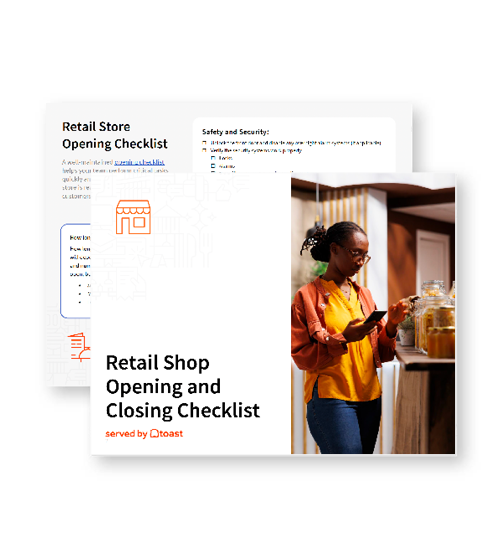
 Retail Store Opening and Closing Checklist
Use this free PDF checklist to set your staff up for success, every shift.
Obtener descarga gratis | Creado para restaurantes
Predictive analytics has emerged as a critical competitive advantage in retail, enabling businesses to anticipate customer behavior, optimize inventory levels, and drive sales growth through data-driven decision-making. The global retail analytics market is projected to reach $43.31billion by 2034, growing at a compound annual growth rate of 17.14%, demonstrating the increasing importance of analytics-driven strategies in modern retail operations.
This technology transforms raw data into actionable insights, allowing retailers to move beyond reactive approaches toward proactive strategies that anticipate market changes, customer preferences, and operational challenges before they impact business performance. In today’s fast-moving retail landscape, predictive analytics is no longer optional — it’s becoming the standard for businesses that want to thrive in 2025 and beyond.
Key takeaways
Predictive analytics enables retailers to boost sales, optimize inventory, and improve customer experiences through data-driven insights.
Demand forecasting, personalization, and dynamic pricing drive higher revenue and reduce costly stockouts.
Real-world success stories from Amazon, Nike, Family Dollar, and Welch’s show measurable ROI from predictive analytics.
The global predictive analytics market is projected to reach $100.2 billion by 2034, creating major growth opportunities for retailers.
Retail Store Opening Costs Calculator
This free calculator lays out some of the fundamental financial costs of opening a retail store, so you can start planning and bring your dream business to life.

Understanding predictive analytics in retail
Predictive analytics combines historical data analysis, statistical modeling, and machine learning algorithms to forecast future outcomes and identify patterns that inform strategic decision-making. Smart inventory management and data-driven in-store optimization can increase retailer sales by an average of 10%, making these technologies essential for maintaining a competitive advantage.
The four pillars of predictive analytics
The foundation of retail predictive analytics rests on four key pillars: data collection, cleaning, modeling, and interpretation. Modern retail generates massive volumes of data across multiple touchpoints, including point-of-sale systems, e-commerce platforms, customer loyalty programs, social media interactions, and supply chain operations.
AI and machine learning in action
By leveraging machine learning algorithms, artificial intelligence improves demand forecasting, customer behavior prediction, and inventory management. These automated systems continuously learn from new data inputs, increasing accuracy over time while reducing manual intervention requirements.
Key applications for retail sales optimization
Demand forecasting
Demand forecasting represents one of the most powerful examples of predictive analytics in retail. By analyzing historical sales data, seasonal patterns, market trends, and external factors such as weather conditions, retailers can anticipate future demand with remarkable precision. AI-driven forecasting can lead to a 65% reduction in lost sales caused by unavailable products, directly impacting revenue and customer satisfaction.
Inventory optimization
Predictive models also help retailers maintain optimal stock levels across product categories and locations. Toast's retail inventory management solutions utilize predictive analytics to analyze sales patterns, identify trends, and forecast demand — helping retailers avoid both stockouts and overstock situations that erode profitability.
Customer behavior analysis
Another key application is customer behavior analysis, which allows retailers to understand purchasing patterns, predict churn risks, and identify high-value customers for targeted marketing campaigns. According to McKinsey, personalization can reduce customer acquisition costs by up to 50% and lift revenue by 5% to 15%, proving the financial impact of analytics-driven personalization strategies.
Revenue forecasting and financial planning
Analytical vs. expert forecasting
Predictive analytics enables retailers to determine optimal stock levels and develop effective marketing strategies through two primary approaches: analytical forecasting based on historical and current data analysis, and expert forecasting incorporating industry knowledge and market insights.
Revenue forecasting in practice
Revenue forecasting capabilities enable retailers to project financial performance across multiple dimensions, including product categories, geographic regions, individual store locations, and specific SKUs. For example, one retailer using Toast's analytics platform discovered that Thursday evenings, not Saturday afternoons, were their highest-performing sales periods, leading to strategic staffing adjustments that boosted revenue.
Dynamic pricing strategies
Predictive models also power dynamic pricing, allowing retailers to optimize product pricing in real-time based on demand fluctuations, competitor pricing, inventory levels, and market conditions. Starbucks leverages predictive analytics through its digital menu boards to adjust pricing and optimize the timing of changes for maximum impact.
Customer personalization and experience enhancement
Personalized shopping experiences
Amazon shows how predictive analytics can drive personalization at scale. Its recommendation systems generate up to 35% of total sales through targeted product suggestions based on browsing history, purchase patterns, and similar customer behaviors.
Cross-selling and upselling opportunities
Affinity analysis identifies product combinations frequently purchased together, helping retailers create strategic promotions. For example, offering wine discounts with cheese purchases — or stocking extra complementary items — can increase basket size and customer lifetime value.
Mapping the customer journey
Predictive analytics also supports customer journey mapping, tracking how prospects move through marketing and sales funnels to identify optimization opportunities at each touchpoint. Toast’s restaurant analytics platform analyzes special requests and modifier usage patterns to provide insights for menu optimization and service improvements.
Operational efficiency and supply chain optimization
Smarter supply chain management
Predictive analytics enables retailers to anticipate disruptions, optimize shipping routes, and strengthen vendor relationships. Walmart, for example, utilizes predictive analytics in its inventory system to forecast demand, factoring in historical weather data to improve accuracy.
Improving supply chain visibility
Prologis partners with Crisp to integrate sales data with inventory levels, helping retailers get products in the right place at the right time. This integration boosts supply chain visibility and demand prediction accuracy, reducing inefficiencies.
Predictive maintenance and operations
Beyond logistics, predictive analytics supports predictive maintenance by monitoring equipment performance and scheduling service before failures occur. Toast’s reporting and analytics capabilities give restaurant operators detailed performance insights, enabling proactive equipment management and smoother operations.
Market size and growth opportunities
Explosive market growth
The global predictive analytics market is valued at $17.49 billion in 2025 and projected to reach $100.20 billion by 2034, growing at a CAGR of 21.40%. This dramatic growth reflects increasing adoption across retail sectors as businesses recognize the competitive advantages of data-driven decision-making.
North America leads the way
North America dominates the global retail analytics market with a 39% market share in 2024, driven by technological advancement and significant venture capital investment in analytics solutions. The United States specifically shows strong growth, with the retail analytics market expected to reach $12.06 billion by 2034.
Profitability potential for retailers
Retailers that fully utilize big data in their operations have the potential to see a 60% rise in operating profitability, highlighting the significant financial returns possible through comprehensive analytics implementation.
Implementation strategies and best practices
Plan for seamless integration
Successful predictive analytics implementation requires careful planning and a systematic approach to data integration. Toast’s platform integrations with companies like QSR Automations show the importance of choosing compatible technology solutions that create unified, data-driven operational platforms.
Prioritize data quality
Data quality management forms the foundation of effective predictive analytics, requiring retailers to establish consistent data collection processes across all touchpoints. Modern retailers must integrate fragmented data from physical stores, e-commerce platforms, and marketplaces to create unified datasets suitable for analysis.
Build scalable technology infrastructure
Strong infrastructure supports scalability and real-time insights. Cloud-based solutions, real-time data processing, and integration with existing POS and inventory systems are critical. Retailers using predictive analytics have improved demand forecast accuracy by 10% to 20% compared to traditional methods.
Real-world success stories
Family Dollar: Smarter product choices
Family Dollar partnered with First Insight to produce real-time data on customer preferences, reducing markdowns and stock shortages through improved demand anticipation and smarter product choices.
Nike: Personalized digital campaigns
Nike uses digital campaigns to leverage customer data and deliver personalized advertisements, tailoring promotions, exclusive offers, and product recommendations by tracking interactions across websites and mobile applications, resulting in increased customer engagement and sales growth.
Welch’s: Boosting trade promotion ROI
Welch’s, the iconic juice brand, implemented predictive analytics for trade promotion optimization over a 10-week planning period, moving from manual planning to automated, predictive analytics-based planning, resulting in a 16% surge in trade investment ROI.
Future trends and emerging technologies
AI integration becomes standard
Artificial intelligence is increasingly central to predictive analytics, with machine learning algorithms becoming more sophisticated at identifying patterns and generating accurate forecasts from complex datasets. Gartner predicts that by 2027, 70% of major retailers will integrate AI solutions into their demand planning strategies.
Early adoption will be critical for staying competitive. As Karina van den Oever, principal at Elixirr, explains, “Retailers who are ahead of the curve when it comes to the application of AI will have learned more from their early experiments and reap the benefits. Those playing catch-up may find themselves continuing to be just that – followers.”
The rise of real-time analytics
Retailers are prioritizing real-time analytics to respond immediately to market changes, customer behavior shifts, and operational challenges. This capability allows businesses to act on insights as they happen, rather than relying on lagging indicators.
IoT expands data sources
The Internet of Things (IoT) retail market is predicted to grow 28.2% over the next decade, creating new streams of data for predictive modeling. From connected shelves to smart sensors, IoT devices will fuel even more precise forecasting and optimization.
Measuring success and ROI
Tracking key performance indicators
The most important KPIs for predictive analytics include forecast accuracy, inventory turnover, customer retention, and overall sales growth. Companies that leverage customer insights and behavioral data outperform their peers, experiencing 85% higher sales growth and over 25% greater gross margins.
Measuring Cost Reductions
Analytics also deliver savings by reducing markdown expenses, minimizing stockouts, improving labor efficiency, and optimizing marketing spend. Retailers that monitor equipment conditions with predictive analytics can prevent costly breakdowns, ensuring operational continuity.
Evaluating customer lifetime value
Customer lifetime value (CLV) improvements highlight the impact of personalization. Research shows that 81% of customers prefer companies offering personalized experiences, making CLV and personalization metrics critical indicators of long-term ROI.
Retail Marketing Plan
Create a marketing plan that'll drive repeat business with this customizable marketing playbook template and interactive calendar.
FAQ
What is predictive analytics in retail sales?
Predictive analytics in retail uses historical data, statistical algorithms, and machine learning to forecast future sales patterns, customer behaviors, and market trends. It helps retailers make data-driven decisions about inventory, pricing, marketing, and operations to optimize performance and increase revenue.
How much can predictive analytics increase retail sales?
Smart inventory management and data-driven optimization can increase retailer sales by an average of 10%. Retailers that fully utilize big data have the potential to see a 60% rise in operating profitability, while personalization can lift revenue by 5% to 15%.
What types of data do retailers use for predictive analytics?
Retailers use point-of-sale data, customer transaction histories, inventory levels, website analytics, social media interactions, loyalty program data, seasonal patterns, weather information, economic indicators, and competitor pricing to build predictive models.
What are the main applications of predictive analytics in retail?
Key applications include demand forecasting, inventory optimization, customer behavior prediction, personalized marketing, dynamic pricing, supply chain management, churn prevention, and sales forecasting across different time periods and product categories.
How long does it take to implement predictive analytics in retail?
Implementation timelines vary based on data complexity and system integration requirements. Simple analytics tools can be deployed within weeks, while comprehensive enterprise solutions may require 3 to 6 months for full implementation, including data integration, model training, and staff training.
What challenges do retailers face when implementing predictive analytics?
Common challenges include data quality issues, system integration complexity, lack of skilled personnel, privacy compliance requirements, technology costs, resistance to change, and difficulty measuring ROI during initial implementation phases.


¿Es útil este artículo?
AVISO LEGAL: Esta información se proporciona solo con fines informativos generales y su publicación no constituye un aval. Toast no garantiza la precisión ni la integridad de la información, el texto, los gráficos, los enlaces y otros elementos que incluye este contenido. Toast no garantiza que alcanzarás ningún resultado específico si sigues los consejos que aparecen aquí. Te recomendamos consultar con un profesional, como un abogado, contador o asesor comercial, para recibir asesoramiento específico para tu situación.
 Tendencias

Suscribirse a On the line
Regístrate para recibir opiniones reales, consejos, herramientas e información específica del sector de la mano de quienes están abordando los desafíos más importantes para los restaurantes.
Al enviar, aceptas recibir correos electrónicos de marketing de Toast. Trataremos tu información de acuerdo con nuestra declaración de privacidad. Información adicional disponible para residentes de California aquí.