How to Design a Food Truck Menu in the UK (With Examples)
Learn how to design a food truck menu that spawns queues for days.

Maddie RocklinAuthor
Designing your catering van menu is more than an aesthetic decision — it’s one of the most powerful tools you have to influence what customers order, drive up average spend, and make your offering stand out from the crowd. Whether you’re trading at festivals, markets, or events, the right design choices can speed up service, attract the right customers, and support your brand identity.
Here’s how to craft a catering van menu that delivers, with examples, UK-specific tips, and helpful resources along the way.
1. Start With Your Core Offering
Before getting creative, you’ll need to define your menu’s backbone. What do you serve best — is it gourmet burgers, loaded fries, fusion tacos, or artisan toasties? Keep your menu concise and structured.
According to the Toast Consumer Preferences Survey 2025, in which 200 UK restaurant-goers were polled on their restaurant design and menu preferences, 46% of UK diners prefer menus with 6–8 items per category — anything more can be overwhelming.
Think about:
Profitability: Focus on dishes with high margins and low prep time.
Popularity: Include a few guaranteed crowd-pleasers.
Efficiency: Design the menu around what your van can prep quickly.
2. Prioritise Readability & Speed
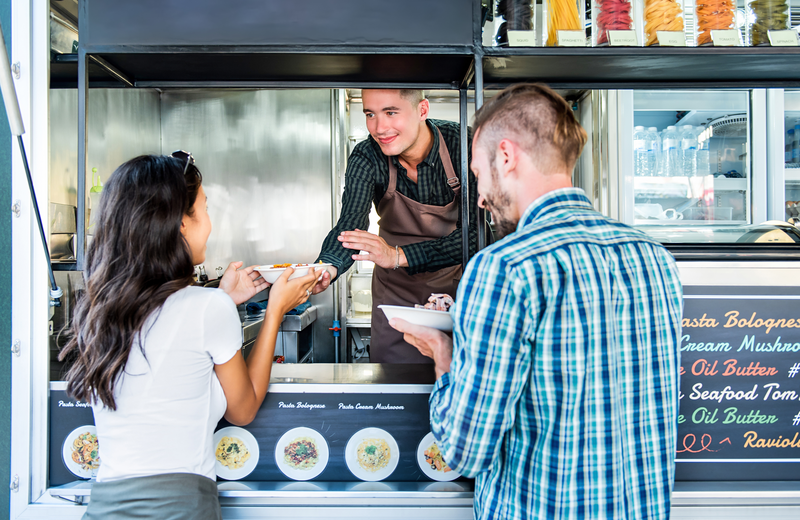
Fast readability matters when customers are queuing outdoors or ordering in a rush. Use clear, high-contrast fonts and large text sizes. Chalkboards and A-frames still work brilliantly for UK catering vans, especially when paired with good lighting and high-quality printouts.
The most important menu design elements for UK diners? Font/visual design and icons like vegan/gluten-free markers ranked highest in usefulness.
3. Use Photos and Colours Strategically
Photos can boost customer orders — if used sparingly and professionally. According to our Consumer Preferences Survey 2025, 33% of UK diners find photos “very important” when choosing what to eat. However, avoid cluttering your design.
In terms of style, 89% of respondents said bold fonts and colours are effective as long as they’re readable.
4. Highlight Your Best-Sellers and Unique Dishes
Use boxes, symbols, or icons to showcase:
House favourites
Best sellers
Locally sourced ingredients
Seasonal specials
More than 40% of UK diners said they are “often” or “always” influenced by these highlights.
Call attention to your story too. Whether it’s sustainable sourcing, local suppliers, or a chef’s passion — these build trust and justify price.
5. Optimise for Pricing Psychology
According to the Toast Consumer Preferences Survey, half of UK respondents said price matters most when they're deciding what to order. Makes sense when you think about it. In today's economy, even a quick lunch from a food truck is a budget decision for most people.
Here are some tips for menu pricing:
Stick to whole numbers like £8 or £12 — these are preferred by 39% of UK diners.
Include optional add-ons like “double cheese +£1” to drive up average spend.
Bundle items into “Meal Deals” or “Combo Boxes” — a popular upsell tactic.
Restaurant Menu Templates
Use these menu templates as a starting point for your menu design or to give your menus a refresh.

6. Embrace Local Tastes and Seasonal Ingredients
According to the Toast Voice of the Restaurant Industry UK report, 78% of restaurateurs are focused on increasing guest demand by investing in quality experiences and sustainable sourcing.
Lean into this with rotating specials, limited-time dishes, and clearly labelled local or eco-friendly options. You’ll attract diners looking for value and authenticity.
7. Examples from Food Trucks That Nail It
Here are a few UK-based and design-forward catering vans to take inspiration from:
The Cheese Truck (London)
The Cheese Truck operates vintage Bedford ice cream vans named Audrey and Alfie, serving grilled cheese sandwiches at events across the UK.
Mother Clucker (London)
Mother Clucker started as a food truck in 2013, offering fried chicken. They have since expanded to include a permanent location in Islington but continue to operate their food truck at various events.
Greedy Vegan (Essex & London)
Greedy Vegan operates a 100% plant-based food truck, serving vegan classics at events across London and the South-East.
Belly Bombz (London)
Combines high-resolution food photography, Korean-inspired street food, and flexible combo pricing — often promoted on a bold, digital-style menu board.
The Duck Truck (Norfolk)
Features clean branding, a highly visible open kitchen, and a chalkboard menu with strong typography, offering everything from hoisin duck wraps to duck fat fries.
Restaurant Marketing Plan
Create a marketing plan that'll drive repeat business with this customizable marketing playbook template and interactive calendar.
8. Comply With Local Legal and Health Requirements
Make sure your catering van meets all local rules for food businesses in the UK:
Register your catering van with your local authority at least 28 days before you start trading:FSA guide
Get a street trading licence from your local council if operating in public areas: GOV.UK
Display your Food Hygiene Rating, which your council will issue after inspection.
Ensure allergen labelling is clear and compliant with Natasha’s Law (for pre-packed food): FSA allergen rules
9. Add Digital & Social Touchpoints
Include a QR code linking to a digital menu or pre-order system.
List your Instagram and TikTok handles where you post dish photos and daily specials.
Use handheld devices or mobile POS to speed up payments and improve flow — a key trend in the UK right now.
10. Final Thoughts: Make It Strategic, Make It Yours
Here's the thing about your catering van menu – it's doing way more work than you might realize. Sure, it tells people what you're selling and how much it costs. But it's also quietly convincing them to trust you, helping them decide faster when there's a queue forming behind them, and maybe even talking them into adding that extra side or drink.
When you get the design right, everything flows better. Customers order quicker because they can actually read what you're offering. They spend a bit more because the good stuff catches their eye. And they walk away with a better impression of your whole operation.
 TOAST TECH
 Built for restaurants just like yours.
Toast’s restaurant technology includes point of sale, kitchen display screens, online ordering and more.
Is this article helpful?
DISCLAIMER: This information is provided for general informational purposes only, and publication does not constitute an endorsement. Toast does not warrant the accuracy or completeness of any information, text, graphics, links, or other items contained within this content. Toast does not guarantee you will achieve any specific results if you follow any advice herein. It may be advisable for you to consult with a professional such as a lawyer, accountant, or business advisor for advice specific to your situation.
Subscribe to On the line
Sign up to get industry intel, advice, tools, and honest takes from real people tackling their restaurants’ greatest challenges.
By submitting, you agree to receive marketing emails from Toast. We’ll handle your info according to our privacy statement. Additional information for California residents available here.