10 Restaurant Menu Design Tips for the UK
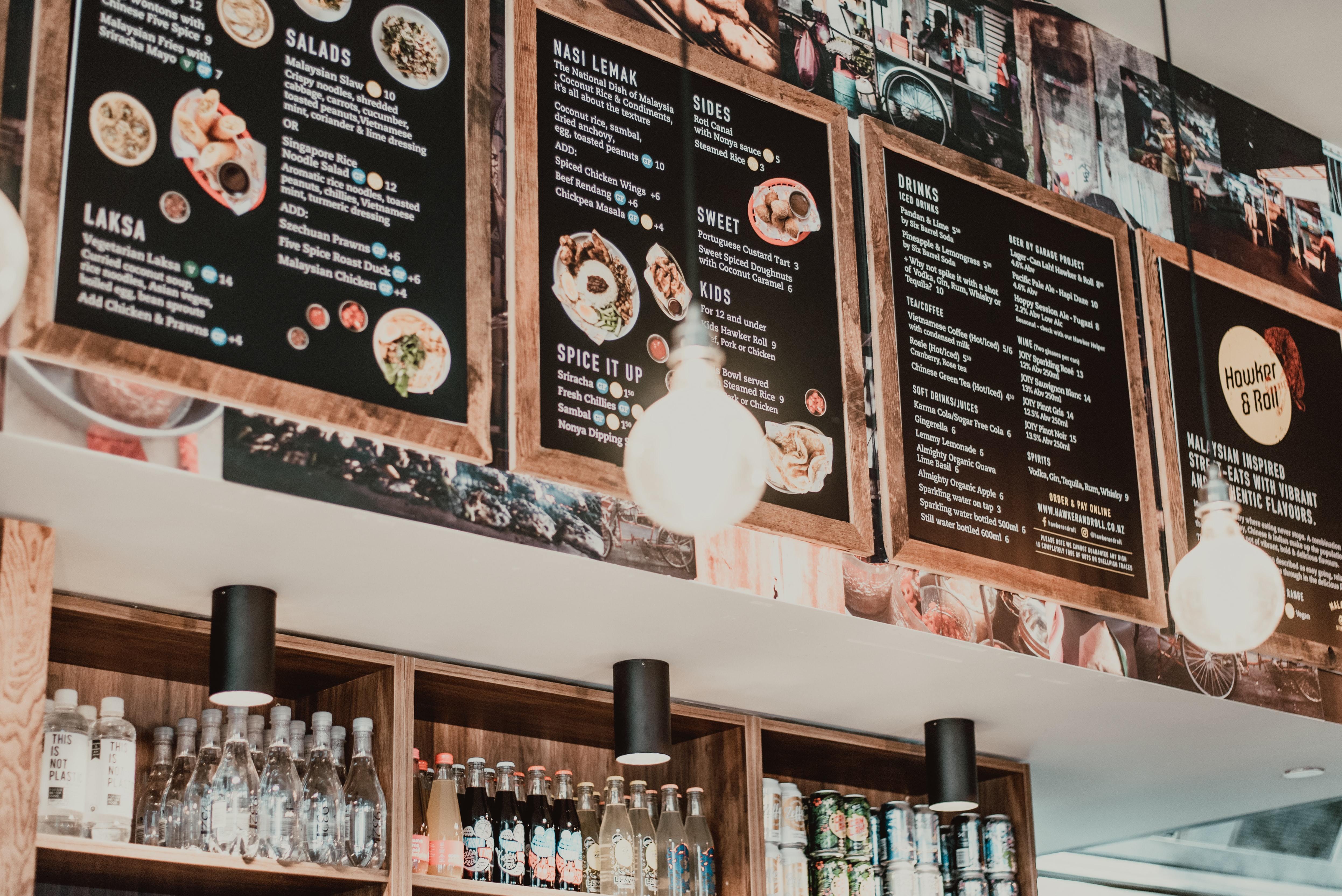
Tip 1: Creativity is key when thinking about restaurant menu design. Read on for more.

Kendal AustinAuthor
A well-designed menu is one of the most powerful tools in your restaurant. It influences guest perception, drives profits, and plays a key role in creating a consistent brand experience. In this guide, we’ll walk through 10 tips UK restaurateurs can use to craft menus that not only look great, but also support your bottom line.
Restaurant Menu Templates
Use these menu templates as a starting point for your menu design or to give your menus a refresh.

1. Understand How Guests Scan Your Menu
Most guests don’t read menus top to bottom. Eye-tracking research shows diners tend to focus on specific hotspots first: the top left, top right, and centre of a page—commonly called the “Golden Triangle”. This is your chance to place high-margin dishes in the best possible locations.
According to the Toast Consumer Preferences Survey 2025, in which 200 UK restaurant-goers were polled on their menu design preferences, 51.5% say they sometimes notice when menu items are strategically placed, and 14% say they always do.
Tip: Use boxes, bold fonts, or icons to draw attention to these high-traffic zones.
2. Keep It Clean with White Space
The human eye hates clutter. In fact, good use of white space can improve reader comprehension by up to 30%. Let your dishes shine by avoiding wall-to-wall text or excessive categories.
UK guests ranked visual layout and font among the top two most persuasive elements of a menu. That’s not just design—it’s strategy.
3. Use Boxes and Colour to Guide the Eye
Design isn’t just decoration. Visual cues like icons, shaded boxes, and colour can subtly lead your guests to the dishes you most want to sell.
From our survey, 37% of UK consumers said they love bold menu designs, while 52% said they’re fine with it as long as it’s readable.
If design isn’t your strong suit, consider hiring a local graphic designer to help bring your brand to life and make your menu truly memorable.
4. Ditch the Pound Signs
Studies show that removing currency symbols can lead to increased spending. Guests already know that “14” means £14—so listing prices without the pound sign can reduce price sensitivity.
Tip: Avoid aligning prices in a single column to prevent guests from scanning purely based on cost.
5. Curate, Don’t Crowd
Too many menu options can overwhelm guests and slow down service. UK diners ranked “too many options” and “no clear categories” among their top annoyances.
The sweet spot? According to our survey, 46% of UK guests prefer 6–8 items per category.
Streamlining your menu also helps your kitchen execute dishes more consistently and reduces food waste—something 70% of UK guests said they care about when it comes to sustainability.
6. Use Descriptive Language That Sells
Descriptive labels like “line-caught,” “house-made,” or “chef’s selection” don’t just sound good—they boost sales and satisfaction. 39% of UK diners surveyed say that premium descriptions definitely or usually justify higher pricing.
Words like “buttery,” “charred,” and “zesty” tap into emotional cues that drive cravings.
Tip: Match your descriptions to your restaurant’s voice. If you’re casual, be playful. If you’re fine dining, keep it elegant.
7. Add Photos—But Only If They’re High Quality
According to the Toast Consumer Preferences Survey 2025, in the UK, 73.5% of diners say photos are either “very” or “somewhat important” when choosing dishes.
But there’s a caveat: poor photos can backfire and put diners off. Only use images that match the tone and lighting of your restaurant.
Tip: If you can’t afford to print photos on menus, add your Instagram handle or a QR code that links to your gallery.
8. Make Your Menu Accessible and Inclusive
From menu size and font choice to layout and paper feel, design matters for usability. UK restaurants are increasingly expected to create inclusive experiences—and this includes those with visual impairments.
Best practices include:
Large-print versions available on request
Clear, legible fonts
Digital menus with screenreader compatibility
Cleanable or wipe-down cards for sustainability
Useful resource: UK Hospitality Accessibility Guide
9. Stay True to Your Brand
A great menu captures your restaurant’s personality. Whether you’re a rustic neighbourhood pub or a modern bistro, your menu’s colour scheme, layout, and language should all reflect your identity.
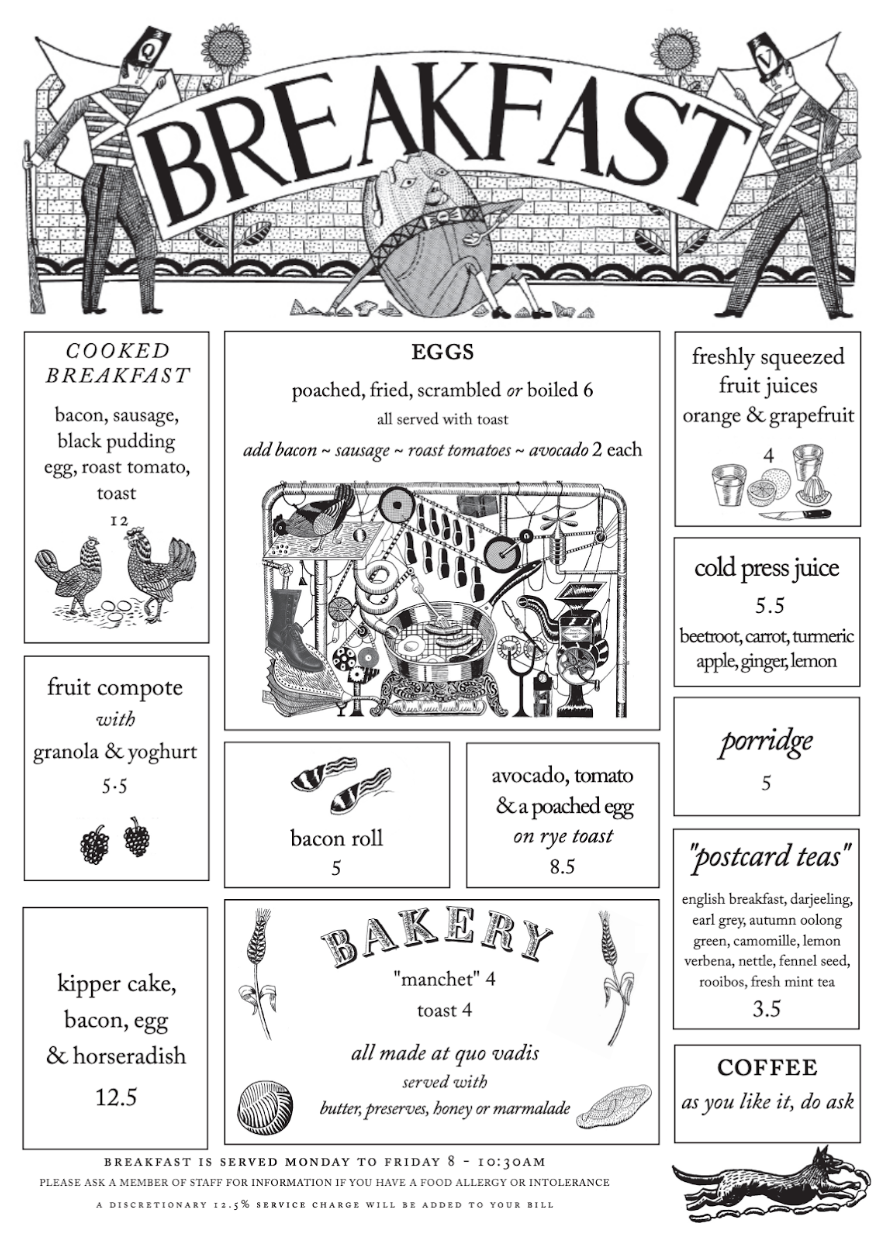
Quo Vadis in London nails this. Their breakfast menu is simple but thoughtful - everything's clearly laid out in clean boxes that make it easy to find what you want. It feels elegant without trying too hard, which is exactly what the restaurant is like.
10. Don’t Forget Your Online Menu
Guests often browse your website before booking. Make sure your digital menu:
Matches your printed one
Loads fast
Is accessible via screenreader and mobile
High-quality images and SEO-friendly HTML formatting go a long way.
Why Menu Design Matters for the UK Market
With economic uncertainty and guest expectations rising, your menu has to do more than list dishes. It needs to communicate value, align with your brand, and support efficient service.
Whether you’re revamping an existing layout or launching something new, use this article to make sure you're using a strategy based on data.
 TOAST TECH
 Built for restaurants just like yours.
Toast’s restaurant technology includes point of sale, kitchen display screens, online ordering and more.
Is this article helpful?
DISCLAIMER: This information is provided for general informational purposes only, and publication does not constitute an endorsement. Toast does not warrant the accuracy or completeness of any information, text, graphics, links, or other items contained within this content. Toast does not guarantee you will achieve any specific results if you follow any advice herein. It may be advisable for you to consult with a professional such as a lawyer, accountant, or business advisor for advice specific to your situation.
Subscribe to On the line
Sign up to get industry intel, advice, tools, and honest takes from real people tackling their restaurants’ greatest challenges.
By submitting, you agree to receive marketing emails from Toast. We’ll handle your info according to our privacy statement. Additional information for California residents available here.