![[IE] Marketing Strategies for Restaurants in Ireland](http://images.ctfassets.net/rric2f17v78a/1WBF0eX4xpLFVRrp4h1ZRt/9516b272d88a3ac31f7f311078a0b345/marketing-strategies-for-restaurants-hero.jpeg)
Restaurant Automation: The Complete Guide for 2025
Discover how restaurant automation in 2025 can boost efficiency, reduce costs, and enhance customer experience with the latest tools and technologies.
Aiden ToborAutor
 RESOURCE
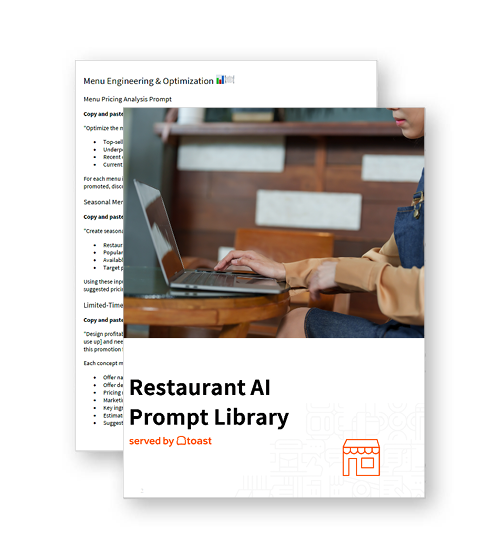
 AI Prompt Library for Restaurants
Use these AI prompts to help get the specific, practical guidance your restaurant needs.
Obtener descarga gratis | Creado para restaurantes
Restaurant automation is no longer a futuristic concept — it's a necessity for operators looking to survive labor shortages, rising costs, and increasing consumer demands. From AI-powered kitchen systems to automated inventory management, restaurants are embracing technology to streamline operations and improve profitability.
Over half of restaurants either use AI in their operations or plan to adopt it in the near future, with automation addressing critical challenges, including staffing shortages, where 45% of operators report needing more employees to meet customer demand.
What is restaurant automation?
Restaurant automation encompasses digital tools, software, and robotics that handle repetitive tasks traditionally performed by human workers. This includes everything from self-ordering kiosks and automated cooking equipment to AI-driven inventory management and voice-activated ordering systems.
The technology addresses three core restaurant challenges — labor shortages with 70% of restaurants having job openings that are "hard to fill", rising operational costs, and the need for consistent service quality across multiple locations.
Key automation technologies transforming restaurants
Advances in robotics and smart kitchen equipment are streamlining back-of-house operations, improving consistency, and freeing staff to focus on the guest experience.
SOPs Template
This template will help you create SOPs for your entire business, so you can create consistency and easily train employees.

Kitchen automation and robotics
Robotic kitchen systems represent the most visible form of restaurant automation. Companies like Miso Robotics' Flippy Fry robot automate tasks like flipping burgers and frying. Spyce restaurant in Boston operates with a fully robotic kitchen that handles all cooking while human staff focus on customer service and presentation.
These systems ensure consistent cooking temperatures, reduce food waste, and eliminate human error in food preparation. Automated fryers can cook items to exact specifications every time, improving both quality and efficiency during peak hours.
Quick-service restaurants like White Castle and Jack in the Box are also utilizing Flippy Fry to speed up production, improve consistency, and free staff from repetitive, high-heat tasks.
Some robotics companies are taking automation beyond the back-of-house. Piestro, for example, has developed a fully automated pizza-making bot designed to be a self-contained kitchen in a box — ideal for nontraditional locations like airports, malls, and office buildings. Massimo De Marco, CEO of Piestro, explains, “This is something the customer can actually enjoy. You can walk over to the Piestro machine and order the pizza and then watch the pizza be made right in front of you.” The system can produce a 12-inch pizza in just three minutes, combining speed, consistency, and a unique customer experience.
AI-powered ordering systems
Self-ordering kiosks have proven their value across the industry. Shake Shack saw a 14.7% increase in sales after implementing self-ordering kiosks across their locations, with improved order accuracy and shorter wait times. The company has also been using AI to enhance upselling and menu personalization on its kiosks, helping boost average order value and streamline the ordering process for guests.
Voice-activated ordering is emerging as the next frontier. These systems handle phone orders, take reservations, and answer frequently asked questions, particularly valuable for quick-service restaurants where speed is crucial.
Inventory management automation
AI can track and project inventory levels and send alerts when it's time to restock essentials. Invoice processing automation captures and digitizes supplier invoices, making expense information easily searchable and analyzable.
These systems provide pricing trends that show exactly which ingredients are impacting profit margins, with tools highlighting how ingredient price fluctuations affect individual recipes and finished dishes.
For example, Sweetgreen uses AI-driven inventory tracking to monitor ingredient usage in real time across its locations, helping the brand reduce food waste and adjust purchasing based on seasonal price fluctuations.
Plantilla de inventario de alimentos para restaurantes
Utiliza esta plantilla gratuita de inventario de alimentos para ayudar a tu empresa a mantenerse organizada y gestionar el inventario con facilidad.
Staff scheduling automation
AI can pick up on scheduling patterns and time-off requests to automate weekly schedules, analyzing historical data such as sales patterns and staffing needs to create optimized schedules. This reduces labor costs while preventing employee burnout by ensuring appropriate staffing levels during peak and slow periods.
Benefits of restaurant automation
Beyond cutting-edge technology, automation delivers measurable gains for restaurants — boosting efficiency, lowering costs, and elevating the customer experience.
Operational efficiency improvements
Automation streamlines restaurant operations by reducing manual errors and speeding up service. Kitchen display systems improve communication between service teams and the kitchen, leading to better order accuracy and customer satisfaction. Automated systems handle repetitive tasks like chopping and mixing, freeing staff to focus on more complex and creative aspects of meal preparation.
For example, Chipotle has deployed automated makeline systems in select locations that assemble digital orders with precision and speed, enabling staff to serve in-store guests faster during peak hours without compromising accuracy.
Cost reduction and profitability
Restaurant automation delivers significant cost savings through reduced labor needs and improved efficiency. AI-driven tools are revolutionizing how restaurants manage day-to-day operations, from automating inventory management and staff scheduling to optimizing supply chain logistics. Automated inventory systems reduce food waste by ensuring optimal stock levels.
Invoice automation systems eliminate hours of manual data entry while providing actionable cost insights that help operators negotiate better pricing with vendors and identify areas for cost reduction.
Enhanced customer experience
Automation improves customer satisfaction through faster service and personalized experiences. Self-ordering systems allow customers to customize orders at their own pace, while AI-powered menu personalization tailors offerings to individual preferences and dietary needs.
Digital reservation systems reduce wait times and no-shows through automated reminders, maximizing seating efficiency and revenue potential. For example, Olive Garden uses an automated waitlist and table management system that updates guests via text in real time, reducing perceived wait times and allowing diners to relax or browse nearby shops until their table is ready.
Implementation challenges and solutions
While the advantages are clear, successful adoption requires addressing common challenges that can slow or derail automation efforts.
Initial investment costs
With 38% of restaurants indicating they are "extremely likely" to implement AI benchmarking tools in the future, operators should view automation as a long-term investment in operational efficiency rather than a short-term expense.
Start with high-impact, lower-cost solutions like automated scheduling or inventory management before investing in expensive robotic systems. Many vendors offer flexible payment options and leasing arrangements to reduce initial capital requirements.
Staff training and adaptation
Successful automation implementation requires comprehensive staff training on new systems. Focus on communicating how automation enhances rather than replaces human roles — automated cooking systems still require human staff for preparation, presentation, and customer service.
Create clear protocols for technology troubleshooting and ensure managers are comfortable with system operations before full deployment.
Plantilla del manual de capacitación
Usa esta plantilla de manual de capacitación para restaurantes, un documento de Word personalizable, para proporcionar a tu personal las reglas, pautas y claridad que necesitan para hacer su trabajo con eficiencia.
Technology integration
Avoid creating technology silos by selecting systems that integrate with existing restaurant management platforms. Toast's comprehensive platform combines POS data with inventory automation and kitchen display systems for seamless operations.
Choose vendors that offer robust technical support and regular system updates to ensure long-term reliability and functionality.
Choosing the right automation solutions
Selecting the best automation tools starts with understanding your restaurant’s unique needs, goals, and growth plans.
Assess your operational needs
Begin by identifying the most time-consuming or error-prone processes in your operation. Restaurants with high delivery volumes might prioritize automated order management, while establishments with complex inventory needs should focus on automated procurement systems.
Consider your service model — quick-service restaurants benefit most from ordering automation and kitchen robotics, while full-service establishments might prioritize reservation management and staff scheduling systems.
Evaluate ROI potential
Calculate potential cost savings from reduced labor needs, decreased food waste, and improved efficiency. Compare these savings against implementation costs and ongoing maintenance expenses to determine realistic payback periods.
Focus on solutions that address your highest operational costs first, whether that's labor, inventory management, or customer acquisition costs.
Select scalable solutions
Choose automation systems that can grow with your business. Technology adoption, including artificial intelligence and automation, improves operational efficiency and enhances customer experience, with cloud-based platforms offering the flexibility to add locations and features as needed.
Ensure selected systems integrate with your existing technology stack and provide comprehensive reporting capabilities for performance monitoring.
Future outlook for restaurant automation
As technology costs drop and capabilities expand, automation is set to become a standard part of restaurant operations across all segments.
Emerging technologies
The global food automation market is projected to grow at a compound annual growth rate of 6.7% through 2030, reaching $20.4 billion by 2030.
Drone delivery networks are expanding beyond test markets, while fully autonomous kitchens capable of preparing entire menus are becoming more sophisticated. AI-enhanced menu personalization will continue evolving to provide increasingly targeted customer experiences.
Industry adoption patterns
Small full-service restaurants are focusing automation efforts on shift optimization, voice AI ordering, and marketing assistance to compete with larger operations. Enterprise restaurants are implementing comprehensive automation suites that integrate multiple systems for maximum operational efficiency.
The trend toward automation adoption will accelerate as labor costs continue rising and technology costs decrease, making sophisticated systems accessible to restaurants of all sizes.
Final thoughts
Restaurant automation isn’t just a passing trend — it’s a fundamental shift reshaping every corner of the foodservice industry. While the path to implementation comes with challenges, the payoff is undeniable — leaner operations, lower costs, happier guests, and a stronger bottom line. The operators who act now won’t just keep up, they’ll set the standard for what dining looks like in the years ahead. In an industry where every second and every dollar counts, automation isn’t the future — it’s the competitive edge you need today.
FAQ
How much does restaurant automation cost?
Costs vary significantly based on system complexity. Basic automated scheduling or inventory systems may cost $100 to $500 monthly, while robotic kitchen equipment requires $50,000 to $200,000 in upfront investment. Most operators see ROI within 12 to 24 months through labor savings and improved efficiency.
Will automation replace restaurant workers?
Restaurant automation primarily handles repetitive tasks, allowing human staff to focus on customer service, food preparation, and creative aspects of restaurant operations. Most automated systems still require human oversight and interaction, reshaping rather than eliminating jobs.
What's the best first automation system for new restaurants?
Start with POS-integrated systems like automated inventory management or staff scheduling, which provide immediate operational benefits at lower costs. These foundational systems can be expanded with additional automation as the business grows.
How do I train staff on new automation systems?
Implement comprehensive training programs that emphasize how automation enhances job roles rather than replacing them. Provide hands-on practice sessions, create clear troubleshooting protocols, and ensure management is fully comfortable with systems before full deployment.
Can small restaurants afford automation technology?
Many automation solutions are now designed for restaurants of all sizes, with cloud-based systems offering affordable monthly subscriptions. Start with high-impact, lower-cost solutions and gradually expand automation capabilities as ROI is demonstrated.


AI Prompt Library for Restaurants
Use these AI prompts to help get the specific, practical guidance your restaurant needs.
¿Es útil este artículo?
AVISO LEGAL: Esta información se proporciona solo con fines informativos generales y su publicación no constituye un aval. Toast no garantiza la precisión ni la integridad de la información, el texto, los gráficos, los enlaces y otros elementos que incluye este contenido. Toast no garantiza que alcanzarás ningún resultado específico si sigues los consejos que aparecen aquí. Te recomendamos consultar con un profesional, como un abogado, contador o asesor comercial, para recibir asesoramiento específico para tu situación.
 Tendencias


Suscribirse a On the line
Regístrate para recibir opiniones reales, consejos, herramientas e información específica del sector de la mano de quienes están abordando los desafíos más importantes para los restaurantes.
Al enviar, aceptas recibir correos electrónicos de marketing de Toast. Trataremos tu información de acuerdo con nuestra declaración de privacidad. Información adicional disponible para residentes de California aquí.