
A Guide to Product Advertising Strategies for Retail Foodservice That Actually Work
Master product advertising in retail foodservice with proven strategies to promote products, increase sales, and build loyalty.
Aislinn CokerAutor
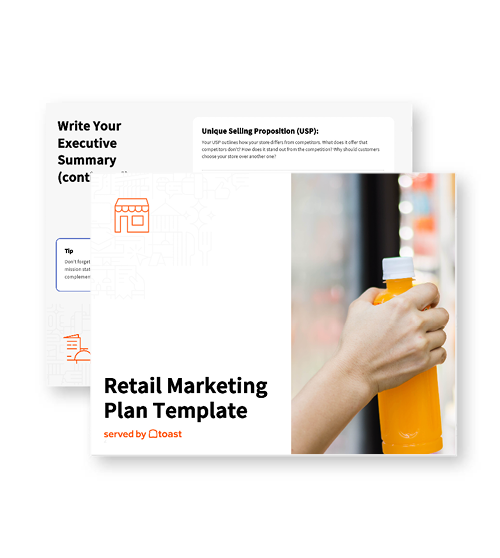
 RESOURCE
 Retail Marketing Plan
Create a marketing plan that'll drive repeat business with this customizable marketing playbook template and interactive calendar.
Obtener descarga gratis | Creado para restaurantes
Product advertising represents one of the most effective ways to drive immediate sales and build customer loyalty in the competitive retail foodservice landscape. Unlike brand advertising that focuses on long-term reputation building, product advertising creates urgency and drives specific purchasing decisions right now.
With the foodservice industry projected to reach $1.5 trillion in sales in 2025, retail foodservice businesses need strategic product advertising to capture their share of this expanding market. This guide provides actionable strategies to spotlight your products, measure campaign effectiveness, and maximize return on investment.
Key takeaways
Product advertising drives immediate sales by spotlighting specific items with compelling offers.
In-store and digital channels work best together—use end-cap displays, staff recommendations, social media, and email to influence purchase decisions both on-site and online.
Seasonal, time-sensitive promotions increase urgency and drive foot traffic, especially when paired with trending themes and local relevance.
Measure what matters—track ROI, sales lift, foot traffic, and digital engagement to evaluate campaign success and optimize future efforts.
Customer loyalty grows through personalized marketing, exclusive offers, and community-driven content that turns one-time buyers into repeat customers.
Retail Marketing Plan
Create a marketing plan that'll drive repeat business with this customizable marketing playbook template and interactive calendar.

Understanding product advertising in foodservice retail
Product advertising focuses on promoting specific items or product categories rather than overall brand awareness. In foodservice retail settings like grocery stores, convenience stores, and specialty food retailers, this could mean highlighting seasonal produce, new craft beer selections, limited-time offerings, or best-selling items.
The key difference between product and brand advertising lies in immediacy and specificity. While brand advertising builds recognition over time, product advertising creates instant awareness and drives immediate purchasing decisions. For example, a grocery chain advertising their "Farm Fresh Strawberries - Buy One Get One Free This Week" targets immediate sales rather than long-term brand loyalty.
Current market dynamics
The retail foodservice advertising landscape has evolved significantly. Measured media spending in the US food, beverages, and candy sector totaled approximately $7.5 billion in 2022, while restaurants allocated an additional $9 billion. Together, these segments account for nearly one-third of total retail sector advertising expenditure.
Digital ordering and delivery have surged, outpacing traditional dine-in traffic by 300% in recent years, creating new opportunities for product-specific digital advertising campaigns.
Strategic benefits of product advertising
Product advertising delivers measurable value across multiple business objectives:
Boost awareness and sales for specific items: Whether introducing new product lines or re-promoting seasonal favorites, targeted advertising ensures customers notice featured products. According to Toast data, 67% of restaurants pay for ads on social media, highlighting the importance of paid promotion in today's marketplace.
Support product innovation: Advertising new or experimental items helps gauge customer interest and gather feedback before expanding selection. This data-driven approach reduces risk when testing market demand for new offerings.
Encourage return visits and increase transaction value: Strategic promotions can boost average order value and bring customers back for repeat purchases. Research shows that 76% of consumers have purchased a product they tried when eating out, demonstrating the power of product exposure.
Drive seasonal sales: Product advertising allows retailers to capitalize on seasonal demand patterns, promoting items when customer interest peaks naturally.
Essential advertising channels for foodservice retail
In-store advertising strategies
Physical retail environments offer unique opportunities to influence purchasing decisions at the point of sale:
End-of-aisle displays: These prime real estate spots are perfect for promoting seasonal items, new arrivals, or limited-time offers where customers cannot miss them. Strategic placement ensures maximum visibility during the customer journey.
Point-of-sale materials: Eye-catching signage, shelf talkers, and digital displays can highlight product benefits, pricing promotions, or preparation suggestions. These materials work especially well for impulse purchases and cross-selling opportunities.
Sampling programs: In-person sampling events in "mover markets" with early adopters can create groundswell support that spreads across regions. California and Seattle have proven effective for natural food product launches.
Staff recommendations: Training employees to recommend featured products during customer interactions creates authentic endorsements that drive sales.
Digital advertising channels
Digital platforms provide precise targeting capabilities and measurable results:
Social media advertising: Social media campaigns have become a significant revenue source for companies, with image-based platforms like Instagram particularly effective for food products. Supermarkets can leverage national food days (like National Doughnut Day) with creative hashtags and visual content.
Email marketing: This cost-effective channel allows retailers to advertise deals, promote new products, and provide relevant updates to existing customers. Unique promotional codes help track campaign effectiveness and return on investment.
Search engine advertising: PPC advertising returns $2 for every $1 spent on average, making it an attractive option for promoting specific products when customers search for related terms.
Geotargeted advertising: Running Facebook and Instagram ads targeted to zip codes near specific store locations can increase brand recognition and drive foot traffic to featured products.
Local advertising opportunities
Community-focused advertising builds relationships and drives local sales:
Local media partnerships: Advertising in community newspapers, radio stations, or local magazines reaches customers in their daily routines. Local services and retail still use newspapers effectively for driving footfall with measurable ROI through coupon redemptions.
Community event sponsorships: Participating in local festivals, farmers markets, or charity events provides product sampling opportunities and builds community connections.
Cross-promotional partnerships: Collaborating with nearby businesses for joint promotions or shared events expands reach while sharing marketing costs.
Measuring advertising effectiveness
Key performance indicators
Successful product advertising requires tracking specific metrics that demonstrate campaign impact:
Sales lift during promotional periods: Compare sales data before, during, and after advertising campaigns to isolate the promotional impact. A 500% marketing ROI, or 5:1 ratio, is considered a successful benchmark.
Foot traffic increases: Implement tracking methods like manual customer counts or POS system analytics to measure advertising's impact on store visits.
Digital engagement metrics: Track click-through rates, social media engagement, email open rates, and website traffic to measure online campaign effectiveness.
Customer acquisition costs: Monitor how much it costs to acquire new customers through specific advertising channels to optimize budget allocation.
ROI calculation methodology
Calculate marketing return on investment using this proven formula:
Determine sales growth attributable to the campaign: Track revenue increases during the promotional period
Calculate total marketing investment: Include advertising spend, creative costs, promotional discounts, and staff time
Subtract marketing investment from sales growth: This gives you net profit from the campaign
Divide net profit by total marketing investment: Multiply by 100 for percentage ROI
Advanced tracking techniques
Attribution modeling: Use tools that track customer journeys across multiple touchpoints to understand which advertising channels drive conversions. Marketing mix modeling can help measure the impact of upper- and lower-funnel activities more holistically.
A/B testing: Test different creative approaches, messaging, or promotional offers to identify the most effective combinations. 90% of shoppers place orders through grocery retailer websites and 73% use apps, making digital A/B testing particularly valuable.
Customer lifetime value analysis: Track how advertising affects long-term customer relationships, not just immediate sales. This approach helps justify advertising investments that may have longer payback periods.
Creating compelling product advertisements
Visual elements that drive sales
High-quality product photography: Professional images showcasing texture, color, and appetite appeal are essential for food products. Visual appeal captures retailers' attention and influences shelf placement decisions.
Clear value propositions: Highlight unique benefits, quality indicators, or special pricing in easily digestible formats. Use bold headlines and concise bullet points to communicate key messages quickly.
Seasonal and trending themes: Align advertising creative with current events, seasons, or trending topics to increase relevance and engagement.
Message development strategies
Urgency creation: Use time-limited offers, limited quantities, or seasonal availability to motivate immediate action. Phrases like "While Supplies Last" or "This Week Only" drive decision-making.
Benefit-focused messaging: Emphasize what customers gain rather than just product features. "Farm-Fresh Flavor" resonates more than "Locally Sourced."
Social proof integration: Include customer reviews, ratings, or testimonials to build credibility and trust. 76% of consumers trust peer recommendations, making this approach particularly effective.
Optimization strategies for maximum impact
Budget allocation best practices
Channel diversification: Strive for balance by aiming for 50-60% allocation to brand building activities, with 40-50% on performance tactics. This approach maximizes both immediate and long-term returns.
Seasonal adjustments: Increase advertising spend during peak demand periods for specific products. Holiday seasons, summer produce periods, or back-to-school campaigns often justify higher investment levels.
Performance-based reallocation: Shift budget toward channels and campaigns demonstrating strong ROI while reducing spend on underperforming initiatives.
Campaign timing optimization
Pre-launch awareness building: Begin advertising campaigns before product availability to create anticipation and drive early adoption.
Peak demand alignment: Schedule intensive advertising during periods when customer demand naturally increases for specific product categories.
Post-campaign follow-up: Maintain lower-level advertising to sustain momentum and capture delayed purchasing decisions.
Creative refresh strategies
Regular creative updates: Prevent ad fatigue by refreshing visual elements, messaging, or promotional offers every 2-3 weeks for digital campaigns.
User-generated content integration: Encourage customers to share experiences with featured products and incorporate this content into future advertising campaigns.
Trending format adoption: Stay current with emerging advertising formats like Instagram Reels, TikTok videos, or interactive social media features.
"As supermarkets become more marketing savvy, they see the need to differentiate themselves and to take more control over their own destiny in trying to shape that image," said John Muckerman, advertising and marketing director at Dierbergs Markets, Chesterfield, Mo.
Technology integration for enhanced results
Digital tools and platforms
Customer relationship management systems: Use CRM platforms to segment audiences and personalize product recommendations based on purchase history and preferences.
Inventory management integration: Connect advertising campaigns with inventory systems to avoid promoting out-of-stock items and optimize promotional timing.
Analytics platforms: Implement comprehensive tracking systems that provide real-time campaign performance data and enable rapid optimization decisions.
Emerging technologies
Artificial intelligence optimization: AI is projected to hit $48.99 billion in the food industry by 2029, improving product quality, optimizing supply chains, and enabling personalized nutrition recommendations.
QR code implementation: Retail and grocery stores can use QR codes to share nutritional information, offer contactless payments, and connect with tech-fluent customers.
Augmented reality experiences: Develop AR applications that allow customers to visualize products, access additional information, or preview preparation suggestions.
Building customer loyalty through product advertising
Loyalty program integration
Points-based rewards: Create systems where customers earn points for purchasing advertised products, encouraging repeat engagement with promoted items.
Exclusive member offers: Provide loyalty program members with early access to new products or special pricing on featured items.
Personalized recommendations: Use purchase history data to customize product advertising for individual customers based on their preferences and buying patterns.
Community building strategies
Recipe sharing platforms: Create online communities where customers share recipes using advertised products, generating user-generated content and increasing engagement.
Educational content: Develop how-to guides, preparation tips, or nutrition information that adds value beyond the basic product promotion.
Feedback loops: Establish systems for collecting customer feedback on advertised products and use this input to refine future campaigns and product selections.
Toast for Retail
Product advertising is one of the most effective ways to get your products noticed, spark immediate sales, and build loyalty that lasts. Whether you are running in-store displays, launching a social media blitz, or teaming up with local partners, the key is to be intentional, measure results, and keep the creative fresh.
At Toast, we help retail foodservice operators do just that. From easy-to-use POS tools that track sales lift in real time to integrated marketing features that make promoting products a breeze, Toast is designed to help you put your best-selling items in the spotlight. With the right strategy and the right technology, your next product advertising campaign can turn casual shoppers into loyal customers.
Frequently asked questions
What's the difference between product advertising and brand advertising? Product advertising focuses on promoting specific items to drive immediate sales, while brand advertising builds long-term awareness and reputation. Product advertising typically includes specific offers, pricing, and calls-to-action, whereas brand advertising emphasizes values and overall company positioning.
How much should I budget for product advertising? Most successful foodservice retailers allocate 5-10% of revenue to marketing, with larger businesses reaching up to 14%. For product-specific campaigns, start with 2-3% of revenue and adjust based on ROI performance.
Which advertising channels provide the best ROI for food products? PPC advertising returns $2 for every $1 spent on average, while TV advertising delivers about $4.90 in revenue for every $1 spent. Social media and email marketing typically offer lower costs with good targeting capabilities.
How often should I refresh product advertising campaigns? Digital campaigns benefit from creative updates every 2-3 weeks to prevent ad fatigue. Traditional media campaigns can run longer but should be evaluated monthly for effectiveness. Always refresh creative elements when promoting different products or seasonal offerings.
What metrics are most important for measuring product advertising success? Focus on sales lift during promotional periods, customer acquisition costs, return on ad spend (ROAS), and customer lifetime value. A 500% marketing ROI is considered successful, while anything over that threshold indicates exceptional performance.
How can small foodservice retailers compete with larger chains in product advertising? Focus on local partnerships, community engagement, and personalized customer service that larger chains cannot match. Use cost-effective digital channels like social media and email marketing, and leverage unique product offerings or local sourcing stories that differentiate your business.
¿Es útil este artículo?
AVISO LEGAL: Esta información se proporciona solo con fines informativos generales y su publicación no constituye un aval. Toast no garantiza la precisión ni la integridad de la información, el texto, los gráficos, los enlaces y otros elementos que incluye este contenido. Toast no garantiza que alcanzarás ningún resultado específico si sigues los consejos que aparecen aquí. Te recomendamos consultar con un profesional, como un abogado, contador o asesor comercial, para recibir asesoramiento específico para tu situación.
 Tendencias

Suscribirse a On the line
Regístrate para recibir opiniones reales, consejos, herramientas e información específica del sector de la mano de quienes están abordando los desafíos más importantes para los restaurantes.
Al enviar, aceptas recibir correos electrónicos de marketing de Toast. Trataremos tu información de acuerdo con nuestra declaración de privacidad. Información adicional disponible para residentes de California aquí.