10 Popular and Most Profitable Diner Foods and Menu Items
Help grow your bottom line by capitalizing on these profitable, high-margin diner foods.

Justin GuinnAutor
 RECURSO
 Curso sobre ingeniería de menús
Realiza este curso para sacar el máximo provecho a tu menú. Obtén información sobre psicología y diseño aplicados a los menús, cómo administrar tu menú en línea y cómo adaptar tu menú para aumentar las ventas.
Obtener descarga gratis | Creado para restaurantes
Most Profitable Diner Foods and Menu Items
The classic American diner is alive and well throughout the country.
To help ensure its survival, diner operators have to balance a menu that’s delicious and inviting while also being profitable. That’s why we’re diving into popular, profitable diner foods that can help with bottom line growth.
In this article, you will learn about common diner foods, which menu items can be the most profitable for restaurant operations, and how to consistently track your menu item profitability with ongoing cost breakdowns.
Guía de control de costos para restaurantes
Usa esta guía para obtener más información sobre los costos de los restaurantes, cómo realizarles un seguimiento y las medidas que puedes tomar para maximizar tu rentabilidad.

Exploring what exactly diner food is
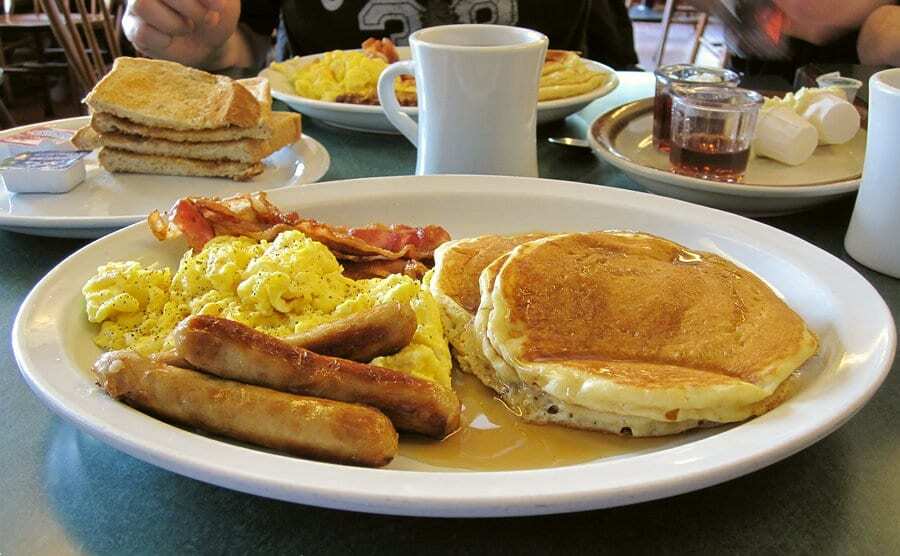
There's a pretty concise answer to "what is a diner?" An Irish-American inventor named Patrick Tierney first defined the term “diner” in the early 1900s. His business built and shipped lunch wagons and dining cars to operators across country roads and rails. They eventually were fitted into the traditional slim, silver-clad diners we know of today.
Most early diners were built around the grill — and the food served conveys that.
Burgers are the essential diner food. All variations, from traditional to patty melt and all points in between. Once the addition of fryers were added, french fries and all variations of fried potatoes were added to the mix.
Breakfast items can also be popular for diners, with eggs any way you want them, waffles and pancakes, and maybe some biscuits if you’re in the south.
And then depending on the diner location, there’s plenty of cuisine variations to accommodate regional tastes.
Informe de estadísticas para operadores de restaurantes
Consulta las estadísticas de operadores de restaurantes reales que pueden ayudarte a comparar la infraestructura tecnológica actual y planificada de tu restaurante con la de tus competidores de cara al 2024 y en adelante.
Analyzing the most profitable items on your menu
High profit margin menus typically combine popular, profitable, and high-cost dishes.
Some diner menus offer pages upon laminated pages of options. Others stick to a relatively brief product mix (pmix). Regardless of your menu makeup, analyzing your current offerings can help you improve your menu and ensure it’s a moneymaker.
Achieving consistent profitability can depend on balancing your prime costs — the combination of your labor costs and your cost of goods sold (COGS). Understanding these costs and calculating them on a regular basis — because they change — is the first step to a profitable menu.
Once you’re able to consistently measure profitability (plate cost vs avg price of menu item) and popularity (total sales) of each of your menu items, you can conduct menu engineering. The process of menu engineering takes these costs into consideration along with other key menu factors, such as guest psychology, menu design, and more.
The end result should be an understanding of which menu items contribute the most profits, based on their sales frequency and average profit margin. These findings can help show restaurant operators menu price insights as well as when to remove menu items completely from your menu.
5 most profitable diner foods
Here’s a breakdown of what can be the most profitable diner foods.
Anything with potatoes
Potatoes are relatively cheap compared to what they yield — and guests typically love them.
Diners should consider whether they want to make their own fries, hash browns, tater tots, and the likes. With wholesale restaurant potato prices low, operators may reap greater profits than those that purchase processed goods. It depends on labor costs required to process all those spuds compared to what it costs to get them pre-processed.
Pancakes, waffles, and other batter-based treats
Batters are typically just flour, fat, and some liquid. You can’t ask for a more profitable product mix on a menu item.
Diner operators may consider how they can increase sales of these high profit items — such as combo options for adding a short-stack to an order.
Biscuits (and especially gravy)
Just like batter-based goods, biscuits are simply flour, fat, and liquid. Potential profitability in every serving. And unlike batter-based goods, biscuits can be made in advance of a service served to order.
Gravy is commonly served along and on top of biscuits. It too can be a profitable diner addition, consisting simply of flour, fat, and liquid.
Grits — sweet, savory, shrimp, however guests want them
Grits may be the pinnacle of restaurant profitability. They can be hugely inexpensive, have a massive yield, and simply need seasoning, liquid, and time to make them delicious.
Operators will want to ensure they aren’t boiling away their grit profitability by adding cheese, meats, and other items without properly adjusting the menu prices to accommodate the additions.
Eggs served anyway
Restaurant egg prices have been highly volatile as of late, but they can be a highly profitable ingredient when stabilized. Fried eggs, scrambled eggs, omelettes, benedicts, quiches, and plenty other menu items can provide a high-profi, quick-served dish.
Similar to grits, operators may want to consider the additional ingredients that are added to their egg dishes and adjust menu item prices accordingly.
Curso sobre ingeniería de menús
Realiza este curso para sacar el máximo provecho a tu menú. Obtén información sobre psicología y diseño aplicados a los menús, cómo administrar tu menú en línea y cómo adaptar tu menú para aumentar las ventas.
Optimizing diner operations with the right blend of tech and service models
Offering the right diner foods can make a significant impact on the profitability of your business. Incorporating these most profitable diner foods into your menu may help encourage more profitability from your sales.
Here are a few other ways to optimize your diner profitability via restaurant cost breakdowns, restaurant technology, and optimized service models.
Adjust what goes on your plate
Calculating plate costs can show you exactly the costs and profit margins for individual menu items. It’s the combination of recipe cost, portion costs, and individual ingredient costs. It can help diner owners see exactly how each component is contributing to the overall profitability of a dish or drink — making it easier to achieve an ideal balance between portions and profits.
Remove popular items that’ve lost profitability
If plate costs become too high, diner operators should be careful not to fall into a trap of sentimentality. Underbelly Hospitality Group realized that the cost of chicken had risen dramatically, fluctuating between 30 and 40 percent higher than usual. Rather than sacrifice the quality or portion size of their famed, crowd-pleaser wings, they pulled them entirely.
Get more efficient with scheduling
More staff doesn’t equal better service. Too many team members and not enough work leads to complacency. Then everyone loses — staff members and their tips and engagement, customers missing out on great experiences, and your ballooned labor costs.
Restaurant scheduling software that’s integrated with payroll software can help you take control of your weekly staff schedule and associated costs.
Implement the New Steps of Service
What if a single adjustment could improve guest and employee experiences while saving on labor costs? Sounds too good to be true until you dive into the New Steps of Service — with streamlined service that can empower guests to order and pay at the table whenever they like. The New Steps of Service ROI Calculator can quantify potential impacts on your labor costs and operational efficiency.
Leverage granular reporting within your restaurant software
Invoice processing automation is an automated tool that digitizes critical invoice line-item data.
Having this ingredient pricing data readily available can simplify your ability to calculate COGS, monitor price fluctuations, and take action on the COGS side of your ongoing restaurant cost breakdowns.
Just like with invoice automation for food costs, scheduling and payroll and team management tools can help automate and simplify labor cost calculations.
You likely don’t have time to manually calculate individual payrolls — and you definitely don’t have time to add all that up to get your cumulative labor costs. An easy-to-use payroll and team management software gives you transparency and visibility into fluctuations in your weekly labor costs, tip pooling breakdowns, payroll taxes, and deductions.
Restaurant Invoice Automation Guide
Use this guide to learn more about your restaurant invoices, the value within, and how to consistently and accurately tap into it to make smarter decisions.
Where to go from here
Combining Toast and xtraCHEF can help all types of restaurants access reports on daily sales, costs, and how they’re impacting profitability.
Toast Payroll and Team Management, as well as Scheduling, powered by Sling, work together to uncover valuable labor trends so you can make better decisions.
xtraCHEF by Toast empowers you to drill into line-item level detail for every ingredient on each of your supplier invoices.
Together, these tools can automate and simplify the process of creating restaurant cost breakdowns.
 TECNOLOGÍA DE TOAST
 Built for restaurants just like yours.
La tecnología para restaurantes de Toast incluye punto de venta, sistema de pantallas de cocina, fidelidad, análisis y nómina, entre otros.
Related Resources
¿Es útil este artículo?
AVISO LEGAL: Esta información se proporciona solo con fines informativos generales y su publicación no constituye un aval. Toast no garantiza la precisión ni la integridad de la información, el texto, los gráficos, los enlaces y otros elementos que incluye este contenido. Toast no garantiza que alcanzarás ningún resultado específico si sigues los consejos que aparecen aquí. Te recomendamos consultar con un profesional, como un abogado, contador o asesor comercial, para recibir asesoramiento específico para tu situación.
 Tendencias
Más información


Suscribirse a On the line
Regístrate para recibir opiniones reales, consejos, herramientas e información específica del sector de la mano de quienes están abordando los desafíos más importantes para los restaurantes.
Al enviar, aceptas recibir correos electrónicos de marketing de Toast. Trataremos tu información de acuerdo con nuestra declaración de privacidad. Información adicional disponible para residentes de California aquí.