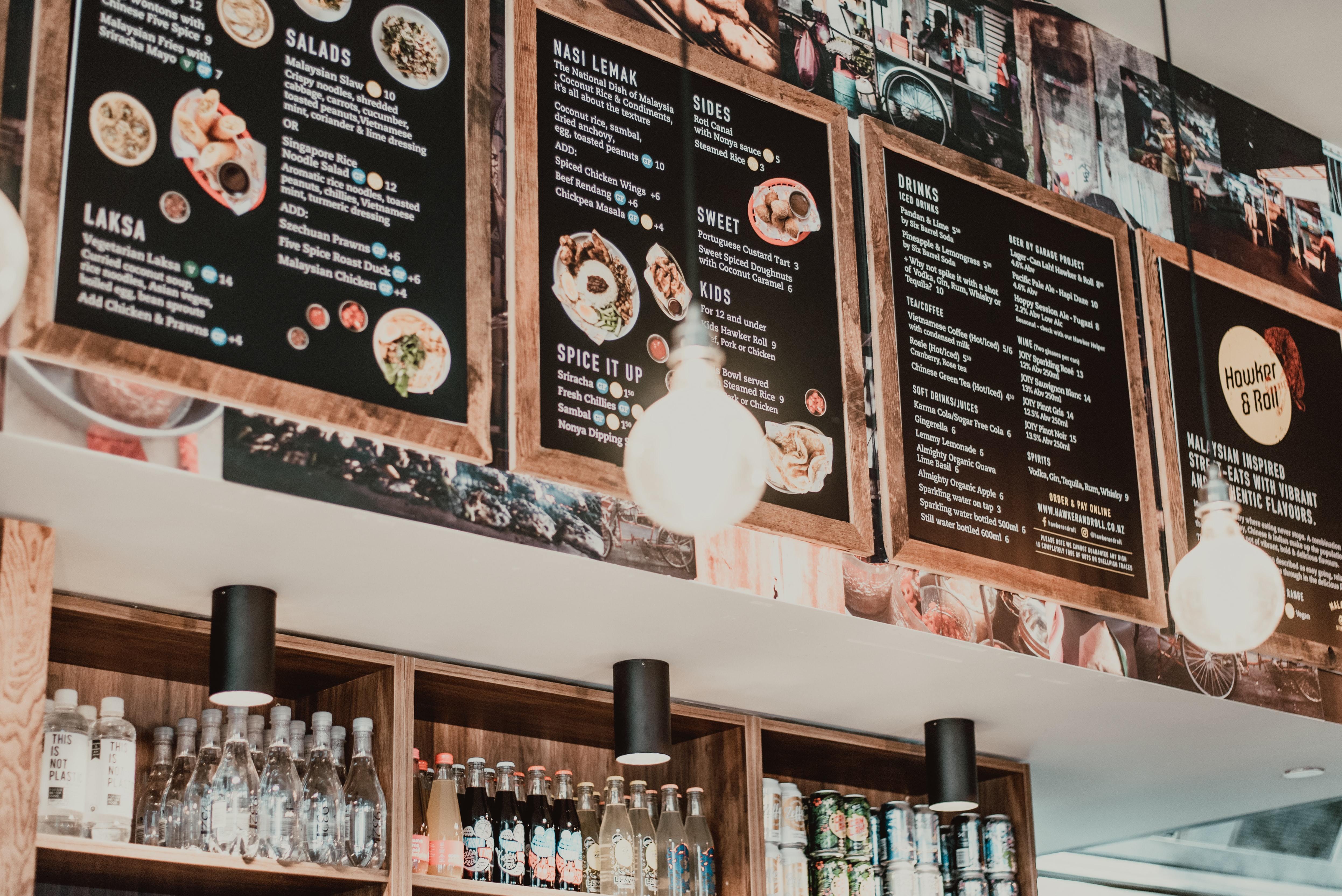
10 Restaurant Menu Design Tips for Canada
Tip 1: Creativity is key when thinking about restaurant menu design. Read on for more.

Kendal AustinAuthor
Whether you’re launching a new concept or refreshing an existing one, smart menu design can directly boost your bottom line.
In this guide, we’ll walk you through ten data-driven tips that Canadian restaurateurs can use to build menus that are both on-brand and effective in driving more sales.
Restaurant Menu Templates
Use these menu templates as a starting point for your menu design or to give your menus a refresh.

1. Understand How Guests Scan Your Menu
Eye-tracking studies show that readers tend to focus on the centre of the page first, then move to the top right and top left. This “Golden Triangle” effect is your opportunity to spotlight high-margin items.
According to the Toast Consumer Preferences Survey 2025, in which 200 Canadian restaurant-goers were polled on their restaurant design and menu preferences, 51.5% of Canadians say they sometimes notice when menu items are strategically placed, while 13.5% always do.
Tip: Your most profitable dishes deserve the spotlight! Place them in the golden zones - top left, top right, and dead center of your menu. A subtle box or little icon can help draw the eye even more.
2. Keep It Clean With White Space
Cluttered menus make decision-making harder for guests. Incorporating white space around text and menu sections improves readability and directs attention naturally.
Research has shown that white space can improve reader comprehension by up to 30%, and in today’s competitive restaurant landscape, anything that makes ordering easier is worth doing.
Tip: Avoid cramming in too many items. Instead, curate your list and space things out. Guests will feel more at ease, and you’ll help increase table turn times.
3. Use Colour and Boxes Strategically
Colour and design elements aren’t just for flair — they’re functional. Boxes, bold fonts, and high-contrast colours help guide the eye and highlight priority items.
Canadian diners agree: 32.5% say they love bold fonts and colours on menus, and 55% are okay with them if they’re readable.
Tip: Use colour to draw attention to house specials or chef’s picks. A simple box or icon can dramatically increase clicks (and orders) on digital menus too.
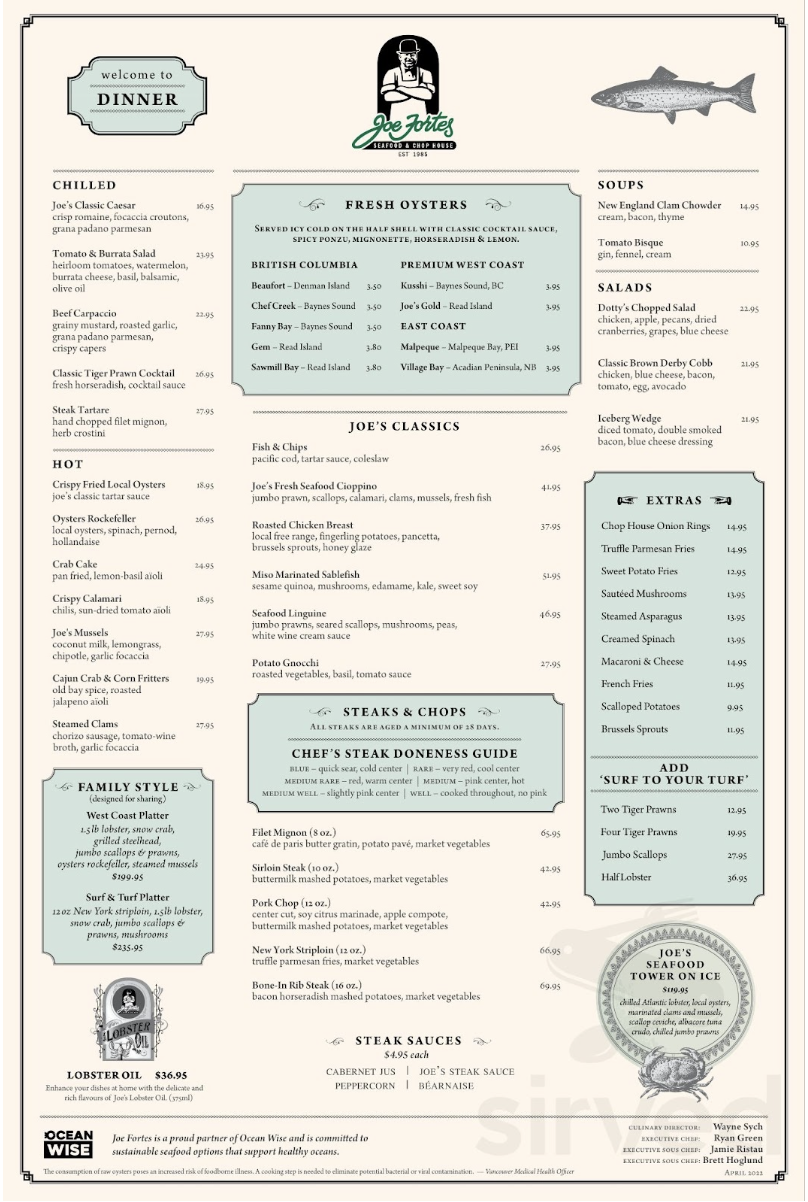
Joe Fortes’ menu below effectively uses subtle colour contrast, boxed specials, and visual anchors (like the oyster and fish illustrations). It’s a good example of polished branding and strong layout strategy in action.
4. Ditch the Dollar Signs
Pricing psychology matters. Studies have found that removing currency symbols like “$” helps diners spend more freely. In Canada, 52% of guests prefer prices shown as whole numbers — think “14” instead of “$13.99.”
Tip: List prices without symbols and avoid aligning them in a single column, which can trigger price comparisons. Instead, tuck the price into the end of your dish description.
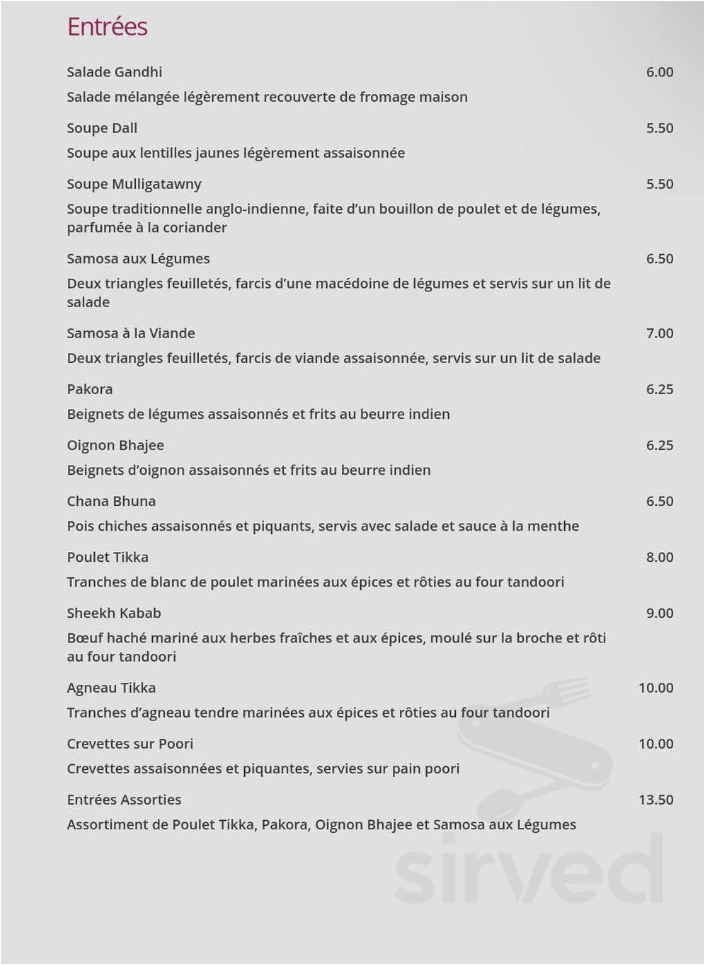
The menu below from Montréal QC's Restaurant Gandhi uses a clean, high-contrast layout and straightforward type hierarchy, making it easier for guests to navigate. It’s also a good example of ditching the dollar signs and multilingual accommodation, which is highly relevant in Canada.
5. Avoid Overwhelming Guests with Too Many Options
When it comes to menus, more isn’t always better. According to our survey, too many choices ranked as the number one menu annoyance among Canadian diners.
Tip: Keep each menu section to 6–8 items. That’s the sweet spot preferred by 35% of Canadians. Curating your menu helps speed up decisions and increases profitability per square inch of space.
6. Use Descriptive Language That Sells
Menu copy should do more than describe ingredients — it should spark appetite. Words like “buttery,” “hand-cut,” or “slow-roasted” help paint a picture of flavour and care.
The Toast survey found that menu descriptions are ranked almost as important as price by Canadian guests, with 61% placing them near the top of their priority list.
Tip: Go beyond generic terms. Describe texture, cooking methods, or sourcing details (e.g., “locally smoked cheddar” or “48-hour marinated chicken”).
7. Include High-Quality Photos — Carefully
Images can work wonders — if done right. Menu engineer Gregg Rapp reports that adding attractive photos can increase sales by up to 30%. In Canada, 36.5% of consumers say they find photos very important in menus.
Tip: If you don’t have the budget to print images, include a QR code linking to your Instagram or digital gallery instead. Just make sure your feed is photo-ready.
8. Design for Accessibility and Comfort
Menus should be usable for everyone. If your menu is on a screen or posted on a board, make sure it’s legible from a distance. For guests with visual impairments, have printed large-font copies available.
Tip: Consider printing menus on laminated or cleanable card stock. Add a QR code for guests who prefer viewing on their own device.
Accessibility resource: Canadian Foundation for Physically Disabled Persons – Accessibility Guidelines
9. Stay True to Your Brand
Your menu should reflect the same care and style that goes into your restaurant. Whether you run a rustic bistro or a high-volume QSR, use consistent fonts, colours, and tone that align with your brand experience.
10. Optimize Your Online Menu
Guests often check your online menu before they ever step foot in your restaurant. Make sure it’s readable, mobile-friendly, and easy to update. With Canadian consumers now prioritising convenience and digital experience, your online menu matters more than ever.
Tip: Use HTML text on your website for SEO and accessibility. Upload a beautifully designed PDF, but always back it with searchable text.
Final Thoughts: Design That Drives Results
A well-designed menu is one of the most effective tools you have to influence guest choices, increase order value, and reflect your brand. Whether you’re refreshing an existing menu or starting from scratch, these tips are designed to help you make confident, creative decisions that support your goals.
Start with small changes, test what works for your audience, and don’t be afraid to evolve your menu over time. Your guests will notice — and your staff will thank you.
 TOAST TECH
 Built for restaurants just like yours.
Toast’s restaurant technology includes point of sale, kitchen display screens, online ordering, loyalty, analytics, payroll, and more.
Is this article helpful?
DISCLAIMER: This information is provided for general informational purposes only, and publication does not constitute an endorsement. Toast does not warrant the accuracy or completeness of any information, text, graphics, links, or other items contained within this content. Toast does not guarantee you will achieve any specific results if you follow any advice herein. It may be advisable for you to consult with a professional such as a lawyer, accountant, or business advisor for advice specific to your situation.
Subscribe to On the line
Sign up to get industry intel, advice, tools, and honest takes from real people tackling their restaurants’ greatest challenges.
By submitting, you agree to receive marketing emails from Toast. We’ll handle your info according to our privacy statement. Additional information for California residents available here.