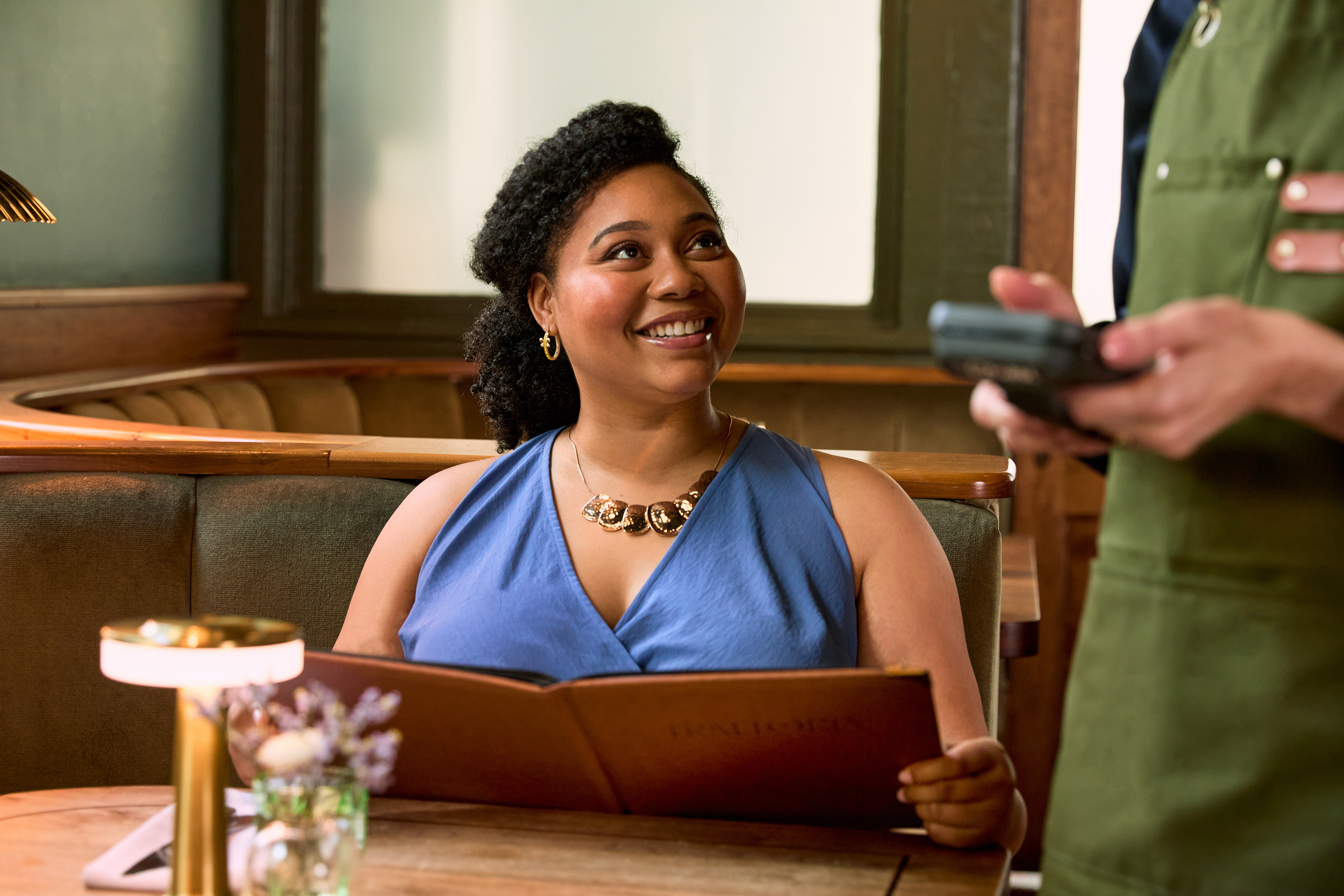
Solo Dining: How Your Restaurant Can Capitalize on the New Trend
For operators, solo dining presents a new opportunity to grow revenue and build guest loyalty. Here’s how.

Tessa ZuluagaAuthor
 RESOURCE
 Restaurant Floor Plan Templates
Use these restaurant floor plan templates to get inspired as you map, or reimagine, the layout and space setup for your restaurant.
Get Free Download | Built for Restaurants
Dining out has long been thought of as a social activity, something to do with friends, family, or colleagues. But more and more, restaurants are seeing a new type of guest: the solo diner. According to the Bureau of Labor Statistics, in 2023, roughly 1 in 4 Americans reported eating all of their meals alone the previous day, an increase of 53% since 2003.
Whether they’re grabbing a quick bite between errands, enjoying a moment of self-care, or logging off from a long day of remote work, these customers are changing the way restaurants think about their spaces and service.
With the rise of remote work, flexible schedules, and shifting social habits, solo dining is becoming a regular part of how people engage with restaurants and bars. And for operators, that means a new opportunity to grow revenue and build guest loyalty.
Why solo dining is on the rise
People are living alone: Almost 1 in 10 young adults ages 18-34 and nearly 3 in 10 adults 65 or older lived alone in 2022, according to this U.S. Census Bureau report. Those who live alone might not be as likely to have a dinner partner every time they choose to dine out at a restaurant. Sometimes, you just don’t want to cook or wait for delivery.
Remote work culture: More people are working from home than ever before, which means fewer coworkers to grab lunch with and more individuals looking for a change of scenery during the day. Restaurants, cafés, and casual dining spots often become the “third space” between home and office.
Flexibility and independence: Modern diners value experiences on their own terms. Whether it’s enjoying a quiet dinner, focusing on a good book, or watching a game at the bar, solo dining allows for personal freedom without compromise.
Self-care and wellness: Dining alone has shifted from being stigmatized to being seen as intentional. Enjoying a meal on your own can be a way to treat oneself without the distraction of coordinating schedules or sharing plates.
Digital integration: With smartphones, laptops, and podcasts as constant companions, solo diners feel less alone when eating out, making the experience more comfortable and appealing.
Restaurant Marketing Plan
Create a marketing plan that'll drive repeat business with this customizable marketing playbook template and interactive calendar.

Why solo dining is good for restaurants
Solo diners are often some of the most profitable guests a restaurant can attract. According to OpenTable, they spend 48% more than other diners, averaging $84 per person. This higher spend is likely because dining alone allows guests the freedom to order exactly what they want. Without the need to compromise for others, they may indulge in appetizers, specialty cocktails, or dessert in ways that a group might not, naturally boosting the average check.
Beyond a single visit, solo diners have strong potential to become regular customers. Many individuals who eat alone, especially remote workers with flexible schedules, frequent restaurants throughout the week. Restaurants that make these guests feel welcome can encourage repeat visits. In fact, 67% of diners say they are more likely to return to a restaurant that consistently remembers their dining preferences.
Solo diners also respond particularly well to personalized recommendations and upsells. Without group consensus influencing their choices, they might be more open to trying curated pairings or add-ons. Men, in particular, show strong interest in this kind of guidance, with 27% reporting that they would like personalized recommendations based on items they’ve enjoyed in the past.
How restaurants can capitalize on the solo dining trend
Here’s how to best cater to solo diners to drive up revenue.
1. Rethink seating arrangements
Solo diners don’t always want to take up a large table meant for groups. Restaurants can accommodate them by:
Adding counter seating, bar seats, and window perches that make solo dining feel natural.
Creating two-top and single-top tables in prime spots, instead of hiding them in corners.
Offering communal tables where solo diners can choose between being social or keeping to themselves.
2. Enhance the guest experience for individuals
Solo diners often pay more attention to details since they’re not distracted by conversation. Consider:
Offering quick service and easy ordering options, such as QR codes or bar ordering, so they don’t feel awkward waiting.
Train staff to make solo diners feel welcome without being overbearing. A warm greeting and respectful attentiveness go a long way.
Providing extras for engagement, like curated playlists, TVs, or tableside power outlets for charging ports.
3. Build solo-friendly menus
Solo diners may order differently from groups, so your menu can work harder for them:
Single portions allow for exploration without waste.
Tasting menus for one create an elevated experience that doesn’t require a partner.
Pairing options (wine flights, cocktail-and-small-plate combos) can encourage upsells in a way that feels curated. A beer-shot combo also never hurts.
4. Market to the solo crowd
Shift your messaging to show that your restaurant is welcoming to parties of one:
Highlight lunch specials or “midday escape” promotions aimed at remote workers.
Showcase bar seating, cozy nooks, or patio spots in your social media posts.
Run campaigns that position your business like a co-working space during the day with lunch/coffee specials.
5. Leverage technology for comfort and convenience
Digital tools make solo dining seamless:
Online reservations that allow guests to book for one without feeling like an outlier.
Loyalty programs personalized to frequent solo visitors, rewarding repeat business.
Wi-Fi and power outlets, especially during the day, to attract remote workers who want to grab a bite while staying connected.
SOPs Template
This template will help you create SOPs for your entire business, so you can create consistency and easily train employees.
Ridin’ solo
Solo dining is no longer a niche behavior. It’s a growing trend fueled by lifestyle shifts, changing work habits, and evolving cultural norms. By making thoughtful adjustments to your seating, service, menus, and marketing, your restaurant can not only welcome these guests but also turn them into loyal regulars.
In an industry where every seat matters, don’t overlook the power of the table for one.
Frequently asked questions
How do I accommodate solo diners without losing revenue from larger parties? Focus on counter seating, bar areas, and two-tops during off-peak hours. Solo diners spend about 48% more per person and turn tables faster, often generating equivalent hourly revenue to larger parties.
What seating arrangements work best for solo diners? Counter seating, bar areas, chef's tables, and window seats appeal to solo diners. Avoid seating them at large tables during peak hours. Instead, design specific solo-friendly spaces that maximize overall capacity.
Should I create special menus for solo diners? Possibly! Offering smaller portions, tasting menus, and shareable plates can allow solo diners to try multiple items. This increases per-visit spending while reducing food waste. Consider adding a daytime menu that suits solo diners.
How do I train staff to serve solo diners effectively? Train servers to read solo diners' preferences for interaction levels, make personalized recommendations, and recognize their higher spending potential. Remove extra place settings promptly to avoid awkwardness.
What technology helps optimize solo diner revenue? Use POS systems like Toast that track solo diner preferences and spending patterns, online waitlist management to fill last-minute openings, and reservation systems that enable dynamic seating allocation.
How do I market to solo diners without alienating groups? Target solo diners through digital marketing emphasizing welcoming atmosphere and premium experiences. Create special events like wine tastings that appeal to individuals while showcasing your capabilities to potential group customers.


Is this article helpful?
DISCLAIMER: This information is provided for general informational purposes only, and publication does not constitute an endorsement. Toast does not warrant the accuracy or completeness of any information, text, graphics, links, or other items contained within this content. Toast does not guarantee you will achieve any specific results if you follow any advice herein. It may be advisable for you to consult with a professional such as a lawyer, accountant, or business advisor for advice specific to your situation.
 Trending


Subscribe to On the line
Sign up to get industry intel, advice, tools, and honest takes from real people tackling their restaurants’ greatest challenges.
By submitting, you agree to receive marketing emails from Toast. We’ll handle your info according to our privacy statement. Additional information for California residents available here.