
In the hospitality industry, your regulars matter, maybe now more than ever. In an interview with Eater, Drew Nieporent, owner of Myriad Restaurant Group, said:
“I’ve owned a restaurant since 1985, when the only thing that we had to go on was recognizing a name on a reservation sheet. And that was very, very important, and still is. If you recognize that name as someone who is a regular, you can do all sorts of things to enable the customer to come back. So, come back! Those who come back often can get a great table, for example.”
Drew Nieporent
Regulars have always been the heartbeat of the restaurant industry. They're the ones who keep dining rooms full on slow nights, bring in new friends, and treat the staff like family.
That’s why Toast conducted a blind survey of U.S. diners to find out what makes a guest come back so often that the staff starts bringing their usual without asking.
Join us as we explore how these insights impact both diners and restaurateurs in 2025.
Key takeaways
Who are restaurant regulars?
60% of respondents consider themselves to be regulars at a restaurant
So, who are these regulars, exactly? Our survey data shows that 60% of respondents consider themselves to be regulars at a restaurant. But who makes up that majority reveals some interesting patterns. Men are more likely than women to consider themselves regulars, as 67% of men claim to be, compared to just 54% of women. But women may be catching up: 17% say they’re starting to become regulars, versus only 13% of men who say the same.
Age also plays a big role. Diners between the ages of 35 and 44 are the most likely to say they’re regulars, with 66% claiming to have a go-to spot. Younger guests are just starting to build those habits, as 25% of respondents ages 18 to 24 say they’re on their way to becoming regulars. There’s a big opportunity for restaurant staff to turn first-timers into lifers, especially younger guests who are just beginning to form their dining routines.
33% of respondents return to a restaurant where they feel like a regular at least once a week
Building relationships with your customers has a powerful effect on driving repeat visits. 33% of respondents return to restaurants where they feel like a regular at least once a week, and another 30% of diners visit their go-to spots several times a month.
Both younger guests ages 18-24 and older diners ages 55+ are more likely to favor the "several times a month" approach, with 34% and 37% respectively choosing this frequency. Whether they’ve been a regular for 3 years or 30 years, they’re still appreciated in the industry.
Why do restaurants need regulars?
Over 49% of respondents tip the staff more at a restaurant where they consider themselves to be a regular
When diners feel taken care of, they give back. And for regulars, that often means tipping a little extra. Nearly half of all respondents (49%) say they tip more at a restaurant where they consider themselves a regular, and another 32% say they occasionally do. That kind of generosity adds up, especially for front-of-house staff who oftentimes rely heavily on tips.
Men are slightly more likely than women to tip extra at their go-to spot (52% vs. 47%), and older guests are particularly generous, as 51% of diners ages 55+ say they’re willing to tip more when they’re a regular. Whether it’s a nod to consistently great service or a quiet “thanks for always remembering my drink order,” these gestures go a long way. In fact, with the average tip at full-service restaurants sitting at just 19.4%, according to recent Toast data, that little extra can mean a lot to front-of-house staff.
26% of restaurant workers say connecting with regular customers is a top reason they enjoy their job
It’s clear that guests appreciate having a personal connection with the team at their favorite restaurants, and the feeling is mutual. Connecting with regular customers is one of the top reasons restaurant industry workers love their jobs in 2025. According to Toast data, 26% of restaurant workers listed it as a top reason they enjoy their job, ranking just behind good pay, a flexible schedule, and supportive co-workers.
Those everyday interactions and familiar faces can make a long shift feel a little easier and remind staff why they got into hospitality in the first place. It’s not just about serving food and drinks. It’s about creating a place where people feel seen, known, and welcomed back.
Why are they restaurant regulars?
48% of respondents say food or drink quality is the aspect that makes them most inclined to become a regular
About half of respondents (48%) say food and drink quality is the number one factor that makes them want to come back again and again. Service came in second, with 24% saying it’s what makes them the most inclined to become a repeat visitor. While ambiance and location play a role, it’s clear that what’s on the plate, and how it’s delivered, matters most.
48% of respondents typically seek out family-friendly restaurants
When it comes to the ambiance, restaurant-goers prefer family-friendly establishments above all other concepts. 48% of respondents claim it’s the top environment they seek out. Whether they’re dining with kids, catching up with parents, or simply enjoying a laid-back vibe, guests of all generations are drawn to family-friendly places. Who doesn’t love a place where you can order a cocktail and a kids’ grilled cheese without judgment?
Coming in second at 18% were classic, iconic restaurants, the kind of places that have stood the test of time. Whether it’s a neighborhood diner, a legendary steakhouse, or a decades-old pizza joint, guests are drawn to restaurants with deep roots and recognizable charm. There’s comfort in consistency, and these spots deliver just that.
How to keep regulars coming back
35% of respondents claim that faster service would improve their experience as a repeat guest
Once someone does become a regular, what keeps them coming back happy? 35% of respondents said faster service would enhance their dining experience. When you’re a regular, you’ve already scanned the menu a hundred times; no need to linger.
But speed isn’t everything. For many guests, especially younger ones, familiarity is key. Nearly 30% of guests ages 18–24 and 34% of those 25–34 said that having staff remember their usual drink or food order would improve their repeat visits. There’s something charming about walking into a place where they know to immediately bring out your truffle fries and Dirty Martini.
While faster service remains the top pick for both men and women, their second priorities differ. Women are more likely to appreciate being remembered, as 27% said having staff recall their go-to order would enhance their experience. Men, on the other hand, are a bit more into the data: 27% said they’d like personalized recommendations based on items they’ve enjoyed in the past. Somebody’s been paying attention to their Spotify Wrapped, and now they want the restaurant version.
Luckily, Toast IQ just might be the restaurant version. ToastIQ is an intelligence engine designed to transform daily restaurant operations with timely prompts, personalized recommendations, and automated workflows. Learn more here.
67% of respondents are more likely to return to a restaurant that consistently remembers their dining preferences
There’s more to a memorable dining experience than just great food, strong drinks, and speedy service. The little things – like a cold glass with your beer bottle, your favorite corner seat at the bar, or no tomato on your sandwich – are what turn a good restaurant into your restaurant. That kind of attention to detail matters: 67% of respondents say they’re more likely to return to a restaurant that consistently remembers their dining preferences.
This effect is even more pronounced among certain groups. Men are more likely than women to say they’d return for that personalized touch (71% vs. 64%). And among younger guests, the impact is even stronger: 84% of diners ages 18–24 say they’re very likely to return to a restaurant that remembers their preferences, followed by 70% of guests ages 25–34 and 35–44.
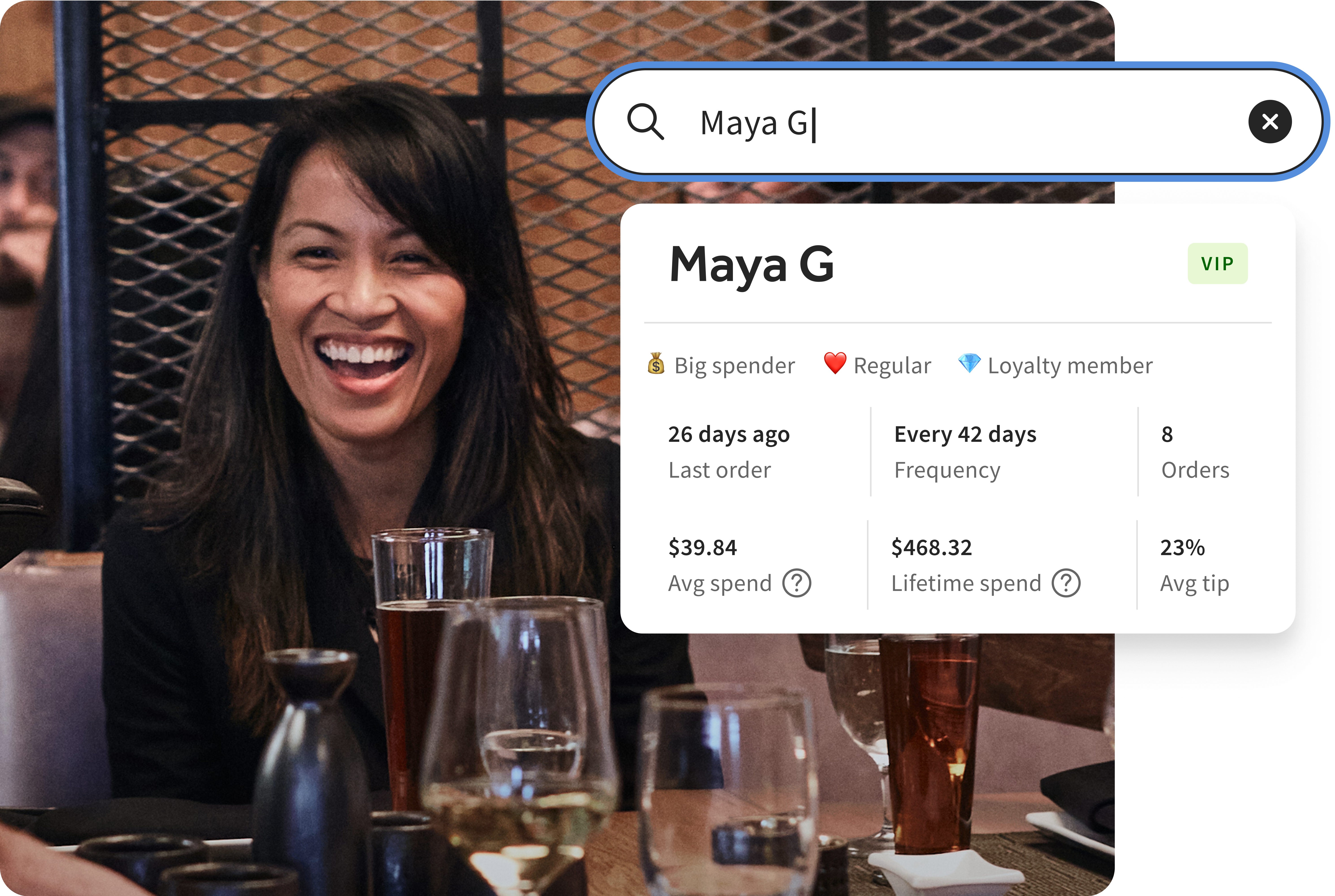
On the flip side, only 67% of guests ages 45–54 said the same. That number drops to 54% for those 55 and older. Just don’t forget! It’s a half-sweet vanilla latte, dressing on the side, and absolutely no onions. Easy way to remember this? With Toast Tables, you can anticipate guests’ needs with preferences, special occasions, and VIP tagging. Learn more here.
18% of respondents would be less likely to return to a restaurant if they forget their preferences
Remembering a guest’s preferences doesn’t just enhance the experience; it can affect whether they choose to return at all. While 44% of respondents say they’d still come back even if a restaurant forgot their preferences, 18% said they’d be less likely to return if they were treated like a first-time guest after multiple visits. Another 38% felt neutral.
Although 18% may not sound huge, for certain groups, the expectations are higher: 21% of men said they’d be less likely to return under those circumstances, compared to 15% of women. And among guests ages 25–34, a key demographic for many restaurants, 21% also said being forgotten could make them reconsider returning.
So yes, remembering repeat guests can be difficult, but forgetting preferences might cost you their next visit.
Why regulars matter more than ever
Regulars are more than just repeat customers. They’re the familiar faces that make restaurants feel like community spaces. For guests, being recognized can elevate their dining experience. For staff, those relationships offer a sense of connection that can brighten even the toughest shifts. In a fast-paced, high-turnover industry, those small, steady moments of recognition and care go a long way.
The regular-guest relationship is a reminder of what hospitality is all about: making people feel seen, valued, and at home. And in 2025, that might just be the most important thing a restaurant can offer.


Methodology
Toast conducted a blind survey of 850 U.S. adults ages 18+ on this topic on July 16, 2025. Respondents were not made aware that Toast was fielding the study. Using a standard margin of error calculation, at a confidence interval of 95%, the margin of error on average is +/- 3-5%.
DISCLAIMER: This information is provided for general informational purposes only, and publication does not constitute an endorsement. Toast does not warrant the accuracy or completeness of any information, text, graphics, links, or other items contained within this content. Toast does not guarantee you will achieve any specific results if you follow any advice herein. It may be advisable for you to consult with a professional such as a lawyer, accountant, or business advisor for advice specific to your situation.
 Trending