
Small Business Management: Essential Strategies for Retail Success in 2025
Master small business management in retail with proven strategies for operations, staff training, inventory control, and customer service to drive growth and profitability in 2025.
Aislinn CokerAuthor
 RESOURCE
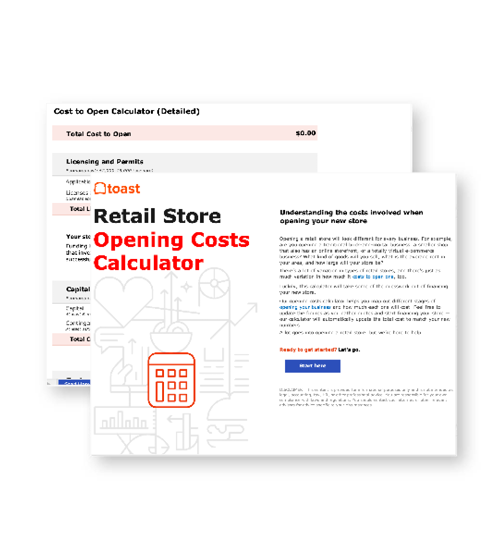
 Retail Store Opening Costs Calculator
This free calculator lays out some of the fundamental financial costs of opening a retail store, so you can start planning and bring your dream business to life.
Get Free Download | Built for Restaurants
In 2025, U.S. retail sales are forecasted to grow 2.7% to 3.7%, reaching between $5.42 trillion and $5.48 trillion, even amid economic uncertainty. Small businesses make up nearly 99.9% of all U.S. businesses and provide employment for about 45.9% of the private‐sector workforce. For small retailers aiming to profit, success in 2025 won’t come from chance — it will depend on how well they manage operations, staff, inventory, and customer experience. Mastering these core principles is essential not only for growth but for surviving competitive pressures, tightening margins, and consumer expectations that are more demanding than ever.
Key takeaways
Streamline operations with agile planning, automation, and POS systems to boost efficiency and cut costs.
Invest in staff training and retention to lower turnover, improve sales performance, and strengthen customer service.
Leverage technology and data analytics for smarter inventory control, financial tracking, and customer insights.
Prioritize customer experience through omnichannel strategies, personalized service, and responsive feedback systems.
Retail Store Opening Costs Calculator
This free calculator lays out some of the fundamental financial costs of opening a retail store, so you can start planning and bring your dream business to life.

Operations management fundamentals
Retail operations management encompasses all activities that impact customer experience and business profitability, from inventory control to staff scheduling.
Streamline daily operations
Modern retail management involves overseeing inventory, human resources, sales, order fulfillment, store operations, warehouse management, supplier relations, and customer service.
Effective operations management requires structured approaches to scheduling, inventory turnover, and quality control. Sixty-one percent of medium-sized businesses are exploring automation to streamline business processes, reducing manual workload while improving accuracy.
Implement agile planning strategies
Traditional business strategy planning might not be as effective in today's fast-paced market. Agile planning focuses on flexibility and adaptation to changing customer needs and market conditions. Amazon exercises agile planning by making customer obsession a company-wide responsibility, not limiting it to specific departments. This approach maintains responsiveness and prevents organizational stagnation.
Optimize resource allocation
Robust ERP (Enterprise Resource Planning) software is instrumental in optimizing resource allocation by streamlining operations, managing inventory efficiently, and enabling data-driven decisions. Automation reduces manual effort while freeing resources for strategic initiatives.
Staff management and training
Human resources management represents one of the most critical aspects of retail success, with employee performance directly impacting customer satisfaction and sales.
Address staffing challenges
Two-thirds of retail executives plan moderate-to-major investments in workforce hiring, retention, and future-readiness in 2025.Labor shortages could continue to disrupt 36% of retail operations into 2025. High employee turnover rates add significant challenges to retail management, requiring constant hiring and training. Retail turnover reached 60% in July 2025, costing businesses around $19 billion annually to replace staff.
Recent surveys highlight the growing pressure on small retailers in particular. The Q3 2023 Small Business Index found that 56% of small businesses struggle to keep up with employees’ salary expectations, while many also report difficulty filling open roles.
Capterra, a respected software review and research platform, notes that small and midsize businesses (SMBs) — which typically employ up to 1,000 people — operate with much smaller margins than big-box companies. As they explained, “It’s harder for mom-and-pop retailers to compete for workers against Fortune-500 counterparts that advertise attractive pay and benefits, let alone weather the costs of attrition in the first place.”
Implement effective training programs
Companies with strong training programs retain 23% more employees and improve sales performance by 30%. Approximately 91% of employees want personalized and relevant training plans. Implement microlearning approaches with lessons under five minutes that employees can complete between tasks. Mobile-first training allows staff to access materials from phones without requiring classroom sessions.
Develop essential management skills
Retail managers need multitasking abilities to handle diverse responsibilities simultaneously. Less than 27% of managers have between 5 and 9 years of experience, and 26% have between 10 and 19 years, highlighting the need for continuous skill development.
Key management areas include human resources oversight, inventory planning, brand management, customer service supervision, and financial operations. Regular training helps managers stay current with industry changes and technology updates.
Inventory and supply chain management
Effective inventory management prevents stockouts while minimizing carrying costs, directly impacting profitability and customer satisfaction.
Optimize inventory levels
AI-driven inventory forecasting tools help optimize stock levels and meet customer demands through pattern analysis and real-time adjustments based on trends and customer behavior. Large retailers are already seeing results from these tools. Target introduced its Inventory Ledger system, which now covers more than 40% of its assortment. The AI-driven platform helps forecast demand, identify misplaced stock, and detect potential out-of-stock issues before they happen, keeping products available and customers satisfied.
Implement smart procurement processes
Develop structured supplier relationships and automated reordering based on sales patterns and demand forecasting. Large retailers used AI during the 2024 holiday season to forecast product demand and prevent stockouts. Regular inventory audits and cycle counts help maintain accuracy while identifying shrinkage, damaged goods, and discrepancies in recorded versus actual stock levels.
Hardy’s Health Stores, for example, adopted RPM’s software to connect their POS with inventory tools, automating forecast orders from over 100 suppliers. This streamlined their procurement process, reduced inefficiencies, and helped keep stock levels accurate across locations.
Manage supply chain disruptions
Over 90% of firms experienced financial or operational challenges in the previous year, emphasizing the need for resilient supply chain management. Diversify supplier networks and build contingency plans for disruptions. Maintain safety stock for critical items while balancing carrying costs against stockout risks.
Customer experience and service management
Customer experience management drives loyalty and repeat business, with service quality directly impacting revenue growth.
Prioritize customer service excellence
Eighty-six percent of buyers will pay more for great customer experiences, making service quality a competitive differentiator. Sixty-five percent of company revenue comes from repeat business, emphasizing the importance of customer retention. Train staff to provide knowledgeable product guidance, handle complaints effectively, and create positive interactions that encourage return visits and referrals.
Implement omnichannel strategies
Seventy-six percent of consumers use 3+ social media channels and 2+ devices to shop, requiring seamless integration across platforms. Medium-sized retailers using omnichannel strategies report 30% increases in customer lifetime value. Ensure consistent pricing, inventory visibility, and service standards across online and offline channels.
Large retailers like Target, Walmart, and Best Buy have adopted ship-from-store fulfillment models, turning their physical locations into mini distribution hubs. This approach speeds up delivery, lowers fulfillment costs, and allows customers to receive products faster — a clear example of how omnichannel strategies improve both efficiency and customer satisfaction.
Manage customer feedback systems
Establish structured processes for collecting, analyzing, and responding to customer feedback. Use insights to identify improvement opportunities and recognize successful service strategies. Monitor online reviews, in-store feedback, and post-purchase surveys to understand customer satisfaction levels and address issues promptly.
Financial management and performance tracking
Sound financial management provides the foundation for sustainable growth while ensuring operational stability.
Monitor key performance indicators
Track essential metrics including sales per square foot, inventory turnover, gross margins, labor costs as a percentage of sales, and customer acquisition costs.Regular financial analysis helps identify trends, seasonal patterns, and opportunities for improvement in pricing, cost control, and operational efficiency.
Manage cash flow effectively
Over 90% of businesses had financial or operational challenges the previous year, with cash flow management being critical for survival. Plan for seasonal fluctuations, unexpected expenses, and growth investments. Maintain adequate working capital while optimizing accounts receivable collection and supplier payment terms. Consider financing options for technology upgrades and expansion opportunities.
For example, Walmart has publicly emphasized how its strong cash flow allows the company to maintain price competitiveness and invest in new initiatives even during inflationary periods. By closely managing supplier terms, labor costs, and operational efficiency, Walmart has been able to sustain growth while other retailers struggled with liquidity challenges. Small retailers can apply the same principle at a scaled level — prioritizing steady cash flow and disciplined expense management to weather uncertainty.
Control operational costs
Identify areas for cost reduction without compromising customer experience or service quality. Retailers implementing automation can reduce costs while improving productivity. Regular expense analysis helps optimize spending on inventory, labor, marketing, and overhead while maintaining profitability targets.
Technology adoption and digital transformation
Modern retail management requires embracing technology to improve efficiency, customer experience, and competitive positioning.
Implement comprehensive POS systems
Modern POS systems handle more than payment processing, providing customer data tracking, promotion management, and loyalty program support from a single dashboard. Toast's POS platform integrates all business operations for unified data management.
Cloud-based systems enable real-time access to sales data, inventory levels, and performance metrics from any location, supporting better management decisions.
Leverage data analytics
AI-driven analytics provides retailers with powerful tools to support business goals through insights about operations and customers for data-driven decision making. Use analytics to optimize pricing, forecast demand, identify customer preferences, and track employee performance for continuous improvement.
Automate routine processes
Automation enables retailers to improve order tracking and better manage staff schedules while reducing manual errors and freeing time for strategic activities. Implement automated inventory reordering, staff scheduling optimization, and customer communication systems to improve operational efficiency.
Old Navy is putting this into practice with its RADAR system, which combines RFID, AI, and computer vision across 1,200 stores. The technology delivers real-time inventory tracking, faster restocks, and fewer out-of-stock situations, showing how automation can directly improve efficiency and customer satisfaction.
Risk management and business continuity
Effective risk management protects business operations while ensuring continuity during disruptions.
Address security challenges
Organized retail crime presents unique security challenges requiring robust security measures, including surveillance systems, trained personnel, and loss prevention protocols. Implement cybersecurity measures to protect customer data and business information, with regular staff training on security best practices and compliance requirements.
Plan for operational disruptions
Develop contingency plans for supply chain interruptions, staff shortages, natural disasters, and economic downturns. Cross-train employees to handle multiple responsibilities during staffing challenges. Maintain business insurance coverage and emergency fund reserves to handle unexpected expenses and operational disruptions.
Monitor competitive threats
Stay informed about competitor activities, market changes, and industry trends that could impact business performance. Develop strategies to differentiate your offerings and maintain competitive advantages. Regular market analysis helps identify opportunities and threats while informing strategic planning and resource allocation decisions.
Communication and team leadership
Effective communication systems ensure coordinated operations and aligned team performance toward business objectives.
Establish clear communication channels
Managing internal communications can pose challenges, given that employees often work part-time on different schedules. Implement structured communication plans outlining information dissemination methods. Use digital collaboration platforms and mobile messaging apps for real-time policy updates and important information sharing across all staff members.
Foster team engagement
Create positive work environments that encourage employee retention and performance. Companies that improve employee engagement see better customer satisfaction and reduced turnover. Regular team meetings, performance feedback sessions, and recognition programs help maintain staff motivation and alignment with business goals.
Final thoughts
Managing a small retail business in 2025 requires more than just keeping the lights on — it demands agility, data-driven decision-making, and a relentless focus on customer experience. By streamlining operations, investing in staff training, embracing technology, and preparing for disruptions, retailers can not only survive but thrive in a highly competitive landscape.
The businesses that will stand out are those that combine smart management practices with human connection — leveraging tools like automation and analytics without losing sight of what matters most: delivering value and building loyalty. With the right strategies in place, small retailers can turn today’s challenges into tomorrow’s growth opportunities.
FAQ
What are the biggest challenges in retail management?
Major challenges include high employee turnover, labor shortages, inventory management complexity, and maintaining customer satisfaction in competitive markets.
How can small retailers compete with larger businesses?
Focus on personalized customer service, local community engagement, agile decision-making, and omnichannel strategies. Leverage technology like Toast's integrated systems for operational efficiency.
What technology investments should retail managers prioritize?
Essential investments include comprehensive POS systems, inventory management software, customer analytics tools, and staff training platforms.
How important is staff training in retail management?
Staff training is critical to retail success. Companies with strong training programs retain 23% more employees and see 30% sales performance improvements. Implement mobile-first microlearning and role-specific training programs for best results.
What financial metrics should retail managers track regularly?
Monitor sales per square foot, inventory turnover, gross margins, labor cost percentages, customer acquisition costs, and cash flow. Toast's reporting tools provide a comprehensive dashboard for tracking data-driven decisions.
Is this article helpful?
DISCLAIMER: This information is provided for general informational purposes only, and publication does not constitute an endorsement. Toast does not warrant the accuracy or completeness of any information, text, graphics, links, or other items contained within this content. Toast does not guarantee you will achieve any specific results if you follow any advice herein. It may be advisable for you to consult with a professional such as a lawyer, accountant, or business advisor for advice specific to your situation.
 Trending


Subscribe to On the line
Sign up to get industry intel, advice, tools, and honest takes from real people tackling their restaurants’ greatest challenges.
By submitting, you agree to receive marketing emails from Toast. We’ll handle your info according to our privacy statement. Additional information for California residents available here.