
Retail Store Operations: 7 Key Areas for Effective Management
Optimize your retail store operations with essential strategies for success. Explore tips to improve efficiency and create a better customer experience.
Aiden ToborAuthor
 RESOURCE
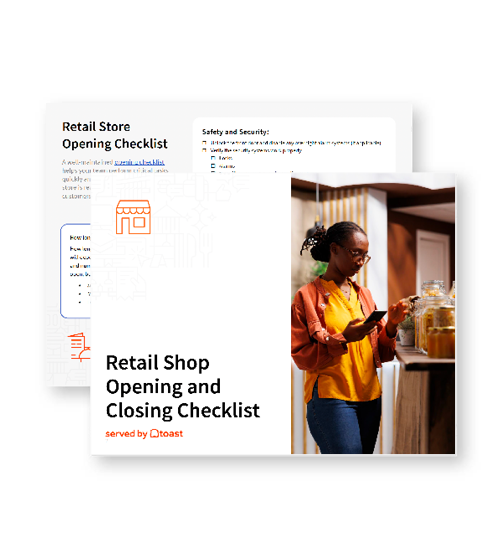
 Retail Store Opening and Closing Checklist
Use this free PDF checklist to set your staff up for success, every shift.
Get Free Download | Built for Restaurants
Whether you’re opening a retail store for the first time or managing a high-traffic retail chain, smooth operations are key to profitability, customer satisfaction, and long-term success. In fact, a McKinsey report found that traditional store efficiency programs can save 5-10% in operating costs, and more comprehensive approaches can result in two to three times more savings.
In this guide, we’ll break down the essential components of retail store operations, providing actionable steps to help you optimize your business and create a seamless shopping experience for customers.
Key takeaways
Strong business planning is the foundation of efficient retail operations.
Inventory management is essential for profitability and customer satisfaction.
Technology plays a vital role in streamlining operations.
Well-trained and properly scheduled staff create a better shopping experience for customers.
Compliance and continuous process optimization are critical for long-term success.
Retail Marketing Plan
Create a marketing plan that'll drive repeat business with this customizable marketing playbook template and interactive calendar.

How to Develop a Retail Store Operations Plan
1. Business planning and performance management
A solid business planning and performance strategy is the backbone of daily retail operations. Setting clear objectives, tracking key performance indicators (KPIs), and optimizing workflows ensure your store runs efficiently.
Define your operational model
Your operational model will differ depending on several factors, including your retail store’s concept, size, product selection, and customer experience. Ask yourself:
Are you a specialty retailer focused on curated product selections?
Do you operate a high-volume discount store with frequent inventory turnover?
Is your store part of a franchise that follows strict corporate guidelines?
Each model requires different staffing, inventory, and sales strategies, so be sure to outline all these details in a comprehensive retail store business plan.
Set clear performance goals
To ensure your retail store is on the right track, it’s essential to set set daily, weekly, and long-term operational goals such as:
Reducing checkout wait times.
Increasing inventory turnover rates.
Improving customer service response times.
Optimizing staffing schedules to reduce labor costs.
Use KPIs like sales per square foot, basket size, and customer retention rates to measure success and refine processes over time.
Develop a financial roadmap for operations
Financial planning goes beyond just counting up your profits—it ensures your store operates smoothly and remains financially stable. Key areas to focus on include.
Budgeting for expenses (rent, utilities, labor, inventory, and technology).
Cash flow forecasting to prevent shortages.
Optimizing pricing strategies to balance profitability and demand.
Negotiating supplier contracts for better bulk pricing and terms.
Be sure to maintain an emergency fund to cover unexpected costs like equipment repairs, supply chain disruptions, or economic downturns.
Benchmark operational efficiency against competitors
As a retailer, you should continuously analyze market trends and competitor strategies. Regular competitor analysis helps identify gaps in your operations and areas for improvement. Look at:
Competitor pricing models and promotions.
Industry best practices for staffing and inventory management.
Automation tools competitors use to streamline workflows.
2. Inventory management
Effective inventory management ensures products are available when customers need them while minimizing waste, excess stock, and financial losses from shrinkage.
Track inventory in real time
Manually tracking inventory is inefficient and error-prone. Instead, implement a POS system with real-time inventory tracking to:
Monitor stock levels automatically and prevent overselling.
Reduce waste and storage costs by optimizing reorder quantities.
Identify seasonal and high-demand items to adjust stock accordingly.
A well-integrated POS system prevents stock disruptions and financial losses caused by human error.
Manage seasonal and perishable inventory
Retail sales fluctuate based on seasons, trends, and shopping behaviors. Without proper planning, your store risks overstocking during slow seasons or understocking during peak times. Keep these tips in mind to effectively manage seasonal inventory:
Stock strategically for holiday seasons and high-traffic events.
Clear seasonal inventory with discounts before demand drops.
Rotate perishable stock to prevent spoilage and reduce waste.
For example, an outdoor gear store should stock up on camping essentials in early spring but reduce inventory in winter to avoid overstocking.
Prevent shrinkage with loss prevention tactics
Inventory shrinkage—caused by theft, fraud, and mismanagement—costs American retailers over $60 billion each year. In fact, 70% of retailers report a shrinkage rate higher than 1%, and 18% report a shrinkage rate greater than 3%.
Fortunately, by combining technology with security measures, you can protect your inventory and bottom line. Keep these strategies in mind to minimize losses:
Installing surveillance cameras and monitoring high-risk areas.
Using security tags and locked displays for high-value items.
Training employees to recognize suspicious behavior.
Implementing digital inventory tracking to reduce miscounts and fraud.
Work with reliable suppliers
Strong supplier relationships keep inventory stocked and store operations running smoothly. Supply chain disruptions can throw retail operations into chaos, so ensure inventory consistency by:
Partnering with dependable vendors with short lead times.
Establishing backup suppliers in case of shortages.
Negotiating better contracts to reduce costs and improve delivery timelines.
3. Technology integration
Technology plays a crucial role in streamlining retail operations, from managing transactions to enhancing the customer experience. The right tools can reduce manual errors, improve efficiency, and create a seamless experience for both employees and customers.
Choose the right POS system
A comprehensive POS system is critical to the success of any retail store. The best POS systems can help you:
Process transactions quickly and securely.
Track real-time inventory updates to prevent stock issues.
Generate sales reports and analytics for better decision-making.
Integrate with loyalty programs to enhance customer retention.
Manage pickups
The rise of omnichannel shopping means customers expect multiple ways to receive their orders. A smooth online ordering system can:
Minimize in-store congestion and speed up order fulfillment.
Improve inventory accuracy by linking online and in-store stock levels.
Enhance customer convenience by offering flexible pickup options.
Use a POS-integrated ordering system to synchronize inventory and reduce mix-ups between online and in-store purchases.
Integrate mobile payments and self-checkout
Customers expect fast, frictionless checkout experiences, and mobile payment solutions are key to meeting this demand. Offering multiple payment options reduces checkout bottlenecks and improves customer satisfaction. Features to consider include:
Contactless payments (Apple Pay, Google Pay) for faster transactions.
Self-service kiosks to reduce wait times.
Mobile POS terminals that allow associates to assist customers anywhere in-store.
Leverage CRM tools
A Customer Relationship Management (CRM) system helps you personalize interactions and build long-term customer relationships by:
Tracking customer purchase history to create targeted promotions.
Automating loyalty programs and email campaigns.
Gathering customer feedback to refine product offerings and service
By integrating CRM data with a POS system, you can tailor your marketing strategies and increase customer retention.
Enhance the e-commerce experience
Even brick-and-mortar retailers can benefit from digital storefronts. Seamlessly connecting in-store and online experiences increases sales opportunities and meets evolving consumer expectations. As Niki Hall, Chief Marketing Officer of Five9, said:
“Change your view that the in-store experience is separate from the online one. Most brands have both to meet different customer needs and to expand their reach, but treating them as siloed channels is setting yourself up for failure. Merging the best of both and allowing customers to be co-architects of their CX builds trust and repeat business. It humanizes experiences, transcending channels.”
A strong e-commerce strategy includes:
Offering online ordering with the option of in-store pickup or delivery.
Ensuring website inventory matches store stock.
Using chatbots or live support for customer inquiries.
Purchase Order Template
Use this template to create standardized purchase orders for requesting goods or services from vendors.
4. Staff management
Efficient staffing ensures great customer service, minimal labor costs, and an organized store environment.
Develop Standard Operating Procedures (SOPs)
Creating Standard Operating Procedures (SOPs) minimizes confusion, speeds up training, and ensures employees follow best practices. Your SOPs should cover:
Cash handling and transaction processes to prevent fraud and errors.
Opening checklists and closing procedures to streamline daily operations.
Inventory restocking guidelines to ensure efficient stock management.
Hire and train employees
Prioritize hiring adaptable employees who can manage various operational duties rather than limiting roles to just sales or stocking. From there, provide training beyond basic sales techniques to enhance operational efficiency. Best practices include:
Cross-training staff to handle multiple tasks, from inventory management to customer service.
Providing hands-on POS training to minimize transaction errors.
Educating employees on loss prevention and security protocols.
Encouraging sales staff to cross-selling (suggest complementary items) and upsell (offering premium alternatives).
Keep this advice from Kate Tornone, Lead Editor of HR Dive, in mind:
“Reskilling workers can be a key way to manage costs and fill jobs… Whether via company-led training sessions or on-the-job training by other workers, cross-training initiatives also can be a more predictable model than recruiting, the organizations concluded… Incentives such as shift premiums have long proved useful for finding coverage for undesirable shifts. Spirit Halloween, for example, reported using pay incentives for holiday hiring this year. Notably, however, such benefits may require a thoughtful approach that takes wage and hour compliance into consideration… Other retailers, like Target and Dick’s Sporting Goods, have touted employee discounts and early access to wages.”
Optimize scheduling
An optimized staffing schedule ensures your store has the right number of employees working at peak times without overstaffing during slow periods. By aligning staff levels with customer demand, you can maximize efficiency and minimize unnecessary labor costs. Key strategies include:
Using POS data to predict store traffic and staffing needs.
Implementing on-call shifts for busy sales periods.
Analyzing sales per labor hour to monitor performance.
Improve employee retention
High turnover rates in retail can disrupt operations. By investing in employee growth and well-being, you can reduce turnover and improve overall store efficiency. To retain staff and maintain a stable, experienced workforce, be sure to:
Offer competitive wages and performance-based incentives.
Provide career development opportunities such as leadership training.
Foster a positive store culture with recognition programs.
5. Store layout and merchandising
A well-planned store layout and merchandising strategy guides customers through your store, encourages browsing, and maximizes sales opportunities.
Optimize store layout
The way you arrange your store directly impacts the customer experience and purchasing behavior. To create a smooth flow, you should:
Position high-demand items strategically (for example, place essentials near the back to encourage customers to browse).
Use clear signage and wide aisles for easy navigation, ensuring accessibility for all customers.
Create defined sections for different product categories to minimize confusion.
Leverage product placement
By leveraging data-driven merchandising decisions, your retail business can optimize product placement to maximize conversions. In fact, “data driven organizations are 23 times more likely to acquire customers, six times as likely to retain those customers, and 19 times as likely to be profitable.”
Planograms (visual representations of product placement) help ensure merchandising consistency and improve sales. Best practices include:
Placing impulse-buy items near checkout counters to increase last-minute purchases.
Grouping complementary products together (for instance, placing coffee accessories near coffee beans).
Using eye-level shelving for best-selling products—what’s most visible sells the most.
Implement visual merchandising techniques
A well-designed in-store experience influences purchase decisions and boosts customer engagement. Effective visual merchandising includes:
Using color psychology to evoke certain emotions (e.g., blue for trust, red for urgency).
Creating seasonal or themed displays to keep the store feeling fresh and exciting.
Incorporating lighting and music to match the store’s brand identity and atmosphere.
Conduct in-store promotions
With the right promotions, you can generate excitement, strengthen customer loyalty, drive more foot traffic, and incentivize purchases. Ideas include:
Flash sales and limited-time discounts to create urgency.
In-store demonstrations or product sampling to boost customer interaction.
Loyalty member exclusives to reward repeat customers.
Promotions are also a great way to reduce excess inventory, even if deeper discounts lead to a short-term impact on profit margins. For example, Jeff Owen, CEO of Dollar General, said in Fall 2023:
“We are strategically accelerating the rightsizing of our inventory position by expanding promotional markdowns, primarily in our non-consumable products. While we expect this to result in an operating profit headwind of approximately $95 million in the back half of the year, we believe it will drive traffic and also more quickly reduce excess inventory. We believe this rightsizing supports our operating priority of enhancing our position as a low-cost operator and that it will accelerate improvement in a number of areas, including store and supply chain efficiencies as well as shrink, damages and cash flow.”
6. Customer service and experience
Outstanding customer service is what sets a good retail store apart from a great one. Positive interactions build customer loyalty, increase word-of-mouth marketing, and drive repeat business.
Handle customer inquiries and complaints
Customer service isn’t just about selling—it’s also about resolving issues efficiently. After all, a well-handled complaint can turn an unhappy customer into a loyal one. Best practices for handling complaints include:
Listening actively and showing empathy to frustrated customers.
Training employees to provide quick and consistent resolutions.
Empowering staff to offer solutions—like returns, exchanges, or discounts—without needing managerial approval for minor issues.
Create an engaging in-store atmosphere
An inviting store atmosphere improves dwell time and enhances the overall customer experience. Consider these retail store design ideas to create the right atmosphere:
Ambient lighting and music that match the brand vibe.
Comfortable seating areas to encourage extended browsing.
Interactive elements (like product demos or touchscreens) to increase engagement.
7. Compliance and legal considerations
Navigating legal and regulatory requirements is critical for operating smoothly, as well as avoiding fines, lawsuits, or disruptions. Compliance involves everything from labor laws and safety regulations to vendor contracts and tax obligations.
Adhere to labor laws and safety regulations
Comply with all employment laws to ensure the fair treatment of your workers and avoid legal issues, and stay updated on local labor laws to avoid costly violations. Key areas include:
Minimum wage and overtime laws: Pay employees correctly based on federal and state requirements.
Break and scheduling laws: Follow state-mandated meal and rest break policies.
Anti-discrimination and workplace safety: Create an inclusive environment and ensure compliance with OSHA standards.
Handle taxes and business licenses
Operating a retail store requires proper registration, tax payments, and licensing. Common compliance areas include:
Sales tax collection and reporting: Ensure accurate tax collection for each transaction.
Business licenses and permits: Meet local, state, and federal licensing requirements.
Payroll tax compliance: Accurately withhold and report employee wages.
Fortunately, your retail store can automate tax calculations with a POS system that tracks sales tax and payroll.
Manage vendor and supplier contracts
Since your retail business will likely work with multiple vendors, contract management is crucial for protecting business interests, reducing financial risk, and ensuring a stable supply chain. Best practices include:
Reviewing supplier terms and conditions to ensure fair pricing and timely deliveries.
Negotiating flexible contracts that allow adjustments based on demand.
Tracking vendor performance to identify issues with delayed or damaged shipments.
Retail store success starts with strong operations
Running a retail store involves a lot of moving parts, but with the right approach, you can streamline operations and create a great experience for your customers and employees.
Remember, retail success isn’t just about what you sell—it’s about how you run your store. By putting these operational strategies into action, you can build a profitable business where customers love to shop and employees love to work. Keep refining, stay adaptable, and watch your store thrive!
Retail Store Opening Costs Calculator
This free calculator lays out some of the fundamental financial costs of opening a retail store, so you can start planning and bring your dream business to life.
Press Kit Template
Use this customizable template to craft a polished one-pager that showcases your business’s key details. It condenses essential information into a concise, visually appealing format that’s quick to read and easy to share.
Refund Policy Template
Use this free template to quickly outline your refund terms, reduce customer confusion, and handle returns or cancellations with confidence.
Is this article helpful?
DISCLAIMER: This information is provided for general informational purposes only, and publication does not constitute an endorsement. Toast does not warrant the accuracy or completeness of any information, text, graphics, links, or other items contained within this content. Toast does not guarantee you will achieve any specific results if you follow any advice herein. It may be advisable for you to consult with a professional such as a lawyer, accountant, or business advisor for advice specific to your situation.
 Trending
Subscribe to On the line
Sign up to get industry intel, advice, tools, and honest takes from real people tackling their restaurants’ greatest challenges.
By submitting, you agree to receive marketing emails from Toast. We’ll handle your info according to our privacy statement. Additional information for California residents available here.