
Retail Branding: 10 Steps for a Stand-Out Customer Experience
Retail branding turns stores into experiences. Discover how to create a brand that customers remember, love, and keep coming back to.

Jim McCormickAuthor
 RESOURCE
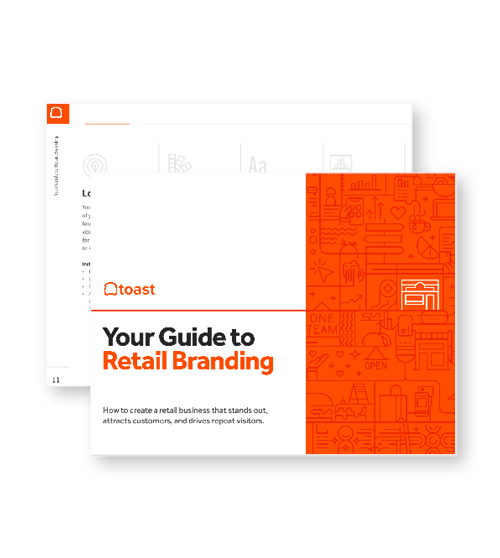
 Retail Branding Guide
This Retail Branding Guide will give you tips on how to create a brand that stands out, attracts customers, and drives repeat visits.
Get Free Download | Built for Restaurants
Walk into your favorite store — or even click onto your favorite online shop — and you’ll notice something right away: it feels different. Maybe it’s the music, the colors, the packaging, or even how the staff greets you. That feeling is retail branding at work.
More than just logos or marketing campaigns, it’s the full experience you create for your customers — the sights, sounds, and stories that make your brand memorable. When done right, it’s the difference between a shop that’s forgettable and one people can’t wait to come back to.
In this guide, we’ll walk through 10 practical steps to help you build (or refresh) a retail brand that clicks with customers — in-store, online, and everywhere in between.
Key takeaways
Retail branding is about the whole experience — from visuals and packaging to staff interactions and online touchpoints.
Knowing your customer is the foundation; without it, your brand risks feeling generic.
A clear brand promise keeps you focused and helps customers know what to expect every time.
Consistency across channels — in-store, online, and social — is what makes your brand stick in people’s minds.
Strong retail brands evolve with their customers, learning and refining instead of staying static.
1. Know your customer
Before you design a logo, pick colors, or brainstorm taglines, you need to know who you’re trying to reach. Retail branding starts with your customer — their needs, habits, and expectations. If you don’t know them well, your brand risks feeling generic instead of memorable.
When you understand your customers, you can tailor everything — from your visuals to your messaging — so it speaks directly to them. Ask yourself:
Who are they? (age, lifestyle, shopping habits)
What motivates them? (deals, quality, exclusivity, convenience)
Where do they shop? (in-store, online, or both)
How do they want to feel when interacting with your brand?
The clearer this picture, the easier it is to build a brand that feels personal and relevant — whether someone’s walking through your store or scrolling your site.
2. Take stock of where you are
Before you can build the brand you want, you need a clear picture of the brand you already have. Think of this as a quick audit: how does your store, website, and packaging look and feel right now? Does it match the impression you want to make — or is it sending mixed signals?
Competitor brands can also highlight both opportunities to stand out and pitfalls to avoid. Start by asking:
What’s the first impression customers get from your store, website, or social media?
Does your current branding feel consistent across touchpoints (in-store, online, packaging)?
What do reviews or customer feedback say about your brand experience?
Which competitors do customers love, and why?
Where do you see gaps in the market that your brand could fill?
For JCPenney’s Brand CEO Michelle Wlazlo, this kind of self-assessment is exactly what’s guiding the retailer’s evolution. Wlazlo explained:
“Once customers realize we have a petites business, and we offer so much choice, every one of our brands comes in petites, and they see the great fit and no alterations and all of that, they become loyal for life.”
By taking stock of where they are — recognizing both what they already do well and where customer awareness is lacking — JCPenney is expanding its appeal beyond its long-standing base to new types of shoppers. That’s the power of an honest brand audit: it highlights untapped strengths that can set you apart.
Press Kit Template
Use this customizable template to craft a polished one-pager that showcases your business’s key details. It condenses essential information into a concise, visually appealing format that’s quick to read and easy to share.

3. Pin down your promise
At the heart of every strong retail brand is a clear promise — the one thing customers know they can always count on when they shop with you. It’s not about being everything to everyone; it’s about defining what makes you worth choosing.
Your promise should be simple, believable, and consistent. It’s what keeps customers coming back, whether they’re in your store or browsing your site at midnight. Ask yourself:
What’s the top reason someone shops with us instead of a competitor?
What feeling do we want every customer to walk away with?
If we had to describe our brand in one sentence, what would it be?
Can we deliver on this promise every single time?
Take TOMS, for example. From the start, their “One for One” promise made it crystal clear what customers could expect: every purchase had a social impact. That simple, purpose-driven pledge set them apart in a crowded shoe market, built deep emotional loyalty, and became the filter for every decision they made — from marketing campaigns to product launches.
When you nail your promise, it becomes the filter for every decision — from marketing campaigns to hiring to customer service.
4. Tell your story
Facts and features are fine, but stories are what stick. A strong retail brand doesn’t just say what it sells — it shares why it exists. Your story adds depth and emotion, helping customers connect with you on more than just price or product.
This doesn’t have to be long or complicated. It’s simply the thread that ties together your values, your history, and the experience you want to create. Think about:
Why did you start your business? (what problem were you solving?)
What values guide your decisions? (sustainability, service, innovation, community)
How do you want customers to feel when they hear about your brand?
What makes your journey different from competitors’?
Martha Stewart built an empire on this idea from day one. Her first book, Entertaining, became a hit because it was more than just recipes. She recalled:
“It was really three books in one. My publisher wanted it to be an ordinary cookbook… I wanted it to be highly illustrated and tell a story as well as give the best possible recipes. It became a landmark book.”
That commitment to storytelling became the backbone of her brand — proving that content and story aren’t extras, they’re the foundation. Told consistently — across your website, packaging, signage, and social media — your story gives shoppers a reason to believe in your brand and become loyal advocates.
5. Create your look and feel
The more cohesive your visuals, the easier it is for customers to recognize and trust you — no matter where they encounter your brand. Your look and feel should capture your personality and promise, and stay consistent across every touchpoint. Key elements to define:
Logo: The signature that ties everything together.
Colors: Pick a palette that conveys mood (bold, calm, playful, luxurious).
Fonts: Typography sets tone (clean and modern vs. warm and approachable).
Imagery: Product photos, lifestyle shots, or illustrations that bring your vibe to life.
Packaging and signage: Tangible cues that carry your brand from shelves to shopping bags.
6. Bring it to life in your store
Your brand isn’t just what people see — it’s what they feel. The sign outside may get them in the door, but it’s the little details that make the experience memorable. Think about how your branding shows up in every moment, from your physical store design to your online shop. Here are some ways to bring your brand to life:
In-store vibes: Music, lighting, scents, and even uniforms set the mood.
Customer interactions: How staff greet and assist shoppers is part of your brand voice.
Packaging and bags: Send customers off with something that feels as special as the product inside.
Ecommerce touchpoints: Your website design, checkout flow, confirmation emails, and even how you ship products should all feel consistent with your brand.
7. Keep it consistent everywhere
Consistency is what turns a brand from “nice” into memorable. If customers get one vibe on Instagram, another on your website, and something totally different in your store, they’ll feel confused instead of connected.
Think of consistency as keeping one thread running through every touchpoint — so no matter where customers find you, they know exactly who you are. Here’s where to heavily focus on consistency:
Visuals: Use the same colors, fonts, and photography style across platforms.
Tone of voice: Whether you’re posting on TikTok or answering a customer email, your brand should “sound” the same.
Offers and messaging: Promos, pricing, and promises should line up in-store, online, and on social media.
Customer journey: The transition from browsing your feed to checking out in-person (or on your site) should feel seamless.
8. Train your team to live the brand
Logos and taglines matter, but your team is what truly brings your brand to life. Every “hello,” every recommendation, and every checkout moment shapes how customers feel about you. Here’s how to turn your team members into brand advocates:
Share the promise: Make sure your staff knows the one thing customers should always expect from your brand.
Give clear examples: Show what “on-brand” service looks like, whether it’s a warm greeting, speedy checkout, or thoughtful packaging.
Empower flexibility: Allow your team to make small decisions that enhance the customer experience, while still staying true to the brand.
Celebrate wins: All out moments when employees nail it. It reinforces the culture you want.
Take Trader Joe’s, for example. The company is well-known for its upbeat, knowledgeable staff who don’t just stock shelves — they chat with customers, offer product tips, and create a neighborhood-market vibe that matches the brand promise of being quirky and approachable.
Their training empowers workers to embody that fun, helpful personality, which is why so many shoppers say the staff is a huge part of why they keep coming back. When your team embodies the brand, it feels authentic and consistent — turning everyday interactions into memorable experiences.
9. Roll it out with a bang
Refreshing or launching a retail brand is a great chance to create hype. When you unveil your new look (or vibe), make it feel like an event so customers notice and lean in. Consider these ideas to make it memorable:
Announce it loud and clear: Share the news on social, email, and your website.
Highlight it in-store and online: Update signage, packaging, and, for ecommerce, refresh your site banner or homepage hero so shoppers see the change right away.
Tell the “why”: Let shoppers know what inspired the change and how it benefits them.
Build excitement: Tease sneak peeks, run contests, or invite your loyal customers to be the first to experience the “new you.”
10. Keep learning and improving
Branding isn’t a one-and-done project. As customers, markets, and trends change, your brand should adapt right along with them. Use these strategies to stay sharp:
Track your signals: Watch reviews, social comments, and sales data to see what’s resonating.
Listen to customers: Feedback in person or online often reveals small tweaks that make a big difference.
Check in regularly: Revisit your visuals, tone, and promise every year or so to make sure they still fit.
Stay flexible: Don’t be afraid to refresh or refine as your business grows.
Retail Store Opening and Closing Checklist
Use this free PDF checklist to set your staff up for success, every shift.
Brand it, tag it, bag it
Retail branding is all about creating an experience that feels consistent, memorable, and true to you. From knowing your customer to training your team and rolling out your look with confidence, every step shapes how people see (and remember) your brand.
The best brands never stand still. The key to running a successful retail store is to keep learning, evolving, and finding new ways to connect with customers — whether that’s in-store, online, or anywhere else your brand shows up.
Frequently asked questions
What’s the difference between retail branding and traditional branding?
Traditional branding focuses on the overall identity of a business — mission, logo, messaging. Retail branding takes it a step further, shaping how that identity comes to life in the shopping experience, whether in-store or online.
How much should I budget for retail branding initiatives?
There’s no one-size-fits-all number. Your budget depends on your goals — a simple refresh might only cover updated signage or a new logo, while a full rebrand could include website redesigns, store fixtures, packaging, and marketing campaigns. The key is to prioritize what has the biggest impact on your customer experience.
How long does it take to see results from retail branding efforts?
Some changes (like updated signage or packaging) can create an immediate impression. Bigger shifts — like building loyalty or shifting customer perception — usually take several months of consistent execution across touchpoints.
What’s the most important element of retail branding?
Consistency. A clear promise, carried through in visuals, tone, and customer experience, is what makes your brand memorable. Without consistency, even great design or storytelling won’t stick.
How do I measure retail branding success?
Look at both numbers and feedback. Metrics like foot traffic, ecommerce conversion rates, repeat purchases, and social engagement can show impact, while reviews and customer surveys reveal whether your brand feels clear, consistent, and relevant.


Retail Marketing Plan
Create a marketing plan that'll drive repeat business with this customizable marketing playbook template and interactive calendar.
Is this article helpful?
DISCLAIMER: This information is provided for general informational purposes only, and publication does not constitute an endorsement. Toast does not warrant the accuracy or completeness of any information, text, graphics, links, or other items contained within this content. Toast does not guarantee you will achieve any specific results if you follow any advice herein. It may be advisable for you to consult with a professional such as a lawyer, accountant, or business advisor for advice specific to your situation.
 Trending

Subscribe to On the line
Sign up to get industry intel, advice, tools, and honest takes from real people tackling their restaurants’ greatest challenges.
By submitting, you agree to receive marketing emails from Toast. We’ll handle your info according to our privacy statement. Additional information for California residents available here.