Restaurant LMS: Staff Learning Management Systems Explained
Great training builds great restaurants. Explore how a restaurant LMS, or Learning Management System, can help every employee perform better.

Jim McCormickAuthor
 RESTAURANT RESOURCE
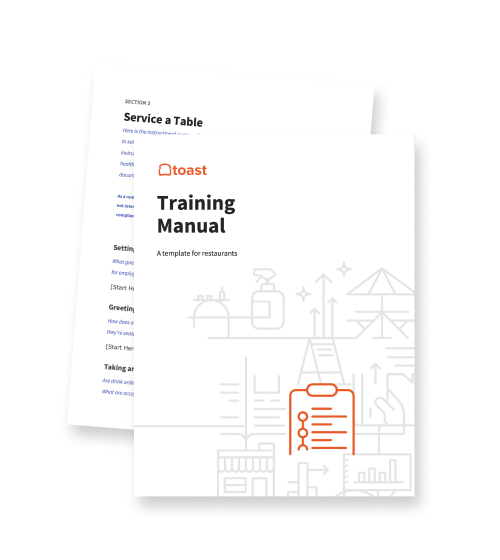
 Training Manual Template
Use this restaurant training manual template, a customizable Word Doc, to provide your staff with the rules, guidelines, and clarity they need to do their jobs efficiently.
Get Free Download | Built for Restaurants
Proper training is the backbone of every great restaurant — but keeping staff consistent, confident, and compliant can feel like a full-time job. A restaurant learning management system (LMS) streamlines that process by turning onboarding, menu updates, and safety training into one organized, trackable experience.
Today’s restaurant workforce is younger, more diverse, and increasingly mobile. As Rachael Nemeth, CEO of Opus, explains:
“Legacy training technology really set the stage for what learning management systems are today. But as we enter a new era of work, those solutions have become obsolete. They’re desktop-based, email-based, English-only, and it’s difficult for operators to build content in them.”
In this guide, you’ll learn how modern restaurant LMS platforms solve those gaps — helping your team learn faster and your restaurant run smoother across every shift.
Key takeaways
A restaurant LMS helps managers deliver consistent, trackable training across every role and location.
It saves time by turning onboarding, menu updates, and safety lessons into digital, self-paced modules.
Staff stay more engaged through interactive videos, quizzes, and mobile-friendly learning.
Managers can easily track progress, certifications, and compliance from one dashboard.
The right LMS strengthens your restaurant’s culture by helping every employee learn and grow.
Employee Satisfaction Survey Template
Use this free template to understand how your staff feels about their work environment, management, and overall experience.

What is a restaurant LMS?
A restaurant learning management system (LMS) is a digital platform that helps restaurant owners and managers train their staff efficiently and consistently. Think of it as your restaurant’s virtual training hub. An LMS lets you:
Upload or create training materials.
Assign courses to specific roles.
Track every team member’s progress from one dashboard.
Instead of repeating the same orientation sessions, managers can use videos, quizzes, and interactive lessons to teach everything from menu knowledge to POS training.
Why should restaurants use an LMS?
Training is one of the biggest challenges in the restaurant industry. High turnover, constant menu changes, and new safety regulations make it difficult to keep every team member on the same page.
Instead of relying on one-off training sessions or thick binders that go out of date, an LMS centralizes learning and keeps it consistent across the board. Here’s how it helps:
Consistency: Every employee — from the host stand to the kitchen line — gets the same training materials, no matter which location they work at.
Time savings: Managers can assign digital lessons once and focus on operations instead of repeating the same orientation speech.
Accountability: Track progress, quiz results, and certifications in one place to ensure compliance and readiness.
Engagement: Interactive videos, checklists, and gamified learning make training feel less like homework and more like growth.
Scalability: Rolling out a new menu, POS feature, or safety update? Push changes instantly across every location and role.
For example, Snooze an AM Eatery uses its Wisetail LMS to keep culture and engagement front and center across 50+ locations. New hires — affectionately called Snoozers — are welcomed through an interactive platform called The Experience, where they learn brand values, job skills, and even submit pancake recipe ideas for a “Pancake of the Week” competition.
How to choose the right restaurant LMS
Choosing the right learning management system (LMS) can feel overwhelming — but the best platforms are built to fit your restaurant’s pace, people, and priorities. Here’s what to look for when evaluating your options:
Mobile-friendly access: Your staff won’t always be at a desk. The best restaurant LMS platforms work seamlessly on phones and tablets.
POS integration: Look for systems that connect with your point of sale (POS) so new hires can train directly within the same ecosystem they’ll use on the floor.
Customizable training content: Every restaurant has its own way of doing things. A flexible LMS lets you upload your own videos, add menu-specific details, and tailor training by role or location.
Robust reporting and dashboards: Easily track who’s completed what, identify skill gaps, and generate compliance reports in just a few clicks.
Support for different learning styles: Great LMS systems blend videos, quick reads, and microlearning modules to keep training engaging and accessible for everyone.
Scalability and pricing: Choose a platform that can grow with your business — from one neighborhood café to multiple locations — without losing its personal touch.
Ultimately, the right LMS should make training feel like a natural extension of your restaurant culture — empowering your team to learn, improve, and deliver consistent hospitality every day.
How to implement an LMS in your restaurant
Rolling out a new LMS might sound technical, but it’s really about making training more efficient and empowering your team to succeed. Here’s a simple roadmap to get started:
Identify your training goals and pain points: Start by asking where your current process falls short — is it consistency, time, or engagement? Clarifying these challenges will guide which LMS features matter most.
Choose or create your core training modules: Begin with essentials like onboarding, menu knowledge, and safety protocols. Then, layer in specialized lessons — from seasonal menu rollouts to advanced service techniques.
Assign training by role: Not every employee needs the same materials. Use your LMS to tailor content for servers, cooks, bartenders, and managers so everyone learns what’s relevant to their job.
Set up progress tracking and incentives: Use built-in dashboards to track completion rates and quiz results. Consider small rewards — like a free meal or shoutout at pre-shift — to motivate your team and celebrate milestones.
Gather feedback and refine content: After the first few weeks, ask your staff what’s working and what isn’t. Update modules based on their input to keep training fresh, practical, and effective.
From rookies to rockstars with a restaurant LMS
A restaurant LMS is your team’s foundation for consistency, confidence, and growth. By turning onboarding, safety lessons, and menu updates into trackable experiences, you free your managers to focus on delivering great food and genuine hospitality.
Whether you’re running one neighborhood café or managing a growing group of locations, the right LMS helps everyone stay connected to your restaurant’s culture.
Restaurant Hiring Kit & Templates
Use these free job description, interview, and offer letter templates to improve and standardize the hiring process for your restaurant.
FAQ
How much does a restaurant LMS cost?
Most restaurant LMS platforms charge per employee or per location, with pricing that typically scales to your team size. While it’s an investment, it often pays for itself quickly — especially when you consider that employee turnover can cost restaurants hundreds of thousands each year.
Can small restaurants afford an LMS?
Yes. Many LMS providers offer flexible plans designed for independent operators. Considering that replacing just one hourly employee can cost around $5,800, even small teams can benefit from the long-term savings of consistent training.
How long does implementation take?
Most systems can be set up in a few days to a couple of weeks, depending on how much content you already have. Many platforms include templates for onboarding, safety, and compliance so you can launch quickly.
What if employees don’t have smartphones?
Most LMS platforms work on any device — including tablets or shared computers. You can set up a training station in your break room or let staff complete lessons on a manager’s tablet between shifts.
Do I need technical skills to manage an LMS?
Not at all. Modern LMS tools are built for busy restaurant operators, with drag-and-drop interfaces, preloaded courses, and simple dashboards for assigning and tracking training.
Can an LMS replace all in-person training?
No. An LMS is best used to complement hands-on training by covering the basics digitally, so managers can focus on coaching, culture, and service on the floor.


Is this article helpful?
DISCLAIMER: This information is provided for general informational purposes only, and publication does not constitute an endorsement. Toast does not warrant the accuracy or completeness of any information, text, graphics, links, or other items contained within this content. Toast does not guarantee you will achieve any specific results if you follow any advice herein. It may be advisable for you to consult with a professional such as a lawyer, accountant, or business advisor for advice specific to your situation.
 Trending


Subscribe to On the line
Sign up to get industry intel, advice, tools, and honest takes from real people tackling their restaurants’ greatest challenges.
By submitting, you agree to receive marketing emails from Toast. We’ll handle your info according to our privacy statement. Additional information for California residents available here.