
How To Lead a Restaurant Team: 11 Tips for Great Leadership
Strong leadership is key to reducing turnover and building a motivated team. Learn how to lead a restaurant team with pro tips and actionable advice.
Aiden ToborAuthor
 RESTAURANT RESOURCE
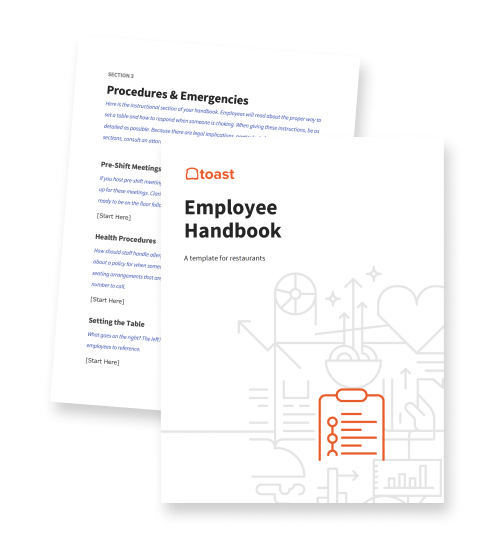
 Employee Handbook Template
Outline your restaurant’s staff policies in this customizable Word doc to help restaurant management and staff get on the same page.
Get Free Download | Built for Restaurants
Running a restaurant is tough—but keeping a team together might be the hardest part. According to the latest data, the restaurant industry sees an average turnover rate of 79.6% per year. Every time someone leaves, it costs time, money, and momentum—often thousands of dollars per employee.
Strong management can keep your restaurant running smoothly. But strong leadership? That’s what makes people want to stay, grow, and give their best. When you lead a restaurant team with clarity, consistency, and care, you create a culture people take pride in.
So how do you lead in a way that builds loyalty and strengthens your team from the inside out? Start with these tips!
Key takeaways
Clear values and consistent leadership build a culture your team wants to be part of.
Hiring for attitude and training with intention sets your staff up for long-term success.
Delegation, recognition, and empathy go further than micromanagement ever will.
Inclusive, respectful workplaces aren’t optional—they’re essential for retention and trust.
Great leaders keep learning, stay open to feedback, and model the growth they expect from others.
1. Set the tone with a clear vision and culture
Your leadership sets the standard. From day one, your team will look to you to understand what matters most—whether that’s speed, service, creativity, or consistency. A well-defined culture makes everything else easier, from hiring to handling high-stress rushes. It also boosts morale and gives your team purpose beyond the daily grind. Lydia Castro, co-founder of Acamaya, put it this way:
“I strongly believe that when upholding the culture that we have set to create at the restaurant, it’s imperative to know that we all see each other as invaluable members of the team. All our jobs are different but equally important… This has created an understanding among our staff that they all contribute to the experience of our guests.”
Lydia Castro
Co-founder of Acamaya
Define your mission and values: Let your team know what your restaurant stands for—then reinforce it during team meetings, training, and one-on-ones.
Lead with consistency: Show up the way you want others to show up. Be respectful, energetic, and dependable.
Talk about the “why”: Explain how every role contributes to the bigger picture—from dishwasher to GM.
Make culture visible: Celebrate wins, model respectful communication, and address issues quickly to maintain trust.
2. Hire and train with intention
Even the best leadership can’t succeed without the right team in place. Thoughtful hiring and structured training build the foundation for a cohesive, high-performing staff.
Hire for attitude and potential: Experience helps, but positivity, adaptability, and a strong work ethic often matter more.
Create a clear onboarding process: Don’t just throw new hires into the mix—train them step-by-step so they feel confident and supported.
Cross-train whenever possible: Helping staff understand each other’s roles encourages empathy, teamwork, and flexibility during busy shifts.
Set expectations early: Be clear about responsibilities, communication protocols, and standards from the start.
Restaurant Hiring Kit & Templates
Use these free job description, interview, and offer letter templates to improve and standardize the hiring process for your restaurant.

3. Lead by example
Your team watches more than you think. How you handle stress, treat guests, and communicate with staff will set the tone for how everyone else behaves. The best leaders don’t just give orders—they model the behaviors they want to see.
Be present and engaged: Show up on time, stay focused during service, and make yourself available when your team needs support.
Jump in when needed: Whether it’s running food, clearing tables, or handling an upset guest, nothing builds respect like rolling up your sleeves.
Stay calm under pressure: Your reactions during a rush teach your team how to handle stress—keep your cool, and they’ll follow suit.
Practice what you preach: If you expect professionalism, communication, or punctuality, demonstrate it yourself every day.
4. Communicate clearly and often
Clear, consistent communication is one of the most powerful tools a restaurant leader has. When your team knows what’s expected and feels heard, they’re more confident, focused, and collaborative.
Start with pre-shift meetings: Use quick huddles to align on daily goals, specials, and any service notes.
Encourage two-way feedback: Make space for team members to share ideas, concerns, or frustrations—then actually act on what you hear.
Be transparent about decisions: When plans change or policies shift, explain the reasoning so your team stays in the loop.
Use tools to stay connected: Leverage team messaging apps, shared schedules, or task boards to keep communication organized and accessible.
5. Delegate and empower your team
You can’t (and shouldn’t) do it all yourself. Delegating isn’t just about getting things off your plate—it’s about giving your team ownership, building trust, and creating space for leadership to grow at every level.
Assign responsibility, not just tasks: Let team members take the lead on things like inventory, social media, or organizing special events.
Trust your leads to make decisions: Give your shift managers and senior staff real authority—and back them up when they use it.
Recognize initiative: Even if mistakes happen (they will), reward team members who step up, solve problems, or offer ideas.
Check in without micromanaging: Offer support, answer questions, and give feedback—but let people find their own rhythm.
6. Manage conflict thoughtfully
Tension is inevitable in a fast-paced restaurant—but how you handle it makes all the difference. Good leaders don’t ignore problems or let things fester. They create a culture where issues are addressed quickly, respectfully, and fairly.
Address problems early: Don’t wait until a small issue becomes a big one. Step in when needed and talk things through.
Have tough conversations in private: Corrective feedback should never be a public performance. Show respect even when you’re being direct.
Stay calm and listen: Ask questions before jumping to conclusions. There’s often more to the story.
Create systems for safe feedback: Consider anonymous forms or regular one-on-ones where team members can raise concerns without fear.
7. Recognize and reward contributions
People want to feel seen. Acknowledging hard work and celebrating wins—big or small—keeps morale high and motivates your team to keep showing up strong.
Give shoutouts often: Recognize great service, quick thinking, or team support during pre-shift meetings or in team chats.
Tie praise to impact: Instead of just saying “great job,” explain how their actions improved service or helped the team.
Use small rewards strategically: A free meal, early cut, or bonus shift can go a long way in showing appreciation.
Celebrate as a team: Hit a sales goal? Crush a holiday rush? Take a moment to mark the occasion together.
SOPs Template
This template will help you create SOPs for your entire business, so you can create consistency and easily train employees.
8. Invest in growth and retention
Great team members stick around when they see a future for themselves. Supporting professional development and creating clear paths for advancement shows your team that you’re invested in their success—not just your own. Speaking to the financial and cultural impact of high turnover, Dan Sines, CEO of Traitify, put it this way:
“If you can refocus your efforts—making sure you’re providing a better work environment for these people, paying these people more, keeping them excited about the positions that they’re in, and showing them upward mobility—that cost goes way down… And it becomes something that, I think, is a real ROI generator for the business.”
Dan Sines
CEO of Traitify
Promote from within when possible: Recognizing internal talent boosts morale and builds loyalty.
Support long-term goals: Whether it’s culinary school, management training, or certification courses, help your team take the next step.
Cross-train to build skills: Offering shifts in different roles keeps things fresh and prepares team members for leadership positions.
Ask about their goals: Regular check-ins give you a chance to learn what each team member wants—and how you can help them get there.
9. Use tech to support great leadership
Technology can’t replace leadership, but it can make it a lot easier. The right tools free up your time, streamline operations, and help your team stay organized and informed.
Simplify scheduling and communication: Use tools that make it easy to swap shifts, track availability, and stay in touch.
Leverage POS data: Track sales, staff performance, and customer trends to make informed decisions—and share insights with your team.
Automate repetitive tasks: Free yourself from paperwork with tools for payroll, inventory, and tip pooling.
Focus on people, not just systems: Use technology to support your team—not micromanage them.
10. Create a safe, inclusive work environment
Today’s restaurant teams are more diverse than ever—and strong leadership means creating an environment where everyone feels safe, respected, and empowered to be themselves. Reporter Brett Anderson said:
“I’ve spent a lot of time listening to restaurant workers—mostly women—talk about the problems they’ve faced with harassment, and those phone calls aren’t stopping.”
This isn’t just about checking a box—it’s about creating proactive systems that protect your team before something goes wrong. Many employees won’t speak up unless they truly feel safe from retaliation, so it’s up to leadership to create that safety from the top down.
Set the standard for respect: Make it clear that harassment, discrimination, and toxicity won’t be tolerated.
Support mental health and well-being: Encourage breaks, reasonable scheduling, and open conversations about burnout.
Promote inclusivity: Ensure your policies, language, and team culture are welcoming to people of all backgrounds and identities.
Lead with empathy: A little understanding goes a long way—especially in high-stress environments.
11. Stay open to feedback and self-improvement
Even leaders need to grow. The best managers treat feedback not as a threat, but as a tool for getting better—and show their teams what continuous improvement looks like. Troy Hooper, CEO of Hot Palette America, puts it simply:
“Ask them. Don’t ask your executives. Don’t create a committee. Don’t sit around and pontificate… Go to the store. Work the grill for three hours, and you lean over and ask them, ‘Why do you work here? What do you like about it? What can you do better?’ Ask a lot of questions, and don’t stop asking. This is not a one-time exercise… Let them tell you what they want, what they need, what they care about, and what you can do to connect… It’s about treating them as humans.”
Troy Hooper
CEO of Hot Palette America
Ask for team feedback: Regularly check in with your team about your leadership and what’s working (or not).
Own your mistakes: When you mess up, admit it. It builds trust faster than pretending to be perfect.
Keep learning: Read, attend workshops, or talk with other restaurant leaders to sharpen your skills.
Adapt when needed: What worked last year might not work today. Stay flexible and adjust your approach when needed.
Lead your restaurant with intention, and your team will follow
Great restaurant leadership isn’t about being perfect—it’s about being present, consistent, and willing to grow alongside your team. Whether you’re managing your first shift or running a multi-unit operation, the tips above can help you build a stronger, more connected crew.
Start small. Pick one area to focus on this week, and you’ll go from manager to leader in no time. Your team will notice—and the results will show in service, morale, and retention.
Restaurant Operations Manual Template
Use this free template to easily outline all of your operating procedures and make day-to-day operations as consistent as possible.
Is this article helpful?
DISCLAIMER: This information is provided for general informational purposes only, and publication does not constitute an endorsement. Toast does not warrant the accuracy or completeness of any information, text, graphics, links, or other items contained within this content. Toast does not guarantee you will achieve any specific results if you follow any advice herein. It may be advisable for you to consult with a professional such as a lawyer, accountant, or business advisor for advice specific to your situation.
Subscribe to On the line
Sign up to get industry intel, advice, tools, and honest takes from real people tackling their restaurants’ greatest challenges.
By submitting, you agree to receive marketing emails from Toast. We’ll handle your info according to our privacy statement. Additional information for California residents available here.