How to Make a Lunch Menu Design With Examples (Free Template)
This is everything you need to know to develop, engineer, and design your perfect lunch menu.
Debbie MillerAuthor
 RESOURCE
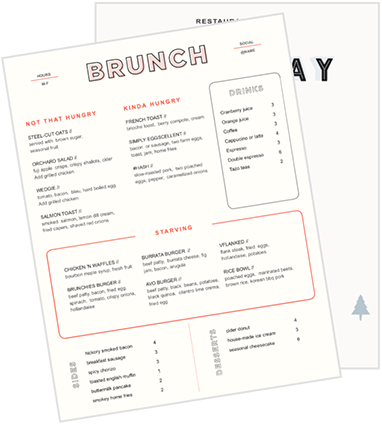
 Restaurant Menu Templates
Use these menu templates as a starting point for your menu design or to give your menus a refresh.
Get Free Download | Built for Restaurants
A well-designed lunch menu is an asset for any restaurant. It represents your brand and helps entice diners. A standout lunch menu should appeal to a broad audience, mesh well with the restaurant’s cuisine, and maximize profits wherever possible.
Let’s explore the essential components of crafting a captivating lunch menu, both in the physical space of your restaurant and online. From menu design to pricing and descriptions, we’ll provide actionable insights to create a menu that appeals to both lunch-goers and your bottom line.
TL;DR: This is everything you need to know to develop, engineer, and design your perfect lunch menu.
Restaurant Menu Templates
Use these menu templates as a starting point for your menu design or to give your menus a refresh.

The Power of Good Restaurant Menu Design
Your menu is not merely a list of dishes; it’s an extension of your brand. Your restaurant brand is an essential part of how your guests perceive your business and feel during their dining experience. Plus, when you’re an establishment that offers varied lunch and dinner options, you can really have fun and get creative with your branding.
Your lunch menu is a powerful tool that influences customer decisions and helps drive sales. Start with menu engineering – the art of strategically designing menus to increase sales and maximize profits. The goal? Harmonize costing and pricing information with your restaurant vibes and brand.
By understanding the psychology behind menu design, you can leverage the following categories to enhance your lunch menu:
Layout and Organization: Arrange your menu items in a logical and visually appealing manner, considering the flow of information and highlighting popular choices or specials.
Visual Cues: Utilize images and symbols to provide a visual representation of menu items, making it easier for children to understand and choose their meals.
Descriptive Language: Craft compelling menu descriptions that highlight the unique features and benefits of each dish, appealing to both children and their parents.
Restaurant Allergy Alert Card Template
Restaurant staff can use this allergy card template as an extra precaution to keep guests safe.
How to Make a Lunch Menu
Creating an engaging lunch menu requires attention to several key elements. Let's explore each step in the process:
Write Out All Menu Items
Start by taking note of every single item that will go on your menu. Then, home in on popular dishes that cater to more casual tastes. Think salads, sandwiches, wraps, soups, and protein or burrito bowls.
Toast's Annual Q2 Restaurant Trends Report took a look at which menu items rose and fell in popularity in quick service restaurants over one year's time. Here's what we found:
Burgers, bowls, and noodles/ramen topped the list as the most expensive items, while tacos, fries, and hot dogs were the cheapest. Tacos (+5.9%), sandwiches/wraps (+4.6%), burgers (+4.6%), and bowls (+4.6%) saw the largest increase in pricing in Q2 2024 compared to Q2 2023.
The cost of hot dogs (+1.9%), salads (+2.7%), and dumplings (+3.8%) grew the slowest in Q2 2024 compared to last year.
Hot dog sales dipped 9% in Q2 2024 compared to Q2 2023, while sales of bowls, chicken tenders, and burritos rose 1%
For additional menu insights, you can check out the full report here.
Beyond your standard list of lunch-favorite food and drinks, are there any specials or deals you can include? Certain drinks or food items that are only available during lunchtime hours? Be sure to also include a variety of options, like vegetarian or allergy-friendly choices.
Categorize Menu Options
After you’ve narrowed down what you’ll offer, it’s time to assess how to best organize everything in your menu template. Group menu items into clear categories. "Main Courses," "Sides," "Beverages," and "Desserts" are basic examples to facilitate navigation.
How will you make high-price items stand out to drive revenue? Will sides like fries be included with sandwiches, or will they be separate? Will the most expensive dishes go first? A menu engineering worksheet can be super helpful in outlining categories.
Set Menu Prices
A whopping 45% of diners go out to eat multiple times a week, with another 20% going out to eat once a week. How can you stay competitive and keep your loyal customers coming back? The key is to determine pricing that strikes a balance between affordability and profitability. Consider offering meal deals or combo options to incentivize ordering.
A restaurant menu pricing strategy is critical for operators looking to be intentional about their profitability. You must keep tabs on consumer habits and wage trends, to name a few. Craft a menu strategy that ties into navigating inflation and protecting profitability.
.
Create Menu Descriptions
When deciding how to position your offerings, put yourself in your customer’s shoes and imagine what would make dishes stand out to. Figure out how to present menu items in a way that feels aligned with your overall vibe.
The best place to start? Craft concise and appealing descriptions for each item. Use language that evokes imagination and appetite. Highlight any unique features or ingredients that set your menu apart.
For example, rather than just listing a “house salad,” say “house-grown greens with spring vegetables and a tangy lemon vinaigrette.” Use descriptors that are vibrant and that diners can “taste.” You can also be quirky with your lunch to show personality and avoid generic verbiage.
Decide on a Menu Color Scheme
Visuals also play a major role in menu design. Choose colors that resonate with children and reflect your brand identity. Consider brand colors as a starting point, then get creative from there. Chron’s The Psychology of Colors for Restaurant Designs is a great resource for exploring design options.
Design your Lunch Menu
Design a visually appealing menu layout that is easy to read and navigate. Consider using playful fonts and graphics that align with your target audience. Colors can make a huge difference and allow you to lean into your restaurant’s brand.
Not sure where to start? Check out our free menu templates for inspiration. There are lots of other tools and resources like Adobe Suite, Canva, or Pinterest that can help, too.
Think About Photos
Allowing your young customers to put a “face” to their food can be helpful. High-quality, appetizing food photos can entice diners to try new dishes.
Include images strategically and ensure they accurately represent the menu items. Dive into menu design best practices that can be helpful for any establishment looking to deliver a top-tier menu.
Choose Menu Fonts, Spacing, Composition, and Layout
You have a color scheme, a general idea of how you want your menu items to be laid out on the page, and possibly a few photos you want to include. Now, it's time to put it all together to create a restaurant menu.
Use clear and legible fonts, appropriate spacing, and a balanced composition to enhance readability and create a cohesive visual experience. Test different menu layouts to determine the most effective one.
For example, do your diners prefer a simpler menu or one with a more vibrant personality? Or a combination of both? Seek feedback from your staff, focus groups, or conduct A/B testing to optimize the design.
Proofread Your Menu
Thoroughly proofread the final menu for any errors or inconsistencies. One misplaced comma or small typo could change your guests' perception of the restaurant.
Ensure that all menu items, descriptions, and prices are accurate and up to date. According to our Restaurant Success Report, 31% of restaurateurs update their menu on a monthly basis and 24% do it seasonally. Make sure your customers aren’t ordering from outdated menus since that can lead to disappointment and a poor customer experience.
Menu Engineering Course
Take this course to make the most of your menu. Learn about menu psychology and design, managing your menu online, and adapting your menu to increase sales.
5 Great Lunch Menu Examples
Around the Clock Restaurant – Crystal Lake, IL
Around the Clock does a great job with varied formatting and showcasing menu items. They alternate the sides on which the photos are shown and show their fun personality by adding a little camera icon next to the featured items. The categories are easily distinguished which allows people to easily jump to the section for which they’re in the mood.
Urban Plates (Numerous Locations)
With various locations around the US, Urban Plates takes a distinct approach to their menu layout. First, they shift colors and layout across pages, utilizing a variety of categories and callouts (like the $10 Everyday Menu). They also play specific images more prominently off to the side rather than distribute multiple smaller images throughout. Their integration of icons dictating which items are dairy free, gluten free, and vegetarian emphasizes their commitment to everyone regardless of one’s dietary restrictions.
Poppy + Rose – Los Angeles, CA
Poppy + Rose takes a third approach to photo integration: they display photos for every item. They’re able to do this with a tasteful, even format that gives each item equal weight. The overall vibe and color scheme ties directly into the overall brand’s vibe.
Chinchilla Coffee House – Sydney, Australia
Some dining establishments go for a more concise, simple format to best integrate into their establishment’s brand and personality. For example, for this boutique, antique-inspired coffee house in southwest Sydney, designer Korolos Ibrahim wanted the menu and identity to represent the cafe’s pride in quality and sense of tradition. Inspiration from the 1800s, vintage typography, and a hint of steampunk comes out in design decisions from the chosen type of palette.
Audubon – Boston, MA
Audobon in Boston boasts another great example of a more scaled-back menu. Nevertheless, they incorporate pops of color with bolded, pointy headlines. They title their menu “Eats” rather than a traditional “Lunch” option and include several personalized messages to guests. They showcase their day-of-the-week specials subtly but directly at the bottom, too. Sometimes, a simple menu like this that’s clean and concise can help diners decide which selection they’d like more quickly.
***
Designing a captivating lunch menu goes beyond just listing food options. By incorporating effective menu engineering techniques and thoughtful design elements, you can create a menu that not only appeals to children but also represents your brand and drives profitability.
Remember to regularly evaluate and update your lunch menu based on customer feedback and changing trends. Ensure it remains fresh, exciting, and relevant to young diners and their families.
Restaurant Menu Templates
Use these menu templates as a starting point for your menu design or to give your menus a refresh.
Is this article helpful?
DISCLAIMER: This information is provided for general informational purposes only, and publication does not constitute an endorsement. Toast does not warrant the accuracy or completeness of any information, text, graphics, links, or other items contained within this content. Toast does not guarantee you will achieve any specific results if you follow any advice herein. It may be advisable for you to consult with a professional such as a lawyer, accountant, or business advisor for advice specific to your situation.
 Trending


Subscribe to On the line
Sign up to get industry intel, advice, tools, and honest takes from real people tackling their restaurants’ greatest challenges.
By submitting, you agree to receive marketing emails from Toast. We’ll handle your info according to our privacy statement. Additional information for California residents available here.