
Kitchen Brigade System: The Foundation of Kitchen Operations in 2025
Master the kitchen brigade system to optimize restaurant operations, improve efficiency, and build stronger teams.

Caroline PriceAuthor
 RESOURCE
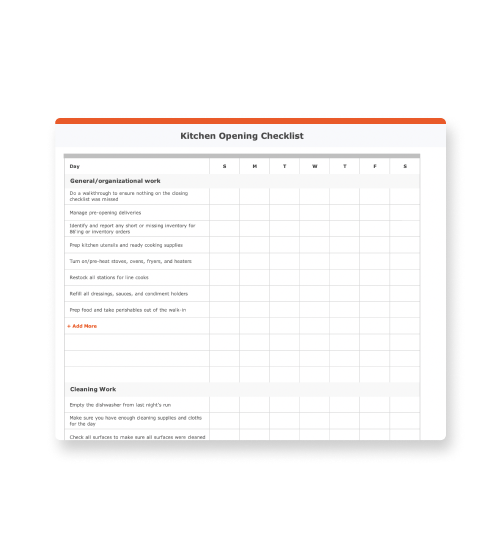
 Kitchen Opening and Closing Checklist
Ensure your back of house runs like a well oiled machine with these customizable kitchen opening and closing checklists.
Get Free Download | Built for Restaurants
When orders start flying in during peak dinner service, professional kitchens rely on a carefully orchestrated system that's been refined over more than a century. The kitchen brigade system organizes busy service into smooth coordination, where every chef knows their role.
From the executive chef calling out orders to the prep cook ensuring garnishes are ready, this hierarchical framework creates the backbone that allows restaurants to serve hundreds of covers nightly while maintaining consistency that keeps customers coming back.
Kitchen Opening and Closing Checklist
Ensure your back of house runs like a well oiled machine with these customizable kitchen opening and closing checklists.

Understanding the kitchen brigade system
The kitchen brigade system (brigade de cuisine) is a hierarchical system that delineates responsibility for each station in a professional kitchen. Originally developed by Georges Auguste Escoffier in the late 19th century, this military-inspired framework assigns specific roles and responsibilities to create order and maximize productivity.
Escoffier conceived this revolutionary approach after serving seven years as an army chef during the Franco-Prussian War, where he witnessed firsthand how military hierarchy could coordinate large groups in complex operations. When he returned to civilian life, he found himself working in the typical restaurant environment of the era—unruly, unsanitary spaces plagued by heavy drinking, violence, and a complete lack of organization.
Determined to elevate the culinary profession, Escoffier systematically applied military organizational principles to kitchen operations, establishing specialized roles, clear chains of command, and standardized procedures. These changes transformed many chaotic kitchen workplaces into efficient, professional environments.
Core brigade positions
Understanding each role within the kitchen brigade helps restaurants build effective teams and maintain operational excellence. Here's how the hierarchy works from top to bottom:
Executive Chef - The executive chef sits at the top of the kitchen hierarchy with a primarily managerial role. They focus on high-level oversight of operations, strategic business decisions, menu development, and overall kitchen management rather than day-to-day cooking tasks.
Chef de Cuisine - Working directly under the executive chef, the chef de cuisine handles day-to-day kitchen management with a largely supervisory role. They ensure smooth operations, oversee menu creation, and maintain quality standards during service.
Sous Chef -As second-in-command to the head chef, the sous chef assumes full responsibility during the chef's absence. They typically handle ordering, menu planning oversight, and serve as the crucial link between management and line staff.
Chef de Partie - Chef de partie manages specific kitchen stations, with common positions including Saucier (in charge of creating sauces), Grillardin (handles grilled items), and Garde Manger (Manages the pantry and cold items like salads and appetizers).
Support Staff - Commis Chefs serve as junior positions for recent graduates, while Tournants work as swing cooks trained for multiple stations.
Implementation across restaurant types
The beauty of the brigade system lies in its adaptability to different restaurant formats and sizes.
Large fine dining operations may maintain traditional brigade structures with specialized roles, while smaller restaurants could use modified systems that combine positions. The size and style of a restaurant determine the brigade structure, with even quick-service operations benefiting from clear role definition and communication principles.
Effective leadership remains crucial regardless of restaurant size. Successful kitchen managers stay calm under pressure and communicate clearly, setting the tone for the entire team. Pre-service briefings, where teams align on daily specials, prep status, and service goals, create the foundation for successful service periods.
Modern day kitchens
The brigade system creates a clear structure and organization that can dramatically improve kitchen performance through defined roles and responsibilities.
However, today's restaurant landscape presents new challenges. Rising labor costs and ongoing staffing shortages have prompted significant adaptations to the traditional model. With more than 9 out of 10 restaurants having fewer than 50 employees, modern kitchens must accomplish what once required many specialized positions with streamlined, cross-trained teams.
Many restaurants are implementing flexible roles that allow chefs to handle multiple stations when needed. Cross-training has become an important component of restaurant training programs, helping ensure smooth operations when team members are absent or during unexpected rushes. Modern training approaches often include shadowing opportunities where employees learn different roles within the kitchen. Technology integration, such as Kitchen Display System (KDS) screens, has replaced traditional paper tickets, improving communication and order accuracy throughout the kitchen.
The future of kitchen organization
While the fundamental principles of the kitchen brigade system remain valuable, successful implementation requires adaptation to contemporary realities. Modern restaurants must balance traditional organizational benefits with operational flexibility and rising costs.
The brigade system has been a cornerstone of professional kitchens for over a century, and its core principles of organization, specialization, and clear communication continue to drive kitchen success.
Whether operating a traditional fine dining establishment or a contemporary casual concept, understanding and adapting brigade principles creates the foundation for consistent quality, efficient operations, and team success.
FAQ
What is the kitchen brigade system? The kitchen brigade system is a hierarchical organizational structure that assigns specific roles and responsibilities to kitchen staff, originally developed by Auguste Escoffier in the late 19th century.
Do modern restaurants still use the full brigade system? Most modern restaurants use adapted versions of the brigade system, combining roles and streamlining hierarchies to match their size, style, and operational needs.
What are the main benefits of the brigade system? Key benefits include improved operational efficiency, enhanced communication, quality consistency, clear role definition, and better coordination during busy service periods.
Which position is highest in the kitchen brigade? The Executive Chef sits at the top of the kitchen hierarchy, focusing on managerial duties, menu development, and overall kitchen operations.
How do small restaurants implement brigade principles? Small restaurants typically use streamlined brigade systems that combine traditional roles while maintaining clear organizational structure and role definition.
Can the brigade system work in modern fast-paced kitchens? Yes, when adapted appropriately with flexible roles, cross-training, and technology integration, brigade principles enhance efficiency even in contemporary kitchen operations.
Restaurant Prep List Template
Use this free template to organize daily tasks for prep cooks, keep your team aligned, and make sure your kitchen runs smoothly from open to close.
Is this article helpful?
DISCLAIMER: This information is provided for general informational purposes only, and publication does not constitute an endorsement. Toast does not warrant the accuracy or completeness of any information, text, graphics, links, or other items contained within this content. Toast does not guarantee you will achieve any specific results if you follow any advice herein. It may be advisable for you to consult with a professional such as a lawyer, accountant, or business advisor for advice specific to your situation.
 Trending


Subscribe to On the line
Sign up to get industry intel, advice, tools, and honest takes from real people tackling their restaurants’ greatest challenges.
By submitting, you agree to receive marketing emails from Toast. We’ll handle your info according to our privacy statement. Additional information for California residents available here.