
Streamline Your Kitchen Workflow with a Simple Prep List Template
Learn how to create an effective restaurant prep list that improves kitchen efficiency, food safety, and cost control.

Caroline PriceAuthor
 RESOURCE
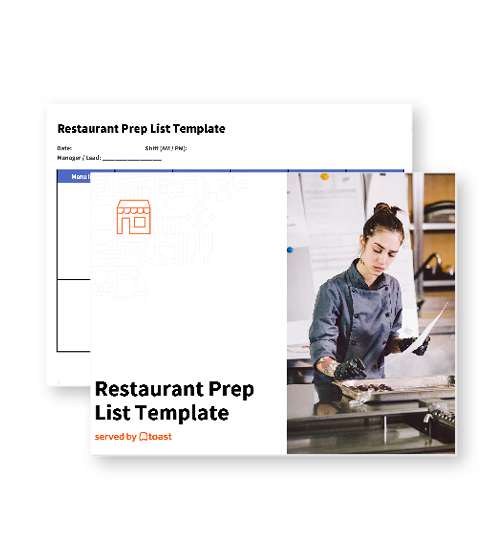
 Restaurant Prep List Template
Use this free template to organize daily tasks for prep cooks, keep your team aligned, and make sure your kitchen runs smoothly from open to close.
Get Free Download | Built for Restaurants
A well-structured prep list can make or break your kitchen’s success. It’s the secret to smooth service, consistent food quality, and a team that’s set up to win. Proper prep planning also helps reduce one of the industry’s biggest hidden costs. According to the National Restaurant Association, commercial kitchens typically waste between 4% and 10% of their food inventory — often before it ever reaches the plate. With clear guidelines in place, even the busiest shifts become more manageable. When your prep is on point and your station is stocked, service flows, customers leave happy, and your team ends the day proud of their work.
Essential components of a prep list
Before you build your prep list, it’s important to understand its key components. From setting quantity targets to timing out tasks, these foundational elements help ensure prep work is accurate, efficient, and aligned with the day’s service needs.
Daily prep tasks
The backbone of any prep list is the set of daily tasks that keep kitchen service running smoothly. Known in professional kitchens as “mise en place,” this includes everything that must be completed before service begins — from washing produce and prepping ingredients to cooking certain items in advance. The goal is simple — ensure every menu item can be fired and plated in ten minutes or less.
Par level requirements
Par levels define the ideal quantity of each ingredient or item needed for a given day and shift. Accurate par levels are essential for controlling food costs, reducing waste, and preventing stockouts during high-demand periods. Getting this right means fewer surprises and a more predictable prep process.
Time management priorities
Smart prep lists don’t just list tasks — they schedule them by priority and cook time. Items that take longer or involve multiple steps should be tackled early, while quicker tasks can fill in the gaps. This helps maximize efficiency and minimize bottlenecks during crunch time.
Kitchen Opening and Closing Checklist
Ensure your back of house runs like a well oiled machine with these customizable kitchen opening and closing checklists.

Core prep categories
Every kitchen’s prep work can be broken down into a few key categories. Organizing your list this way helps streamline workflows and assign tasks more efficiently.
Protein preparation
Protein items typically require the most time and attention during prep. Tasks include:
Portioning and cutting meat, poultry, and fish: Accurate portioning ensures consistency, controls food costs, and speeds up service.
Marinating proteins according to recipe specifications: Marinating in advance allows flavors to develop and reduces last-minute prep during service.
Pre-cooking items that can be finished during service: Par-cooking proteins saves time on the line and helps maintain consistent cook times.
Properly storing proteins at safe temperatures below 40°F: Cold storage prevents bacterial growth and keeps proteins fresh and food-safe.
Vegetable and produce prep
Fresh produce preparation forms a significant portion of daily prep work:
Washing and sanitizing all fruits and vegetables: Cleaning produce thoroughly helps remove dirt, pesticides, and bacteria.
Chopping, dicing, and slicing according to recipe requirements: Uniform cuts ensure even cooking, consistent presentation, and faster service.
Pre-cooking vegetables that benefit from advance preparation: Some vegetables, like potatoes or root vegetables, can be partially cooked ahead to speed up finishing during service.
Organizing prepped items using proper labeling systems: Clear labels with prep dates and contents help prevent waste and streamline retrieval during service.
Sauce and seasoning preparation
Many restaurants prepare sauces, dressings, and seasoning blends in advance:
Mixing signature sauces and dressings: Preparing house-made sauces in batches maintains consistency and saves time during peak hours.
Preparing herb and spice blends: Combining seasonings ahead of time ensures consistent flavor profiles across all dishes.
Making stocks and broths for daily use: Slow-simmered stocks form the flavor base for soups, sauces, and reductions.
Portioning condiments and garnishes: Prepping finishing touches in advance helps dishes go out quickly and look polished.
For example, many Italian restaurants batch-prep marinara and other core sauces in the morning, portioning them into quart containers labeled with prep and use-by dates. This not only speeds up plating during service but also supports food safety and inventory accuracy.
Food safety integration
Safe food handling is a non-negotiable part of prep work. A strong prep list should bake food safety into every step to protect guests, meet health codes, and avoid costly mistakes.
Temperature control protocols
All prep work must adhere to strict temperature guidelines. Time/temperature control for safety (TCS) foods in the temperature danger zone can cause bacteria to grow quickly and can easily become hazardous. The temperature danger zone between 41°F and 135°F creates conditions for rapid bacteria growth.
HACCP compliance
Proper prep lists incorporate Hazard Analysis Critical Control Points principles:
Monitor and record temperatures regularly: Use logs to track cold and hot holding temps throughout prep.
Implement proper hand washing procedures: Reinforce hand hygiene at every station and shift.
Maintain sanitized work surfaces and equipment: Clean and sanitize tools, counters, and machines between tasks and shifts.
Follow proper food storage protocols: Store raw, cooked, and ready-to-eat items separately, and use food-grade containers with tight lids.
Labeling requirements
Proper labeling supports both food safety and efficient inventory rotation. Be sure to:
Label all prepped items clearly: Include preparation date, use-by date, and contents.
Track shelf life of ready-to-eat items: TCS foods held at 41°F or below must be used within 7 days from prep.
Inventory management through FIFO
Using the FIFO method — First In, First Out — ensures ingredients are used in the correct order to reduce spoilage, save money, and maintain food quality.
First In, First Out principles
FIFO prioritizes older stock over newer stock to avoid expired ingredients and reduce waste:
Use older inventory first: Always rotate and use products based on the order they arrived.
Minimize spoilage and expiration: FIFO reduces the risk of food going bad in storage, especially with perishable items.
Stock rotation procedures
A strong FIFO system relies on consistency and staff follow-through:
Label items with delivery or prep dates: Clear, visible labels help staff quickly identify what to use first.
Place new stock behind older items: Physically rotating inventory encourages proper usage order.
Train staff to follow FIFO: Reinforce rotation best practices during onboarding and daily operations.
Perform regular inventory checks: Frequent reviews help catch aging items before they spoil.
Chipotle trains its team members to rigorously follow FIFO guidelines, including labeling every product with prep dates and consistently rotating stock to maintain freshness and meet strict food safety standards.
Waste reduction benefits
FIFO not only saves ingredients — it also reduces labor and energy costs:
Lower food costs through better utilization: By using what you have efficiently, you cut down on overordering and waste.
Reduce utility and labor waste: Less spoilage means fewer cleanup tasks, less energy spent on overstocked refrigeration, and less food thrown away.
Technology integration
Digital tools are transforming how kitchens manage prep, offering more flexibility, accuracy, and insight than traditional paper systems. Beyond streamlining task management, modern systems increasingly incorporate AI to improve forecasting and real-time decision-making.
Stephen Zagor, a restaurant consultant and adjunct professor at Columbia Business School, shared, "The beauty of AI is it's taking forecasted demand and turning that into a reaction all the way through the supply chain."
This level of automation helps kitchens align prep with real-time demand, reducing overproduction, food waste, and last-minute scrambling during service.
Digital prep lists
Kitchen software streamlines prep workflows and improves team coordination:
Real-time updates and modifications: Managers can adjust prep lists instantly based on changing needs.
Task assignment and completion tracking: Digital systems help monitor who’s responsible for what — and what’s done.
Integration with inventory management systems: Linking prep to inventory helps reduce over-prepping and stockouts.
Automated scheduling based on historical data: Software can anticipate prep needs using past sales patterns.
Sweetgreen uses digital kitchen display systems to manage prep in real time, ensuring every team member sees the latest updates and tasks — even across multiple locations. This helps streamline communication and maintain consistency during peak service.
Mobile accessibility
Cloud-based systems allow staff to access up-to-date prep lists from anywhere:
Remote updates by managers: Prep lists can be adjusted offsite as service needs shift.
Mobile-friendly access for staff: Team members can check tasks and updates on tablets or smartphones, keeping communication tight.
Data collection and analysis
Digital platforms turn prep activity into actionable insights:
Track prep times and staff efficiency: Monitor how long tasks take to optimize staffing and workflows.
Spot trends and refine schedules: Use data to predict busy periods and adjust prep levels accordingly.
Staff training and accountability
Prep work depends on well-trained, well-assigned team members. Clear responsibilities, skill-building opportunities, and quality checks help maintain a high-performing kitchen.
Role-specific assignments
Clear roles help avoid confusion and ensure efficiency during prep:
Assign tasks based on station needs: Prep cooks may handle ingredients, wash and chop vegetables, measure seasonings, and maintain cleanliness.
Clarify responsibilities: Assigning specific tasks prevents overlap and ensures nothing falls through the cracks.
In fine dining environments, kitchens often follow a brigade system where prep cooks start with simple tasks and work their way up under supervision. Chefs like Thomas Keller and Daniel Boulud have spoken about structured mentorship and skill progression being essential in their kitchens.
Skill development progression
Structured training gives prep staff a path for growth and stronger performance:
Beginner level: Basic knife skills, fruit and vegetable prep, and maintaining a clean station.
Intermediate level: Scaling recipes, using kitchen equipment, and handling specialty ingredients.
Advanced level: Managing multiple prep tasks, mentoring junior staff, and overseeing quality.
Quality control measures
Systems for checking prep consistency protect food quality and brand standards:
Regular taste testing of prepared items: Ensure flavor and seasoning are consistent across batches.
Visual inspections for proper cutting techniques: Monitor knife work and portioning for accuracy.
Verification of portion sizes and specs: Check that each item matches recipe requirements.
Documentation of quality issues: Track errors or inconsistencies for coaching and process improvement.
Seasonal and menu adjustments
Prep lists should evolve with your menu and calendar. Staying flexible and data-informed ensures your team isn’t over- or under-prepping as needs change.
Menu-driven prep planning
Align prep tasks with your current offerings and seasonal ingredients:
Analyze each dish for make-ahead opportunities: Determine which components can be prepped in advance and which require à la minute cooking.
Adjust prep lists when the menu changes: Keep prep aligned with rotating specials, seasonal ingredients, or limited-time offers.
Volume forecasting
Use historical data and upcoming events to predict how much to prep:
Increase prep levels for high-volume days: Anticipate rushes based on past sales, holidays, or weekends.
Scale back for slow periods: Avoid waste by prepping less during traditionally quiet shifts.
Account for special events and holidays: Reservations, catering, or local events can all impact demand.
Monitor weather-related traffic changes: Rainy or sunny days may shift foot traffic and require adjustments.
Restaurants in tourist-heavy areas like New Orleans often adjust prep levels around major events like Mardi Gras, using historical POS data and reservation trends to scale up production for the city's influx of tourists.
Flexibility for changes
Build wiggle room into prep schedules to handle the unexpected:
Adapt to last-minute menu changes: Be ready to substitute or remove dishes.
Work around ingredient availability issues: Have contingency plans if suppliers fall short.
Shift based on staffing changes: Fewer hands may require paring down prep tasks.
Schedule around equipment maintenance: Plan prep around repairs or downtime to keep productivity high.
Cost control through prep efficiency
A well-structured prep list doesn’t just support smooth service — it also saves money. Smart prep practices reduce labor costs, minimize waste, and extend the life of ingredients and equipment.
Labor optimization
Organizing prep tasks strategically helps teams work faster and smarter:
Minimize setup and cleanup time: Group similar tasks to reduce time spent switching tools or cleaning stations.
Use similar preparation techniques together: Chopping, marinating, or measuring in batches improves flow.
Fill downtime with lower-priority tasks: Keep staff productive between big-ticket tasks.
Cross-train staff for multiple roles: Flexible employees can shift tasks as needed and reduce scheduling gaps.
Ingredient utilization
Creative use of ingredients reduces waste and maximizes what you’ve already purchased:
Repurpose trim and scraps: Use vegetable ends for stocks or proteins for staff meals.
Batch prep similar items: Prep shared ingredients across multiple dishes at once.
Store items properly to extend shelf life: Reduce spoilage with airtight containers and accurate labeling.
Rotate inventory regularly: Use older items first to reduce waste and overordering.
Equipment maintenance
Scheduling maintenance during prep avoids disruptions and protects your investment:
Optimize performance during service: Well-maintained tools work faster and more reliably.
Prevent costly breakdowns: Early fixes are cheaper than emergency repairs.
Maintain food safety standards: Clean, calibrated equipment helps ensure consistent temperatures and cooking times.
Extend equipment lifespan: Regular maintenance reduces wear and tear, keeping equipment running longer.
Quality assurance protocols
Maintaining high standards during prep ensures that every dish leaving the kitchen meets expectations. Quality checks, regular audits, and a commitment to improvement help keep prep consistent and service-ready.
Consistency standards
Clear guidelines help ensure uniformity in prep and presentation across the team:
Cutting sizes and uniformity: Ensure all ingredients are prepped to the same size for even cooking and a professional appearance.
Seasoning levels and taste profiles: Maintain consistent flavor by sticking to measured blends and tasting regularly.
Presentation and plating requirements: Align prep work with plating expectations to streamline assembly.
Storage container specifications: Use standardized containers and labeling for easy identification and stacking.
Regular audits
Frequent checks help identify gaps before they become problems:
Verify adherence to standards: Observe prep work to ensure it aligns with established procedures.
Identify training opportunities: Catch and correct mistakes early with real-time coaching.
Ensure food safety compliance: Confirm that hygiene, storage, and temperature protocols are followed.
Maintain quality consistency: Audits help reinforce expectations across all shifts.
Continuous improvement
Prep systems should evolve with feedback and observation:
Collect staff feedback and suggestions: Cooks often know where bottlenecks or shortcuts happen.
Consider customer comments and preferences: Adjust prep for common modifications or complaints.
Observe workflow for efficiency: Look for repeated slowdowns or redundancies in daily prep.
Incorporate industry best practices: Stay updated on prep innovations, tools, and trends.
Final thoughts
A well-crafted prep list is more than a kitchen tool — it’s a strategic advantage. From streamlining daily tasks to reducing waste and improving food quality, effective prep planning keeps your kitchen operating at its best. Whether you’re refining your current system or starting from scratch, taking the time to build smart, detailed prep lists will pay off in smoother service, happier staff, and healthier margins. Consider leveraging digital tools to make updates easier and give your team the clarity they need to execute with confidence.
FAQ
How far in advance should prep work be completed?
Most prep work should be completed within 24 to 48 hours of service, with TCS foods used within seven days if held at proper temperatures. Some items, like stocks and sauces, can be prepared further in advance.
Who is responsible for creating and updating prep lists?
The head chef or kitchen manager typically creates prep lists, often in collaboration with sous chefs. Updates should be made regularly based on menu changes, seasonal availability, and sales patterns.
How do you determine appropriate par levels for prep items?
If you're opening a new restaurant, it will take 3 to 4 weeks to determine the right par levels. Start with estimated quantities and track sales data until you can observe ordering trends.
What's the best way to organize prep tasks throughout the day?
Organize tasks by priority, cooking time, and equipment requirements. Start with items requiring the longest preparation times and schedule quick tasks during equipment downtime or waiting periods.
How can technology improve prep list management?
Digital prep lists offer real-time updates, task tracking, inventory integration, and data analysis capabilities that paper systems cannot provide, leading to improved efficiency and accountability.
What food safety considerations are most important for prep work?
Temperature control is paramount — keep TCS foods out of the temperature danger zone (41°F-135°F), implement proper labeling systems, and maintain strict sanitation protocols throughout prep processes.
Sustainable Restaurant Business Checklist
Use this free checklist to help your restaurant run efficiently while minimizing its environmental impact.
Is this article helpful?
DISCLAIMER: This information is provided for general informational purposes only, and publication does not constitute an endorsement. Toast does not warrant the accuracy or completeness of any information, text, graphics, links, or other items contained within this content. Toast does not guarantee you will achieve any specific results if you follow any advice herein. It may be advisable for you to consult with a professional such as a lawyer, accountant, or business advisor for advice specific to your situation.
 Trending


Subscribe to On the line
Sign up to get industry intel, advice, tools, and honest takes from real people tackling their restaurants’ greatest challenges.
By submitting, you agree to receive marketing emails from Toast. We’ll handle your info according to our privacy statement. Additional information for California residents available here.