
One in Three New Restaurants Fail: Here’s How Four New Restaurants Have Flourished in 2025
Despite all economic hardships, these top four new restaurants have succeeded. Here’s how.

Tessa ZuluagaAuthor
 RESOURCE
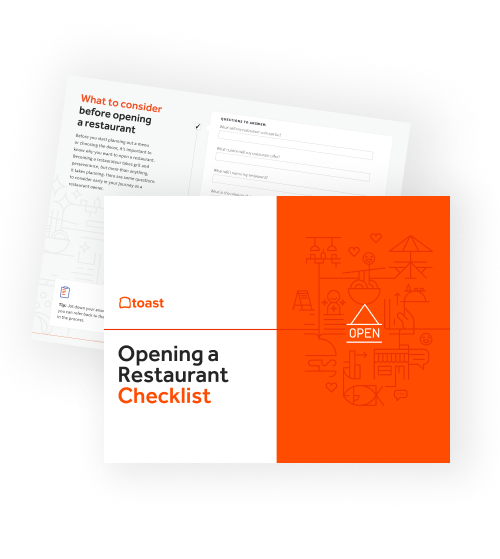
 Opening a Restaurant Checklist
So many things go into opening a restaurant. Use this free PDF checklist to set your new restaurant up for success.
Get Free Download | Built for Restaurants
The restaurant failure rate is difficult to track nationwide, but the National Restaurant Association estimates a 30% failure rate in the restaurant industry. This means that roughly one in three restaurants won’t survive their first year.
Why do so many restaurants fail? Entire books could be written on the topic (and we’ve covered many of the reasons in an article here). But at its core, the restaurant industry is notoriously tough. Profit margins are slim, and costs, from food to labor to overhead, are high.
On top of that, a recent Toast survey found that 79% of respondents find cooking at home to be of the most value for their time and spend. But even in tighter times, restaurants that offer value, creativity, and excellent service continue to attract diners.
In 2025, with economic hardships on the rise, it has become even more difficult to thrive in the restaurant industry. And yet, several restaurants are. We spoke with four of Bon Appétit’s Best New Restaurants to uncover the strategies behind their success and to see where they’re planning to grow as we head into 2026.
Bon Appétit’s Best New Restaurants 2025
Each year, Bon Appétit seeks out the most exceptional new restaurants, spotlighting culinary experiences that transcend the ordinary. This year's selections opened between March 2024 and 2025, and are united by a common thread: they feel like home.
These restaurants weave together heritage and community in ways that transform a simple meal into something more meaningful. They're places where recipes carry stories, where dining rooms become gathering spaces, and where the act of sharing food creates genuine connection. These are the places that have thrived in their first year, and for a good reason.
Restaurant Opening Calculator
This calculator lays out some of the fundamental financial costs of opening a restaurant, so you can start planning and bring your dream restaurant to life.

Lesson One: Build belonging through storytelling — Lenox, Seattle, WA
For Chef-owner Jhonny Reyes, Lenox is an autobiography told through flavor.
“Lenox is my story on a plate,” Reyes explains. “Afro Latin soul food rooted in Puerto Rico, Harlem, and Seattle. It’s not a replica of the island. It’s memory, migration, and imagination. When you walk in, you are stepping into something personal, built on family, culture, and hustle.”
At Lenox, “home” tastes like crispy plantains, mofongo in rich broth, and arroz con gandules with a touch of coconut. “It’s soul food you feel,” he says. And it’s resonating. His mofongo — humble, yet deeply soulful — has become a breakout hit, bringing diners back again and again.
Reyes’s philosophy extends far beyond food. “I want Lenox to be a cultural hub,” he says, “A place where people feel seen, celebrated, and fed in more ways than just food.” His vision for the next five years includes opening his doors to support more pop-ups, creating more opportunities for his staff to grow, and continuing to tell the story of the Afro Latin diaspora through his dishes.
The restaurant’s marketing strategy is simple but powerful: authentic storytelling. “Instagram has been huge for us because people connect with authenticity. They see my kids in the restaurant, they see our staff, they see the grind behind the scenes. Word of mouth has been just as powerful. Seattle shows up when the story feels real.”
Even through tight margins, Reyes says community has been the key ingredient: “Staffing is never easy, but I’ve been blessed with a core that feels like family. My advice for aspiring restaurant owners? Know your why. Stay rooted in your story, take care of your people, and remember — it’s bigger than you.”
Lesson Two: Make guests feel like family — Baan Mae, Washington, DC
At Baan Mae, meaning “Mom’s House” in Lao and Thai, Chef Seng and her team serve meals that feel like homecomings.
Every dish tells a story that blends nostalgia, maternal love, and cultural heritage. As co-owner Aleena Inthaly explains, “We take time to really get to know everyone who walks through our doors. For our regulars, we want this to feel like a safe haven.”
Their farewell to guests isn’t “goodbye.” It’s “see you soon.” That simple shift reflects the heart of their success. Toast survey data reveals that 60% of respondents consider themselves regulars at a restaurant, making Baan Mae’s philosophy of belonging essential for building loyalty in a competitive market.
At Baan Mae, success means creating a space where every diner feels like they’ve returned to Mom’s kitchen, no matter how far from home they’ve come.
Lesson Three: Root your concept in heritage — Minnie Bell’s, San Francisco, CA
In San Francisco’s Fillmore District, Chef Fernay McPherson has turned her family’s legacy into a thriving restaurant that honors both heritage and resilience.
Named after her great-aunt Minnie and grandmother Lillie Bell, Minnie Bell’s celebrates generations of culinary wisdom and Black community pride. McPherson’s rosemary fried chicken, a signature since her early days in Emeryville, now shares the stage with her grandmother’s caramel cake, both steeped in family history.
“The community’s response has been overwhelmingly positive,” McPherson says. “People who watched me grow up now come in to eat. Their support is everything.”
Her advice for newcomers mirrors her restaurant’s spirit: stay rooted. By grounding her business in family recipes and community ties, McPherson has built a neighborhood cornerstone.
Lesson Four: Do a few things exceptionally well — Recoveco, Miami, FL
In Miami, chef-owners Maria Teresa Gallina (Tere) and Nicolas Martinez have created Recoveco, a minimalist dining experience that values intimacy and excellence over scale.
With only ten dishes on the menu, every plate is intentional. “We knew from the beginning that our goal was to do a few things exceptionally well rather than dilute the attention by doing a lot of things,” Tere explains.
Their decision to locate in a quieter area of South Miami aligns with their personality — reflective, personal, and focused. Built literally from the ground up, Recoveco embodies the belief that constraint breeds creativity.
“We don’t measure success in accolades,” Tere says, “It’s about guests who return for their tenth or eleventh visit. That’s the highest recognition we could ever want.”
Restaurant Competitive Analysis Template
Use this free template to size up your competitors, analyze your market, and identify your restaurant’s strengths, all in one place.
The recipe for survival: Community, care, and connection
What do these four restaurants have in common? Each embodies a modern definition of success, one rooted not in profit margins alone, but in purpose.
They show that thriving in 2025 means building something that feels real:
Lenox connects through authentic storytelling and cultural pride.
Baan Mae turns hospitality into a form of homecoming.
Minnie Bell’s preserves legacy while nurturing community.
Recoveco proves that restraint and intimacy can be powerful differentiators.
These restaurants demonstrate that succeeding as a new restaurant today requires serving more than just food. You must serve belonging, and give guests a reason to come back time and time again.


Is this article helpful?
DISCLAIMER: This information is provided for general informational purposes only, and publication does not constitute an endorsement. Toast does not warrant the accuracy or completeness of any information, text, graphics, links, or other items contained within this content. Toast does not guarantee you will achieve any specific results if you follow any advice herein. It may be advisable for you to consult with a professional such as a lawyer, accountant, or business advisor for advice specific to your situation.
 Trending

Subscribe to On the line
Sign up to get industry intel, advice, tools, and honest takes from real people tackling their restaurants’ greatest challenges.
By submitting, you agree to receive marketing emails from Toast. We’ll handle your info according to our privacy statement. Additional information for California residents available here.