
How to Make a Wine Menu Design With Examples (Free Template)
A great wine menu doesn’t just list bottles — it tells a story, drives profits, and keeps guests coming back.
Aiden ToborAuthor
 RESOURCE
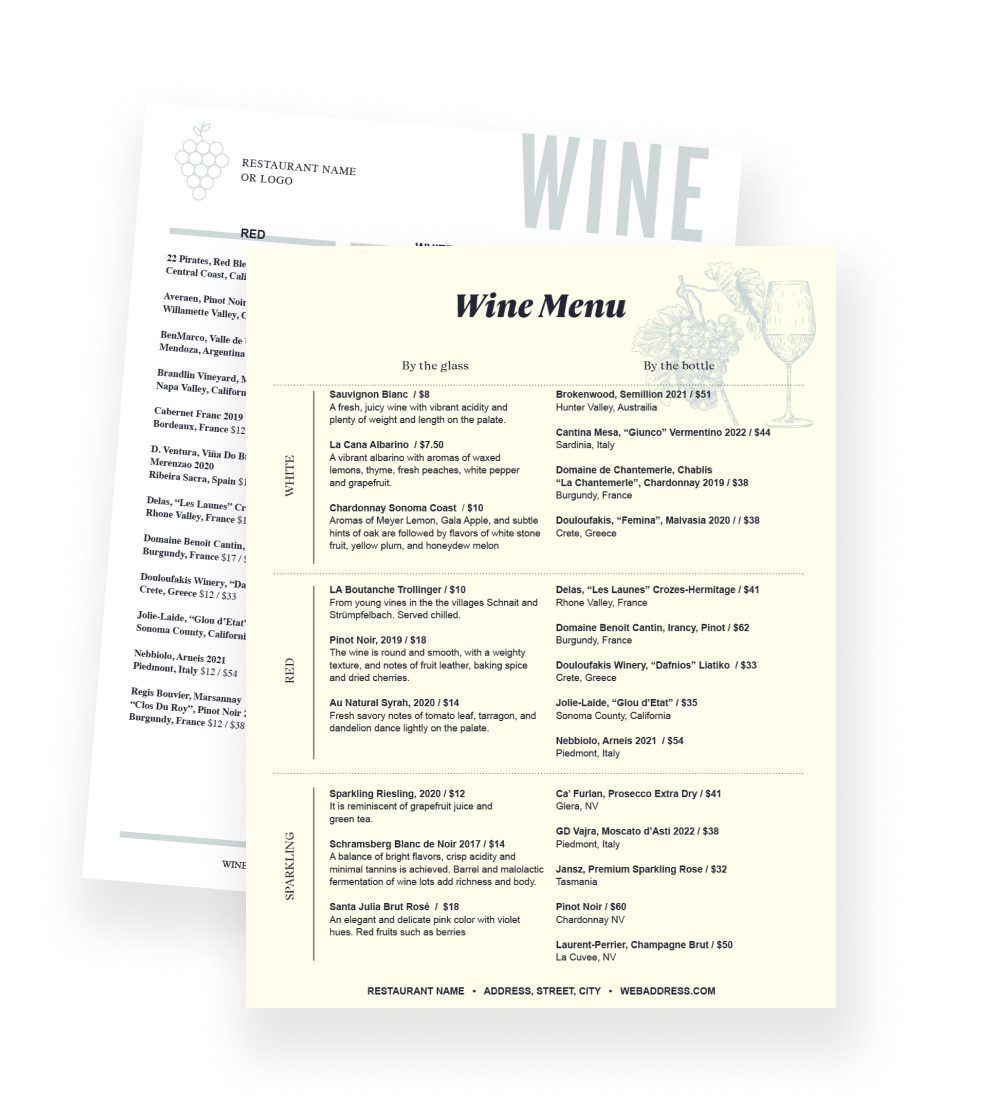
 Wine Menu Templates
Use these wine menu templates as a starting point for your menu design or to give your menu a refresh.
Get Free Download | Built for Restaurants
In today’s competitive restaurant landscape, a thoughtfully crafted wine menu is more than a list — it’s a storytelling tool, a revenue driver, and a reflection of your brand. As we navigate 2025, wine programs have evolved to meet changing consumer preferences, embrace emerging technologies, and respond to economic realities.
In fact, research shows that the presence of a sommelier can boost wine sales by 11.5%, underscoring the importance of not just what’s on the list, but how it’s presented and supported. This article explores the latest trends, design strategies, and pricing techniques that help restaurants build wine menus that enhance the guest experience, strengthen loyalty, and support long-term profitability.
Current wine trends shaping restaurant offerings
The wine landscape is undergoing significant transformation in 2025, with several key trends influencing consumer preferences and restaurant offerings.
The rise of white wine
White wines continue their meteoric rise in popularity, with consumption increasing by 10% since 2000 according to the International Organisation of Vine and Wine. Red wine consumption, on the other hand, has dropped by 15% over a similar period. This shift is especially noticeable among younger generations who are drawn to white wine's versatility and food-friendly characteristics.
Tatiana by Kwame Onwuachi in New York City reflects this shift, featuring Albariño selections from regions like Uruguay and California. Wine director Amy Racine highlights how these vibrant, high-acid whites pair effortlessly with bold, Afro-Caribbean dishes — an approach that resonates with younger diners seeking both flavor and versatility.
Mindful drinking gains ground
Non-alcoholic and low-alcohol wines have emerged as major players in the market. The non-alcoholic wine market alone is projected to grow by 170% — from $2.5 billion to nearly $7 billion over a decade. High-end wine bars and restaurants are responding by dedicating entire sections of their menus to these alternatives, reflecting growing consumer interest in mindful drinking options.
Climate-conscious choices
Climate change is also reshaping where and how wine is produced, forcing adaptations in grape varieties that were previously unthinkable in certain regions. Grapes once exclusive to Mediterranean climates — like Chardonnay and Pinot Noir — are now flourishing in unexpected places, including the cooler, coastal vineyards of Southern England. Forward-thinking restaurants are leaning into this narrative, featuring wines made from climate-resilient varietals and highlighting the innovative approaches winemakers are taking to address environmental challenges.
A thirst for discovery
Today’s wine drinkers are more curious than ever. Guests are seeking out wines with a story — whether from local producers experimenting with organic methods or winemakers who reflect the sommelier’s values and vision. The days of relying solely on established classics like Cabernet Sauvignon and Chardonnay are fading as consumers become more adventurous in their preferences.
This desire for deeper meaning and emotional resonance in the dining experience isn’t limited to wine. Chef Heena Patel of Besharam in San Francisco has seen this same shift happening across the plate. “Diners are craving deeper connections to their meals. It’s no longer just about flavor — it’s about the stories behind the food. At Besharam, every dish has an emotional story, whether inspired by my grandmother’s cooking or the festivals of my childhood. I believe this desire for nostalgia and cultural connection will only grow, and diners will seek restaurants that feel personal and where every dish tells a story.”
As storytelling becomes central to both food and beverage programs, wine lists are evolving into curated narratives that reflect a restaurant’s identity, values, and vision.
Menu Engineering Worksheet
Use this menu engineering worksheet, complete with intricate menu engineering formulas, to determine areas of strength and weakness in your restaurant's menu.

Principles of effective wine menu design
A thoughtfully designed wine menu does more than list available options — it tells a story, complements the food, and subtly guides guests toward selections they’ll enjoy (and that boost your bottom line).Achieving this requires close collaboration between sommeliers and chefs to craft focused lists that align with the menu and resonate with the restaurant’s core audience. The most effective wine menus reflect the restaurant’s personality and empower even the most hesitant wine drinker to order with confidence.
Curated, not crowded
Gone are the days of massive, encyclopedic wine lists designed to impress with scale. Today’s guests want a curated experience. Focused, well-edited wine selections feel more intentional, more thoughtful, and less overwhelming.
Streamlined lists also make inventory easier to manage and allow for seasonal flexibility, limited-time selections, or exclusive bottles that create a sense of discovery.
Wine and food in harmony
The most effective wine menus don’t exist in a vacuum — they’re tightly aligned with the restaurant’s culinary vision. Sommeliers and chefs should collaborate to create pairings that elevate both the dish and the glass. This cohesion ensures the wine list feels like an extension of the food, not an afterthought.
Organize for the Guest
Menu organization should guide the customer’s journey, not confuse it. While there’s no one-size-fits-all approach, most wine menus follow one of these structures:
Origin-based: Wines grouped by country, then region (e.g., France > Bordeaux)
Style-based: Wines grouped by characteristics (e.g., crisp whites, bold reds)
Progressive: Wines listed from lightest to fullest-bodied
The key is to match the layout to your clientele and make it easy for guests to find something they’ll enjoy. A clear layout also allows you to strategically feature high-margin wines through placement, spotlight sections, or visual design.
A great example of this in action is Pappas Bros. Steakhouse in Houston, Texas, which won both Best Long Wine List and Wine List of the Year in 2024. Despite offering over 3,900 selections from every major wine-producing region, the list remains highly navigable and thoughtfully curated. Organized with the guest in mind, it includes a wide range of price points, food pairings, and access to rare bottles — making it approachable for every level of wine experience.
Embracing digital menus
Digital wine lists are on the rise in 2025 — and for good reason. These platforms allow for real-time inventory updates, rich descriptions, and interactive features like food pairings or tasting notes. For guests unfamiliar with wine terminology, digital menus offer a low-pressure way to explore options and make informed choices at their own pace.
Pricing strategies for profitability and value perception
An effective wine pricing strategy does more than protect margins — it shapes how guests perceive value. While traditional markups (typically 200–300% over retail, and up to 400% for rare bottles) still exist, savvy operators in 2025 are shifting toward more nuanced models that balance profitability with guest satisfaction.
By-the-glass: The profit engine
By-the-glass (BTG) programs serve as the workhorses of beverage profitability. Strategic pricing in this category can subsidize higher-end offerings while driving overall revenue.
For example, a $10 glass of sparkling wine that costs just $6 to $8 per bottle allows restaurants to offer a sense of luxury without sacrificing margins, while potentially introducing guests to higher-end labels they might not order by the bottle.
Tiered pricing for strategic margins
Many wine programs now use a tiered approach to markup, creating flexibility across categories:
Higher margins (70% or more) on everyday wines
Lower margins (50% to 60%) on premium selections and Champagne
Special pricing on wines featured in flights or paired with tasting menus
Some restaurants are even capping margins on their most expensive bottles, knowing that high prices already deter impulse buys. In these cases, a lower percentage can result in higher total profit, especially when it motivates the sale of a bottle that might otherwise stay on the shelf.
Applying menu engineering to wine
Wine lists can be optimized using the same data-driven principles applied to food menus. By identifying which wines are "stars” (high-profit, high-volume) and "dogs” (low-margin, low-selling selections), restaurants can make smarter decisions about what to feature, reprice, or remove. Highlighting top-performing wines through staff recommendations, strategic menu placement, or suggested pairings helps guide guests toward selections that drive both satisfaction and profitability.
The role of staff training and motivation
Even the most perfectly designed wine menu requires knowledgeable staff to maximize its effectiveness. Guests should always be able to get a basic — and confident — description of any wine, whether it’s printed on the menu or delivered tableside. In restaurants without a dedicated sommelier, strong staff training becomes essential.
Staff education as a foundation
Basic wine knowledge helps every team member speak confidently about selections, make pairing suggestions, and elevate the guest experience. The goal isn’t to turn servers into sommeliers — but to ensure they can speak to flavor profiles, origins, and why a wine is on the list.
At Gramercy Tavern, part of Union Square Hospitality Group, staff attend regular blind tastings and wine education sessions led by the in-house sommelier team. This hands-on training helps servers confidently recommend wines and explain why each bottle is on the list — empowering them to enhance the guest experience without needing formal sommelier certification.
Training Manual Template
Use this restaurant training manual template, a customizable Word Doc, to provide your staff with the rules, guidelines, and clarity they need to do their jobs efficiently.
Incentives that drive performance
In 2025, incentive programs are proving highly effective. If you want staff to upsell like salespeople, it helps to reward them accordingly. Some restaurants offer team-based bonuses, while others recognize individual performance when wine sales exceed specific goals.
Investing in certification
Progressive establishments are sponsoring staff to complete wine education programs, including international certifications. This not only builds wine knowledge, but also boosts employee retention. When team members understand the stories behind the wine, they engage with guests more authentically, transforming transactions into experiences and encouraging repeat business.
Technology integration and data-driven decisions
In 2025, technology is revolutionizing how restaurants manage and optimize their wine programs. From AI-driven tools to advanced inventory systems, innovation is helping operators enhance the guest experience and improve profitability.
Personalized recommendations with AI
AI-powered recommendation engines and virtual tastings are helping restaurants deliver a more tailored experience. These tools can suggest wine pairings based on a guest’s order history or current selections, making the experience feel curated rather than transactional. When used well, this tech can boost both engagement and loyalty.
Chef Jean-Georges Vongerichten — whose restaurant group includes acclaimed spots like ABC Kitchen, The Fulton, and the Matador Room — has begun using AI to optimize menu layouts and increase profitability. By feeding sales metrics and design elements into AI systems, his team is able to refine both food and beverage menus for maximum impact. This kind of data-driven approach to menu engineering can easily extend to wine lists, helping restaurants highlight high-margin bottles, improve guest navigation, and ultimately boost wine sales.
Smarter inventory management
Modern inventory systems track real-time data on what’s selling — and what’s not. This allows restaurants to adjust pricing, update menus, and restock efficiently. It also helps reduce waste and ensures that popular, high-turnover wines remain available.
Continuous optimization with product mix analysis
Analyzing product mix data allows operators to ensure their best-selling wines are also their most profitable. By identifying underperforming items, restaurants can make strategic adjustments — such as reworking pricing, reformatting the menu, or testing limited-time promotions — to maximize financial performance over time.
Creating distinctive programs for diverse concepts
A one-size-fits-all wine list doesn’t cut it in today’s dining landscape. The most effective wine programs are built to reflect and reinforce the restaurant’s overall concept, customer base, and brand identity.
Match the wine to the concept
When your restaurant has a clear identity, curating the right wine list becomes easier — and more meaningful. For example, a modern French bistro catering to health-conscious diners might feature an array of organic, biodynamic, or natural French wines. In contrast, a rustic Italian trattoria may lean into approachable pours from small regional producers.
Design with intention
The presentation of the wine menu — including cover materials, graphics, fonts, colors, and language — should reinforce the restaurant's identity. In fine dining, this often means sleek, minimal designs with detailed descriptions and refined fonts. More casual or contemporary spaces may benefit from bold layouts, illustrations, or playful language that encourages discovery and conversation.
Embrace creative pairings
In 2025, many restaurants are reimagining the beverage pairing experience. Innovative programs are expanding beyond traditional wine pairings to include craft cocktails, alcohol-free options, and regional specialties. In Asia, for example, restaurants are exploring tea flights and infused drinks that complement flavor profiles just as thoughtfully as wine. These creative pairings can broaden guest appeal and reflect a restaurant’s culinary ethos.
Adapting to economic realities
The economic landscape of 2025 brings both challenges and opportunities for restaurant wine programs. With inflation impacting food and beverage costs across the board, strategic pricing has become more important than ever, not only to protect profit margins but also to maintain customer trust and loyalty.
Smart strategies for a shifting economy
To meet these challenges head-on, many restaurants are adopting creative, flexible pricing strategies:
Dynamic pricing models that adjust based on demand, time of day, or seasonality
Menu engineering techniques to spotlight high-margin wines without steep price hikes
Seasonal menus that take advantage of cost-effective ingredients and availability
These tactics help restaurants respond to changing economic conditions while still delivering strong value to guests.
Focus on the experience, not just the price
Rather than cutting costs across the board, successful wine programs in 2025 focus on the overall guest experience. When the quality of service, thoughtful pairings, and compelling storytelling remain strong, guests are more willing to pay for value, even as prices shift. The key is transparency, creativity, and consistency.
At Zahav in Philadelphia, the $45 wine pairing option is designed to elevate the prix fixe menu through thoughtful curation and storytelling. Each selection, often from Eastern Mediterranean producers, is introduced by staff with context about its origin and connection to the dish, creating a deeper and more personal guest experience. This focus on education and hospitality, rather than discounting, encourages guests to see value beyond the price tag.
Looking forward: The future of restaurant wine programs
As restaurants look beyond 2025, several emerging trends are poised to reshape wine menu design and guest engagement. These shifts point toward a more personal, culturally diverse, and experience-driven future for wine service.
A return to indigenous varieties
Diners are increasingly drawn to authenticity, and wine lists are responding. Indigenous grape varieties are making a comeback, offering guests distinctive flavors and stories rooted in place. Wines from lesser-known regions like Romania, Georgia, and Greece are appearing more frequently on forward-thinking menus, expanding the global wine conversation.
A renaissance in wine education
Wine is no longer being overly simplified to appeal to casual drinkers. Instead, restaurants are embracing wine’s complexity while finding creative, accessible ways to communicate it. As consumers show a growing appreciation for wine knowledge, sommeliers have an opportunity to connect more deeply with guests, sharing not just pairings, but perspective.
Hyper-personalized experiences
Personalization will continue to evolve, with technology enabling increasingly tailored recommendations based on individual preferences and past selections. This shift toward customized experiences represents a significant opportunity for restaurants to differentiate themselves and build lasting customer relationships.
Bringing it all together
The most successful wine menus in 2025 balance art and science, combining creative curation with data-driven decision-making. They reflect the restaurant's concept, values, and personality — while responding to evolving guest preferences, economic realities, and technological shifts.
By staying attuned to emerging trends, implementing strategic pricing, investing in staff training, and embracing digital tools, restaurants can build wine programs that not only drive profitability but also elevate the entire dining experience.
In an industry where margins are tight and competition is fierce, a thoughtfully designed wine menu is no longer a luxury — it’s a strategic advantage. The future belongs to establishments that treat their wine lists as living, breathing parts of the guest experience — menus that spark conversation, invite discovery, and reflect the restaurant’s identity in every pour. By embracing these principles, restaurants can ensure their wine menus remain relevant, engaging, and profitable in 2025 and beyond.


Is this article helpful?
DISCLAIMER: This information is provided for general informational purposes only, and publication does not constitute an endorsement. Toast does not warrant the accuracy or completeness of any information, text, graphics, links, or other items contained within this content. Toast does not guarantee you will achieve any specific results if you follow any advice herein. It may be advisable for you to consult with a professional such as a lawyer, accountant, or business advisor for advice specific to your situation.
 Trending
Subscribe to On the line
Sign up to get industry intel, advice, tools, and honest takes from real people tackling their restaurants’ greatest challenges.
By submitting, you agree to receive marketing emails from Toast. We’ll handle your info according to our privacy statement. Additional information for California residents available here.