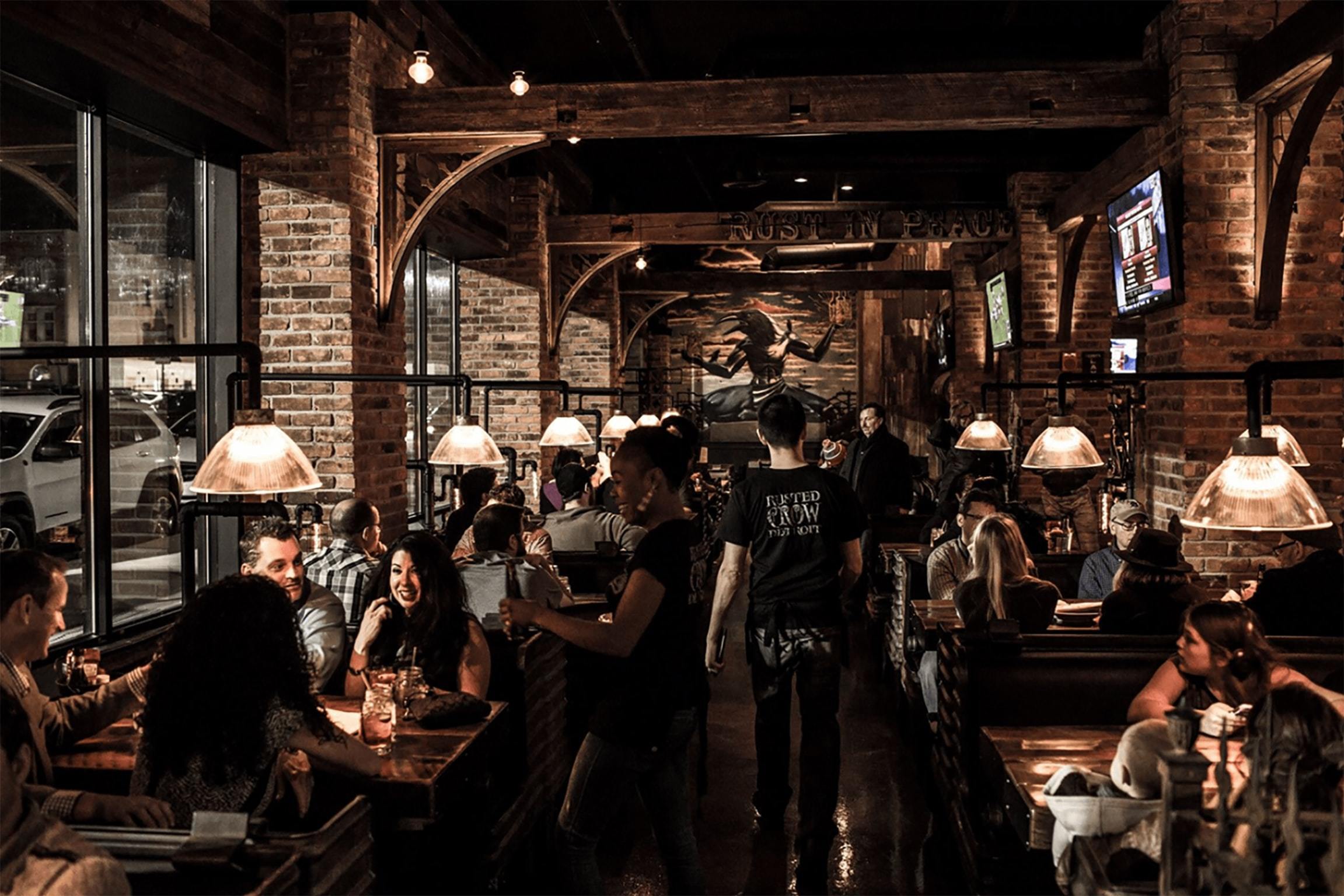
What to Expect When Working in a Restaurant
The restaurant industry is like no other. Here are 15 things to expect while working in a restaurant.
Garth ClingingsmithAuthor
 RESOURCE
 Restaurant Operations Manual Template
Use this free template to easily outline all of your operating procedures and make day-to-day operations as consistent as possible.
Get Free Download | Built for Restaurants
Restaurants are complex and contain countless moving parts, many of them out of your control. But a day when everything is clicking is as satisfying as it gets. Sure, it’s hard work, but making people happy with great food and drink is addictive. Restaurants also foster a real feeling of camaraderie, yet the trade-off is a work-life balance that can be tough to reconcile with friends and family.
In this article, we’ll discuss what to expect when working in a restaurant for the first time. It can be a phenomenal journey, but it comes with a lot of work.
Employee Feedback Template
Use this customizable Word doc to guide self, peer, and manager reviews with your employees.

What to expect when working in a restaurant
Restaurant hours
Restaurants operate pretty darn close to 24 hours a day and at least 360 days a year.
For FOH, the day begins shortly before the doors open to the public. Prep includes stocking work stations, setting tables and more.
For BOH, the first shift of the day begins well before customers (or FOH) arrive. It may include turning on the lights and stoves. You’ll be elbow deep in putting away deliveries and prepping menu items. Or if you’re a closer, you’ll be busy completing tickets and doing a good deal of cleaning.
Managers cover it all, and so the days get especially long. While you rarely do the opening and closing, it’s not unheard of. You’ll juggle everything from checking orders at the back door to paying the window washer in the front, all in between scheduling, building payroll and ordering. In a perfect world, you’re a liaison between the FOH and BOH. Unfortunately, you’ll also have to keep the peace when FOH v. BOH tensions arise. Ideally your restaurant won’t have a toxic environment, but the stereotype is real.
A very fast-paced environment
As a newbie, the amount of tasks you juggle in a restaurant work environment is intimidating. But you’ll quickly adapt. And once you’re comfortable, you’ll find you’re too busy to even peek at the clock. You can log 20,000 steps and not bat an eye. You’ll forget to eat.
When things go awry, the clock slows down and it’s a battle. But it’s one that you’re all in together. Restaurant veterans tend to quickly ID the person who’s “in the weeds” and pull them out.
A few different pay structures
Payment is varied, to say the least. Typically, BOH receives an hourly wage. That makes for a steady, consistent paycheck. FOH receives a lower hourly wage that’s supplemented with tips. In this case, you could potentially walk out with more cash each night than you would with a weekly paycheck. That inconsistency can make managing your money tough–be sure to put some of that cash aside. Tip pooling is trending up. In this case, FOH tips are shared with BOH staff. This helps build a more cohesive team and equalizes incomes.
Managers usually receive an annual salary. You know what each paycheck will be, but you’re definitely working more than 40 hours. Make sure the stable income is worth being away from home for an extra 10-20 hours per week.
Restaurant skills you’ll learn quickly
Restaurant tasks are usually pretty simple…the hard part is juggling them all at once. The only real way to learn is by doing.
Front of House
Multi-tasking
Time management
Customer service
Delegation
Conflict resolution
Organization
Verbal communication
Active listening
Patience
Team building
Back of House
Multi-tasking
Time management
Kitchen math
Knife skills
Food safety
Organization
Inventory control
On-your-feet problem solving
Grit
Teamwork
You’ll wear (some) kind of uniform
The days of identical restaurant employee uniforms and toques are gone. Every restaurant has a different dress code that suits their style. But no matter where you work, closed-toe, non-slip shoes will be a requirement. Don’t skimp on comfort and support; you’ll be on your feet for the entire day. Many restaurants will reimburse you for a portion of this cost.
In the FOH, it’s best to stick with a few outfits that are comfortable, so you won’t have to stress about picking out your wardrobe before work. Most restaurants provide an apron–be sure to use it.
In the kitchen just about anything goes, unless the restaurant’s linen service includes a jacket and chef pants. If they have them, use them – there’s no reason to ruin your own clothes. Moisture-wicking or cooling shirts and underwear are a godsend to anyone toiling away in a hot kitchen.
Work stays at work
Unless you’re in management, you clock in, work hard, clock out, and move on to the rest of your life. Restaurant jobs will also never go remote. If you’re the kind of person who needs to get out of the house and soak in some IRL facetime, these are gratifying jobs. Also, when you work at a busy restaurant sometimes the shift really flies by.
You may be able to get benefits
Restaurants are realizing that offering a shift meal isn’t enough. Health insurance, dental, vision, and paid vacation can be had, even for entry-level positions. It’s not just large chains providing this. Even one-off mom-and-pop joints can offer benefits.
There’s often room to grow
In a broad sense, restaurants are all doing the same thing. But their systems and procedures are unique. That means promoting from within is the best option. It’s much easier than starting from scratch with an outside hire. Just beware of restaurants adding tasks to your plate without compensation. All of that added work deserves a bump in pay.
Huge camaraderie with your team
Relationships forged in the fires of kitchens and dining rooms are strong. When a restaurant is empty, it feels like your own kitchen and living room. That level of comfort creates something that really does feel like a family. Down times are perfect for getting to know someone–your hands are busy but you can talk. When it’s go-time, you’re not doing that with a stranger. The up and down rhythms of a restaurant day are the perfect ice-breaker.
It can be messy work
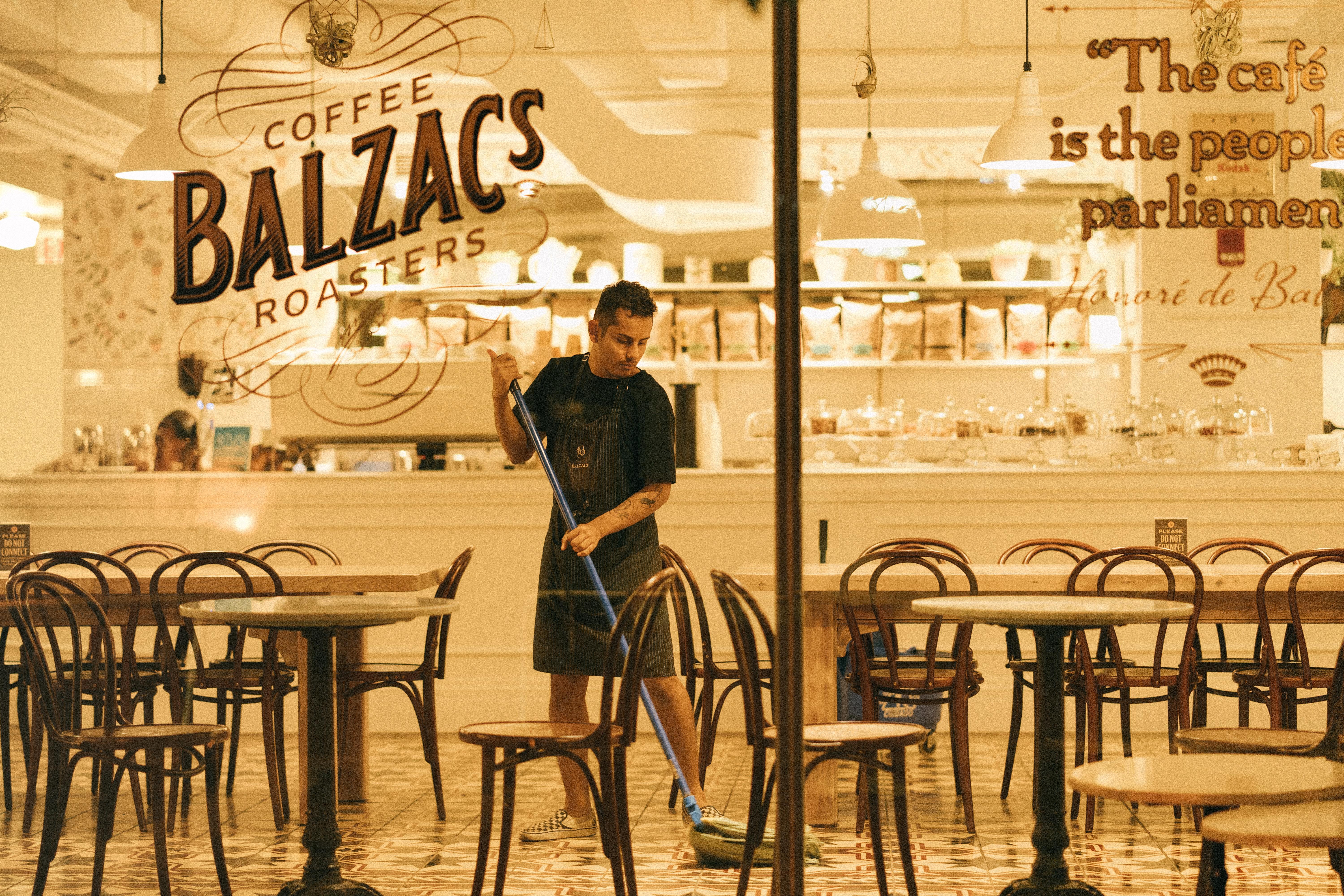
Restaurants can be romanticized as centers of civilized culture. The reality is much messier. Bathrooms don’t clean themselves. A strong work ethic is needed overall to deal with mess and stand on your feet all night.
Work-life balance can be tough
Restaurants are busiest after traditional work hours. So if your friends and family are on a Monday-Friday schedule, your time with them will be precious. If they’re 9-5 folks, you’ll rarely sync up. And forget about holidays. On top of all that, restaurants don’t have enough staff to properly cover time-off. Beware of this–it’s the hardest part of working a restaurant job.
You’ll get to provide guests with a home away from home
Helping create a place where strangers feel comfortable, safe and satiated feeds your soul like few other jobs. The air of gratitude–from a happy customer to you and from you to them–is what keeps people working in restaurants. It’s an indescribable transaction.
You’ll learn a lot about hospitality and customer service
In contrast to the section above, restaurant managers, servers, and all other front of house employees have to deal with all type of customers. Learning how to deal with the general public, especially when they’re angry is a huge skill. Being able to diffuse any situation and make a customer happy is a skill that can be applied to any future career. Expect to provide excellent customer service, handle inquiries, and address any concerns or complaints.
Multitasking
Restaurant roles often require multitasking, such as taking orders while managing multiple tables or preparing multiple dishes simultaneously. There are almost always several different things going on at once regardless of the type of restaurant you work in from fast food restaurants to a fine dining establishment, it’s part of the job. Restaurant staff tend to become marvelous multitaskers while working in the industry.
Pay attention to detail
Attention to detail is crucial in restaurant work to ensure orders are accurate, food is prepared correctly, and customers receive a positive experience. There can be high pressure for waitstaff to notice what’s happening at all their tables all at once. Bussers have to pick up on when to pre-bus. Pastry chefs need to perfect the dessert garnish. And restaurant owners have to pay attention to every ounce of presentation and ambiance. But learning new skills like being observant goes a long way in the food service industry and beyond.
***
The wacky schedules, late hours and smelling like a deep fryer are offset by the invaluable skills you learn. Restaurant-induced grit and multi-tasting is transferable to just about any job. Being able to quickly process and prioritize a to-do list cannot be taken for granted. Most importantly, serving the public is stressful, so being able to do that alongside a team with diverse personalities and skill sets is life experience few others have. If you can succeed in a restaurant, you can succeed anywhere.
Is this article helpful?
DISCLAIMER: This information is provided for general informational purposes only, and publication does not constitute an endorsement. Toast does not warrant the accuracy or completeness of any information, text, graphics, links, or other items contained within this content. Toast does not guarantee you will achieve any specific results if you follow any advice herein. It may be advisable for you to consult with a professional such as a lawyer, accountant, or business advisor for advice specific to your situation.
 Trending

Subscribe to On the line
Sign up to get industry intel, advice, tools, and honest takes from real people tackling their restaurants’ greatest challenges.
By submitting, you agree to receive marketing emails from Toast. We’ll handle your info according to our privacy statement. Additional information for California residents available here.