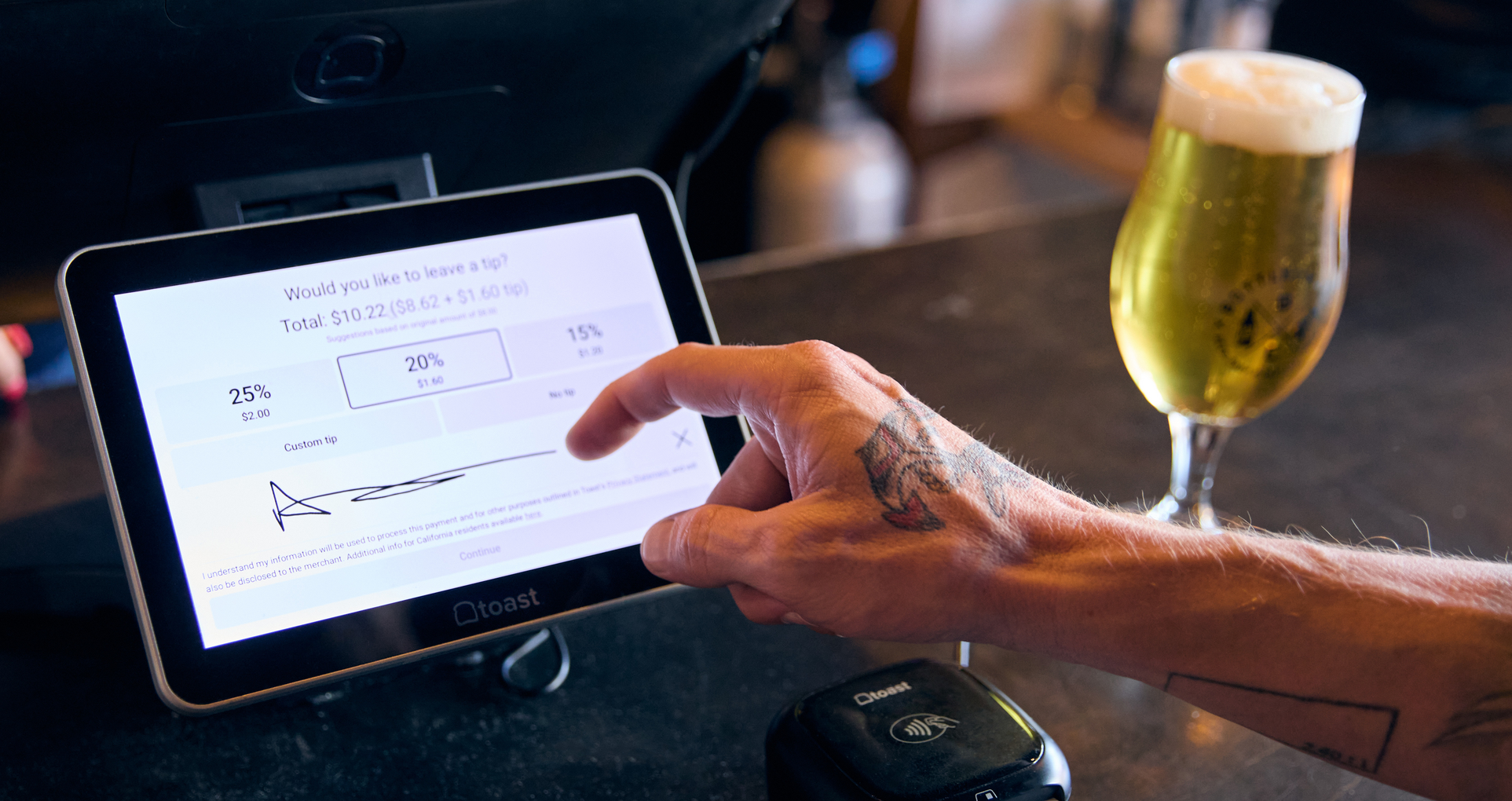
What Is a Merchant Fee? Understanding Transaction Costs for Restaurants in 2025
A complete guide to understanding merchant fees for restaurants, including types, pricing models, and strategies to reduce costs.
Aiden ToborAuthor
Restaurant Opening Calculator
This calculator lays out some of the fundamental financial costs of opening a restaurant, so you can start planning and bring your dream restaurant to life.

As restaurants in 2025 operate in an increasingly cashless and tech-driven economy, merchant fees have become one of the most overlooked yet impactful operating costs. With credit cards now accounting for 31% of all U.S. payment transactions, they represent a major share of the costs tied to digital payments.
And with inflation still squeezing margins and digital payments dominating the landscape, understanding how these fees work — and how to reduce them — is more important than ever. This guide breaks down the types of merchant fees restaurants face, how they’re structured, and what strategies can help minimize them while meeting customer expectations for fast, flexible payment options.
Defining merchant fees
Merchant fees, also known as payment processing fees or transaction fees, are charges that businesses pay to accept electronic payments from customers.As restaurants adopt more advanced front-of-house technologies, seamless and reliable payment processing has become a critical part of modern operations.
“There is no doubt that people are paying more with cards,” says Jordan Rubin, chef/owner of Mr. Tuna. “With the increase in technology and in the effort to adapt to current times, much of our business is done through online ordering.”
These fees typically encompass several components:
Interchange fees: The largest portion is paid to the customer's card-issuing bank
Assessment fees: Paid to the card network (Visa, Mastercard, etc.)
Payment processor fees: Paid to the company that facilitates the transaction
Gateway fees: Charged for routing transactions through payment systems
For restaurants, these combined costs typically range from 2.5% to 3.5% of each transaction, though rates can vary based on multiple factors.
Opening a Restaurant Checklist
So many things go into opening a restaurant. Use this free PDF checklist to set your new restaurant up for success.
The cost structure of merchant fees in 2025
Understanding the breakdown of merchant fees helps restaurant owners evaluate processing partners and negotiate better rates. With rising food costs, it's important to find ways to save money and improve your bottom line, including optimizing payment processing costs.
Interchange fees
Interchange represents the largest component of merchant fees:
Typical rate range: 1.5% to 2.5% of transaction value
Set by card networks: Determined by Visa, Mastercard, Amex, and Discover
Card type: Rewards cards usually come with higher fees
Transaction method: In-person transactions tend to have lower rates than online ones
Business category: Rates vary by industry, with specific pricing for restaurants
Security measures: Enhanced security (like EMV or tokenization) can impact rates
Menu engineering leverages continuous data about the profitability versus popularity of individual restaurant menu items, but these calculations must account for varying payment processing costs that affect net margin.
Assessment fees
Card networks charge assessment fees in addition to interchange:
Typical rate range: 0.13% to 0.15% of the transaction value
Standardized fees: Non-negotiable and consistent across all merchants
Fixed charges: May include flat per-transaction fees in addition to percentage-based rates
Periodic updates: Subject to change by card networks, often reviewed annually
These fees contribute to the infrastructure that enables electronic payment processing across global networks.
Payment processor markup
Payment processors add their own fees on top of interchange and assessments:
Markup range: Typically 0.25% to 1.0% of the transaction value
Additional fees: May include monthly account, statement, or minimum processing fees
Pricing structures: Can follow flat-rate, interchange-plus, tiered, or subscription models
Negotiable terms: Often adjustable based on transaction volume and business history
Because many tech-savvy diners prioritize convenience and flexible payment options, restaurants need to weigh both cost and customer experience when evaluating processor fees.
Additional fees
Beyond the core processing costs, restaurants may encounter:
PCI compliance fees: For maintaining payment card industry security standards
Chargeback fees: When customers dispute transactions
Terminal rental fees: For physical payment hardware
Gateway fees: For connecting to payment networks
Account maintenance fees: Monthly or annual charges for processor services
These additional costs highlight the importance of choosing a modern POS system that integrates payment processing and allows for easy menu updates, both in-restaurant and online.
Pricing models for restaurant payment processing
Payment processors offer several pricing structures, each with distinct advantages and disadvantages. Implementing the right menu pricing strategies by utilizing data will help you find the right balance between being attractive to customers and profitable for the restaurant, which extends to choosing optimal payment processing arrangements.
Flat-rate pricing
Popularized by services like Toast and Square:
Single fee structure: Typically 2.6% to 3.5% of all transactions
Fixed transaction fee: May include $0.10 to $0.30 per transaction
Simplified accounting: Predictable costs make budgeting easier
Higher cost for volume: Generally less cost-effective for high-volume restaurants
This model works well for smaller restaurants with lower average transaction values.
Interchange-plus pricing
Offers greater transparency by separating fee components:
Clear fee breakdown: Separates interchange, assessment, and processor markup
Standard expression: Typically listed as “interchange + markup” (e.g., “interchange + 0.3% + $0.10”)
Cost-effective for volume: Often the lowest-cost option for medium to high-volume businesses
Accounting complexity: Requires more detailed reconciliation and bookkeeping
This model appeals to restaurants that prioritize transparency and process a high volume of card transactions.
Tiered pricing
Categorizes transactions into qualified, mid-qualified, and non-qualified tiers:
Tiered rates: Different rates for each tier (e.g., 1.8% qualified, 2.5% mid-qualified, 3.5% non-qualified)
Determining factors: Card type, processing method, and security features affect tier placement
Simple structure: Easy to understand, but lacks detailed transparency
Processor control: Processors assign the tiers, which can lead to higher costs
This model has declined in popularity as more transparent options have gained market share.
Subscription pricing
A newer model gaining traction in the restaurant industry:
Monthly flat fee: Typically $49 to $199 per month, plus interchange and a small per-transaction fee
No processor markup: Eliminates percentage-based processor fees
Best for high volume: Can result in major savings for restaurants with high transaction volume
Bundled services: Often includes added tech features like POS integration and support
Toast offers a subscription-based payment processing model with fixed monthly fees starting at $69/month, plus interchange and a small per-transaction fee. This setup can reduce variable markup costs for restaurants processing high volume.
Digital evolution with a human touch is emerging as a key opportunity for restaurants, with subscription-based processing solutions often including additional technology benefits.
Industry-specific considerations for restaurants
The restaurant industry faces unique payment processing challenges and opportunities. According to a 2022 study, 68% of diners rank food quality as the most important factor when deciding where to dine, but convenient payment options increasingly influence the overall dining experience.
Tipping impact on processing fees
Tips complicate merchant fee calculations:
Full amount charged: Fees usually apply to the total amount, including tips
Pre-authorization gaps: Card-present transactions may not reflect tip amounts during pre-authorization
Tip adjustment tools: Integrated POS systems help ensure accurate tip capture and fee calculation
Point of sale (POS) systems can now prompt customers to tip at restaurants, streamlining the tipping process but potentially increasing the transaction value, subject to processing fees.
High transaction volume with low average value
The restaurant business model presents specific challenges:
Small-ticket costs: Multiple low-value transactions lead to higher cumulative fees
Volume-based negotiation: High volume may qualify restaurants for lower rates, but only with active negotiation
System demands: Busy periods require payment systems that can process transactions quickly and reliably
Increasing throughput is the top-listed pain point for restaurant respondents with $1 million+ GMV, making payment processing speed and reliability critical considerations beyond just fee structures.
Card-present vs. online ordering
Different transaction environments incur different costs:
Lower in-person rates: Card-present transactions typically range from 2.5% to 2.9%
Higher online risk: Online and phone orders are considered riskier and cost about 2.9% to 3.5%
Mobile payments: Digital wallets used in-store usually qualify for lower, card-present rates
Even easier, your POS system should be able to take care of direct-to-you online ordering, integrating these increasingly important sales channels with appropriate payment processing solutions.
Strategies to optimize merchant fees
Restaurant owners can employ several approaches to reduce payment processing costs. Identifying what sets your restaurant apart is vital for standing out from the competition, with efficient financial operations contributing to overall business performance.
Negotiation tactics
Leverage business volume and history to secure better rates:
Transparent pricing: Request interchange-plus pricing for a clear breakdown of fees
Shop around: Compare quotes from multiple processors to find the best fit
Volume discounts: Ask about lower rates based on your transaction history or projections
Fee waivers: Request removal of monthly minimums or statement fees when possible
Restaurant operators continue to see advancements in restaurant technologies, giving them more options and negotiating leverage with payment processors.
Security optimization
Reduce fraud risk to qualify for lower interchange rates:
EMV chip readers: Use chip-enabled terminals for all in-person transactions
Address Verification Service (AVS): Apply AVS checks for online payments
CVV verification: Require CVV codes on all card-not-present transactions
Staff training: Educate team members on payment security best practices
These measures not only reduce fees but also protect the business from costly chargebacks.
Processing practices
Operational approaches can minimize merchant fees:
Daily batching: Batch process transactions each day to qualify for better rates
Card minimums: Set minimum purchase amounts for card use (where allowed by law)
Cash discounting and surcharges: Offset fees by offering cash discounts or adding surcharges
System integration: Link payment processing with accounting tools to monitor fees effectively
There's more to a great menu than a beautiful design and layout, which includes communicating any credit card minimums or surcharges clearly to customers.
Technology integration
Modern restaurant technology can optimize payment processing:
Integrated POS systems: Reduce gateway fees by using systems with built-in payment processing
Enhanced security: Use tokenization and end-to-end encryption to protect cardholder data
Tip handling tools: Ensure your POS correctly processes tip adjustments to avoid extra fees
Contactless options: Offer tap-to-pay methods that qualify for lower card-present rates
Toast's integrated reservation and waitlist solution helps enhance hospitality and simplify table management, with payment processing integration creating a seamless experience from seating to payment.
Regulatory landscape affecting merchant fees
The payment processing industry operates within a complex regulatory framework.Restaurants face growing challenges in competition, labor, and regulatory demands, with payment processing regulations forming a critical part of overall compliance.
Durbin Amendment impact
This regulation caps debit card interchange fees for large issuers:
Fee limits: Capped at approximately 0.05% plus $0.21 per debit transaction
Large issuers only: Applies to banks with over $10 billion in assets
Savings potential: Offers cost reductions for restaurants with high debit card volume
Exclusions: Doesn’t apply to credit cards or debit cards from smaller banks
The Durbin Amendment has saved U.S. merchants over $9 billion annually in debit card processing fees.
Surcharging and cash discounting regulations
Rules governing surcharging vary by jurisdiction:
Credit only: Federal rules allow surcharges on credit, but not debit, transactions
State restrictions: Some states still ban or limit surcharging
Cash discounting: More widely allowed and often easier to implement legally
Disclosure required: Both practices must be clearly communicated to customers
When restaurants need to create promotional material, they should communicate clearly, particularly regarding any payment-related surcharges or discounts.
International considerations
For restaurants serving international customers:
Cross-border fees: Foreign card transactions often add 0.8% to 1.2% in fees
Currency conversion: Additional charges may apply when converting currencies
Varying regulations: Payment processing rules differ by country
Higher interchange: International cards may trigger elevated interchange rates
These considerations are particularly relevant for restaurants in tourist areas or near international borders.
Emerging payment technologies and their fee implications
The payment landscape continues to evolve rapidly.Diner preferences are shifting, with millennials and Gen Z leading the way toward adventurous options and digital convenience, including how they pay for meals.
Contactless and mobile payments
The move toward touchless transactions accelerated in recent years:
Card-present rates: Typically processed at the same lower rates as in-person chip transactions
Lower fraud risk: Enhanced security features can reduce liability and qualify for better rates
Tech requirements: Need compatible terminals, but offer faster processing times
Consumer preference: Increasingly favored by younger, tech-savvy diners
Starbucks reported that 31% of its U.S. orders in 2023 were placed and paid for via its mobile app, underscoring how digital convenience is reshaping payment behavior — especially among younger consumers who expect speed, ease, and contactless options.
Cryptocurrency considerations
Some restaurants now accept cryptocurrency payments:
Lower fees: Processing costs usually range from 0.5% to 1%, less than traditional credit cards
Volatility risk: Price fluctuations require either close monitoring or instant conversion to cash
Specialized tools: Accepting crypto often involves dedicated platforms with unique fee structures
Marketing appeal: Attracts tech-forward and novelty-seeking consumers
While still representing a small percentage of transactions, cryptocurrency adoption continues to grow in the restaurant industry.
Buy Now, Pay Later options
BNPL services have expanded into the restaurant sector:
Higher fees: Typically charge 3% to 6% of the transaction amount
Larger orders: May increase average check size despite the added cost
Younger appeal: Popular with Gen Z and millennials who value payment flexibility
POS integration: Becoming easier to implement with compatible point-of-sale systems
In 2023, Grubhub partnered with Klarna to offer “Pay in 4” options at checkout, allowing customers to split restaurant delivery bills into interest-free payments.
These services represent both an opportunity and a cost consideration for restaurant operators.
FAQ about merchant fees for restaurants
What's the average percentage restaurants pay in merchant fees?
Most restaurants pay between 2.5% and 3.5% of their total card transaction volume in merchant fees, though this varies based on pricing model, card mix (credit vs. debit), and transaction volume. High-volume restaurants with optimized processing can sometimes achieve rates closer to 2.25%.
Can restaurants legally add a surcharge for credit card payments?
Yes, in most U.S. states, restaurants can legally add a surcharge for credit (but not debit) card payments, provided they disclose the practice, limit the surcharge to their actual processing cost (typically capped at 4%), and follow card network rules regarding notification and implementation.
How do merchant fees differ for online orders versus in-restaurant payments?
Online orders typically incur higher merchant fees (approximately 2.9% to 3.5%) compared to in-restaurant payments (2.5% to 2.9%) because they're processed as "card-not-present" transactions with higher fraud risk. Integrated online ordering systems may offer optimized rates for restaurants with high digital sales volume.
Do different credit cards charge different merchant fees?
Yes, American Express traditionally charges higher interchange fees (often 0.3% to 0.5% more) than Visa and Mastercard, though this gap has narrowed in recent years. Premium rewards cards across all networks typically have higher interchange rates than basic cards, directly impacting restaurant processing costs.
How often can payment processors change their rates?
Payment processors typically adjust their rates once or twice annually, though card networks may modify interchange fees semi-annually (usually in April and October). Processors must provide notice of rate changes, but the timing and notification requirements vary based on contract terms.
Are merchant fees tax-deductible for restaurants?
Yes, merchant fees are considered ordinary business expenses and are fully tax-deductible. Restaurants should maintain detailed records of processing costs, as these fees can represent 2% to 3% of gross revenue and significantly impact net profitability and tax liability.
Final thoughts
In 2025's restaurant ecosystem, merchant fees represent a significant operational cost that requires careful management and optimization. By understanding fee structures, negotiating favorable terms, implementing security best practices, and staying current with payment technology trends, restaurant owners can minimize these necessary expenses while providing customers with the convenient payment options they expect. As the industry continues to evolve toward increasingly cashless operations, strategic management of merchant fees becomes ever more critical to maintaining healthy profit margins.
Is this article helpful?
DISCLAIMER: This information is provided for general informational purposes only, and publication does not constitute an endorsement. Toast does not warrant the accuracy or completeness of any information, text, graphics, links, or other items contained within this content. Toast does not guarantee you will achieve any specific results if you follow any advice herein. It may be advisable for you to consult with a professional such as a lawyer, accountant, or business advisor for advice specific to your situation.
 Trending
Subscribe to On the line
Sign up to get industry intel, advice, tools, and honest takes from real people tackling their restaurants’ greatest challenges.
By submitting, you agree to receive marketing emails from Toast. We’ll handle your info according to our privacy statement. Additional information for California residents available here.