
Restaurant Payroll Percentage: A Comprehensive Guide for 2025
A complete guide to understanding and managing restaurant payroll percentage in today’s labor market.
Aiden ToborAuthor
 RESOURCE
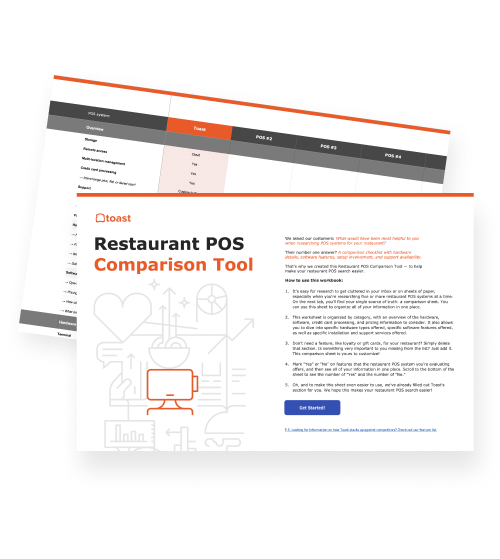
 Restaurant POS Comparison Tool
A free, customizable Restaurant POS Comparison Tool to research and compare point of sale systems in one Excel spreadsheet.
Get Free Download | Built for Restaurants
Restaurant payroll percentages are hitting critical levels in 2025, creating new challenges for operators already battling rising costs and shrinking margins. Payroll costs now make up more than a quarter of restaurant expenses, up from 23% of revenue in 2021, and that figure is expected to exceed 26% in 2024. As labor costs continue to rise, restaurants face mounting pressure to find smarter ways to manage payroll while maintaining service quality and staff satisfaction.
Current restaurant payroll percentage benchmarks
Understanding industry benchmarks provides essential context for managing labor costs. Here's what operators should know:
Typical target: A good labor cost percentage is around 30% of gross revenue. This should make up roughly half of your restaurant’s prime costs (with COGS accounting for the other half).
Industry average: Labor costs generally fall between 30% and 35% of total revenue across the foodservice industry.
Conservative estimates: Many restaurants aim for 25% to 35% of sales to stay on the safe side.
Benchmarks by restaurant type
According to accounting firm BDO, payroll percentages vary widely depending on the type of restaurant:
Quick-service restaurants (QSRs): Typically target around 25% labor costs
Full-service and fine dining: Often operate with higher percentages due to additional service staff, training, and hospitality focus
Rising payroll costs impacting restaurants
Restaurant operators face substantial payroll increases that directly impact their operational sustainability.Payroll has increased an annual average of 10.9% from $95,201 in 2021 to a projected $129,583 in 2024, representing a dramatic escalation in labor expenses over a relatively short period.
What makes this trend particularly challenging is thatpayroll costs are increasing, but employee headcount is not. In 2021, restaurants averaged 6.51 employees. By 2024, that number dropped to 6.03. Restaurants are spending more on fewer employees, largely due to:
Minimum wage increases: Mandated boosts in hourly pay across many states
Higher benefits costs: Includes healthcare, paid leave, and insurance
Ongoing competition in the labor market: Drives up wages and incentives as operators compete for a limited talent pool
For example, in 2022, Starbucks raised its U.S. minimum wage to at least $15 an hour, influencing wage expectations across the industry and putting pressure on smaller operators to keep up.
According to industry surveys, 99% of operators say they are spending more on labor costs this year compared to last year, while 79% of restaurants report being short at least one position in 2024.
Restaurant Labor Cost Calculator
Unlock the power of data-driven labor management with our free Restaurant Labor Cost Calculator. Stop guessing and start optimizing your staffing decisions today.

How to calculate restaurant payroll percentage
Calculating your restaurant's payroll percentage requires understanding all labor-related expenses and comparing them to total revenue.
The formula
The formula for calculating restaurant payroll percentage is simple, but essential for understanding how labor costs impact your bottom line.
Total Payroll Costs ÷ Total Revenue = Restaurant Payroll Percentage
For example, if your annual payroll is $300,000 and your total sales are $1,000,000, your labor cost percentage is 30%.
What to include in payroll costs
Accuracy matters — payroll costs go far beyond base wages. Make sure you include:
Wages: Includes both salaried and hourly pay for all employees
Overtime: Any additional compensation for hours worked beyond the standard schedule
Taxes: Employer-paid payroll taxes such as Social Security, Medicare, and unemployment
Benefits: Health insurance, paid time off, retirement contributions, and similar perks
Insurance: Workers’ compensation premiums required to cover job-related injuries
Other expenses: Includes uniforms, training, staff meals, and other employee-related costs
These costs combined represent your true labor burden, which can range from 30% to 35% of total revenue across the food service industry.
Factors affecting restaurant payroll percentage
Several variables influence your restaurant’s payroll percentage. Understanding these drivers can help you pinpoint cost-saving opportunities.
1. Restaurant type
Your concept heavily influences labor needs:
Quick-service and fast-food restaurants: Usually have lower payroll percentages due to streamlined operations and cross-trained staff
Fine dining establishments: Tend to face higher payroll costs because of a higher staff-to-guest ratio and extensive training requirements
However, wage regulations can disrupt that balance. In April 2024, California raised the minimum wage for fast food workers to $20 per hour, significantly increasing labor costs for QSR operators across the state — a shift that challenges the low-labor-cost advantage these models typically enjoy.
2. Geographic location
Where you operate matters. Regional variations in minimum wage, cost of living, and labor market competition have a direct effect on payroll percentage. California, for example, has the highest payroll percentage at 28% of revenue — a number driven in part by high wages and regulatory changes.
3. Operational factors
Your internal systems and business model also play a role:
Wages, benefits, payroll taxes, overtime: Core labor expenses that fluctuate based on pay structure
POS inefficiencies and money management systems: Can lead to scheduling gaps and payroll errors
Menu complexity, service style, and hours of operation: Affect how much labor is needed and when
These elements can all impact staffing needs and, by extension, your overall payroll percentage.
Strategies to optimize restaurant payroll percentage
Restaurant operators can manage payroll percentages without compromising service quality or employee morale by focusing on these core strategies:
Smarter scheduling
Informed scheduling is one of the most effective ways to control labor costs. Try to strike the right balance of number of employees per shift. Too few employees on the schedule, customer service and employee morale can suffer. But when you're overstaffed, employees can feel disengaged — and their tips can suffer, too.
Cross-training your team
Cross-training employees provides operational flexibility and cost control opportunities. For example, if a host can jump in when a server goes home sick, they can keep diners happy without adding extra payroll. This strategy allows restaurants to maintain service levels with fewer total staff members during various operational scenarios.
One example is Velvet Taco, a fast-casual chain where dishwashers assist with prep, prep cooks work the line, and counter servers help bus tables. Managers also step in as needed, creating a fully cross-functional team that adapts quickly to staffing needs.
Training Manual Template
Use this restaurant training manual template, a customizable Word Doc, to provide your staff with the rules, guidelines, and clarity they need to do their jobs efficiently.
Embracing labor-saving tech
Use modern restaurant technology to improve efficiency and reduce manual tasks. Solutions include:
Self-service ordering: Reduces front-of-house staffing needs
Automated scheduling tools: Streamlines shift planning and labor compliance
Digital ordering platforms: Speeds up service and reduces order errors
Modern POS systems: Simplifies time tracking and payroll integration
These tools cut back on manual work and help operators better align staffing with demand.
Reducing turnover with retention strategies
Employee retention strategies provide long-term cost benefits. It can cost $5,864 to hire and train a new staff member, while turnover in the restaurant industry is at an all-time high, at nearly 80%. Investing in employee satisfaction, competitive pay, and career development not only cuts replacement costs — it also boosts team stability and performance.
As Sybil F. Stershic, internal marketing expert and president of Quality Service Marketing, put it: “The way your employees feel is the way your customers will feel. And if your employees don’t feel valued, neither will your customers.”
Some brands are putting this philosophy into practice. For example, Chipotle has invested in retention by offering career development programs and educational benefits, which have been linked to lower turnover and higher employee engagement across their locations.
Regional variations in payroll percentages
Where your restaurant operates has a major impact on payroll percentage. Regulations, wages, and market conditions vary widely by region — and so do the cost implications.
Geographic disparities in labor costs
State-by-state data shows big differences in how much restaurants spend on payroll. For example, Colorado has one of the higher payroll percentages, but also leads in average restaurant revenue after payroll at $431,483.
Minimum wage impact by state
Wage laws are one of the biggest regional drivers of payroll percentage:
Federal minimum wage: $7.25 per hour
Washington, D.C.: $17 per hour (highest in the U.S.)
Washington State: $16.28 per hour
California: $16.50 per hour
Higher minimum wages equates to higher payroll percentages, especially in full-service operations.
Broader economic pressures
The relationship between payroll costs and local market conditions affects profitability differently across regions.These rising payroll costs are largely driven by macroeconomic forces — including inflation and minimum wage hikes in 25 states as of January 2024.
Impact of labor shortages on payroll percentage
Labor shortages are affecting nearly every segment of the industry, with staffing gaps becoming the norm rather than the exception:
79% of restaurants report being short at least one position in 2024
29% of full-service restaurants are short on bartenders, making it the most in-demand role
Operator responses to rising labor costs
To manage higher wages and staff shortages, operators are making tough trade-offs:
47% have scheduled employees for fewer hours each week
16% have halted hiring efforts entirely
These tactics may reduce short-term costs — but they can strain operations and service quality.
The high cost of turnover
Labor shortages come with long-term financial consequences:
Hiring and training a new manager can cost up to $15,000
Turnover adds significant pressure to already tight labor budgets
As staffing challenges persist, replacement costs and retention strategies are becoming critical parts of payroll planning.
Technology solutions for payroll management
Modern restaurant technology offers a wide range of tools to help operators better manage and reduce payroll percentages.
Back-office tech for labor tracking
After POS systems and payment processing, the most popular back-office solutions are:
Accounting software: Tracks expenses and monitors labor as a percentage of revenue
Payroll software: Automates payroll processing and ensures compliance with labor laws
These platforms allow for accurate tracking and analysis of labor costs over time — giving operators a clearer picture of their spending.
Integrated scheduling and payroll insights
Combining scheduling and payroll systems delivers key benefits:
Real-time labor and pay reports: Available to managers with appropriate permissions
Employee-level insights: Visibility into individual productivity and logged hours
Responsive scheduling: Faster adjustments to overages, gaps, or inefficiencies
Automated time tracking
Automation minimizes errors and saves time:
Track hours through your POS: Includes regular and overtime pay
Eliminate manual errors: Reduces risk of miscalculations
Streamline payroll processing: Ensures accurate and timely payments
For example, restaurants using Toast’s integrated payroll system can automate time tracking, sync schedules, and access real-time labor reports — helping reduce errors and streamline payroll processing from clock-in to paycheck.
Prime cost considerations
Labor cost is a significant part of your prime cost — a metric many restaurant owners use to analyze the efficiency of restaurant operations. Understanding payroll percentage requires considering its relationship to overall prime cost management.
What is prime cost?
Prime cost is a key metric that combines your two largest controllable expenses — labor and food — to help measure overall restaurant efficiency and profitability.
Prime cost = Cost of Goods Sold (CoGS) + Total Labor Cost
This represents the most controllable expenses in your restaurant and is a critical benchmark for financial health.
Restaurant Cost Control Guide
Use this guide to learn more about your restaurant costs, how to track them, and steps you can take to help maximize your profitability.
Industry guidelines
Industry guidelines suggest specific targets for prime cost management.A general guideline for this prime cost is 55% to 65% of sales. This framework provides context for evaluating whether payroll percentages align with overall operational efficiency.
Varying cost allocation by restaurant type
The balance between labor and food costs varies by restaurant concept:
Quick-service restaurants: May emphasize food cost efficiency, with lower labor percentages
Fine dining establishments: Typically allocate higher percentages to labor due to service requirements
Planning for 2025 payroll challenges
Restaurant operators must prepare for continued payroll percentage pressures throughout 2025. To manage rising costs, many are adopting efficiency strategies — nearly 30% have cross-trained or repurposed staff to help keep labor costs low.
Long-term strategy matters
Long-term planning requires consideration of both immediate cost pressures and strategic positioning. There’s also an opportunity for long-term investment. With 18% of restaurant employees motivated by career ambitions, operators can reduce turnover by supporting employee development and retention as part of their cost management strategy.
Proactive Operators Will Have the Edge
The industry outlook suggests that labor cost challenges will persist. Operators who proactively manage payroll through technology adoption, efficient scheduling, and employee retention strategies will be best positioned to stay profitable.
Frequently asked questions
What is a good payroll percentage for restaurants?
A good labor cost percentage is around 30% of gross revenue, though this varies by restaurant type.Most restaurants aim for labor cost percentage somewhere between 25% to 35% of sales.
How do I calculate my restaurant's payroll percentage?
To calculate your restaurant's payroll percentage, divide your total payroll costs by your total revenue. Use the formula: Total Payroll Costs ÷ Total Revenue = Restaurant Payroll Percentage. Include all labor-related expenses: wages, taxes, benefits, and other employee costs.
Why are restaurant payroll costs increasing?
Payroll has increased an annual average of 10.9% from $95,201 in 2021 to a projected $129,583 in 2024 driven by minimum wage increases, benefits costs, and competitive labor markets.
How can I reduce my restaurant's payroll percentage?
Focus on informed scheduling, cross-training employees, using new restaurant technology, and improving employee retention to optimize labor efficiency without compromising service quality.
What's included in restaurant labor costs?
Restaurant labor cost describes the total dollar amount your restaurant spends on labor, including pay for salaried and hourly workers, as well as taxes and employee benefits.
Final thoughts
Managing restaurant payroll percentage in 2025 requires balancing cost control with service quality and employee satisfaction. As labor costs continue rising across the industry, operators who implement strategic approaches to scheduling, technology adoption, and employee retention will be best positioned to maintain sustainable payroll percentages while delivering exceptional customer experiences.
Looking ahead, staying competitive means thinking holistically — not just about labor, but about prime cost management, regional wage dynamics, and long-term employee investment. Restaurants that plan now, act strategically, and stay flexible will be more resilient in the face of ongoing industry change.
Employee Satisfaction Survey Template
Use this free template to understand how your staff feels about their work environment, management, and overall experience.


Is this article helpful?
DISCLAIMER: This information is provided for general informational purposes only, and publication does not constitute an endorsement. Toast does not warrant the accuracy or completeness of any information, text, graphics, links, or other items contained within this content. Toast does not guarantee you will achieve any specific results if you follow any advice herein. It may be advisable for you to consult with a professional such as a lawyer, accountant, or business advisor for advice specific to your situation.
 Trending


Subscribe to On the line
Sign up to get industry intel, advice, tools, and honest takes from real people tackling their restaurants’ greatest challenges.
By submitting, you agree to receive marketing emails from Toast. We’ll handle your info according to our privacy statement. Additional information for California residents available here.