
Starting a Food Business Checklist: 12 Steps to Plan & Launch
There’s so much more to the food and beverage industry than just full-service restaurants. Learn about the different types of small food businesses and how you can start the food business of your dreams.

Caroline PriceAuthor
 RESOURCE
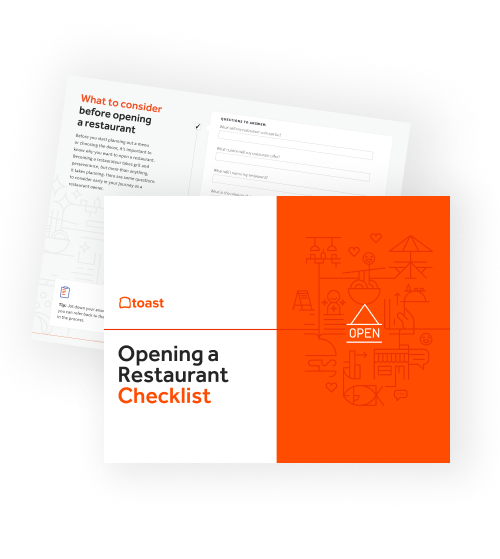
 Opening a Restaurant Checklist
So many things go into opening a restaurant. Use this free PDF checklist to set your new restaurant up for success.
Get Free Download | Built for Restaurants
How to Start a Food Business: Starting a Food Business Checklist
Starting a food business is both exciting and challenging. While a great concept and passion for food are strong foundations, long-term success comes from careful planning, financial discipline, and strategic execution.
The numbers prove it: only 23% of private businesses in the U.S. fail within their first year, while nearly half (48%) close within five years. But that also means more than half survive—and well-prepared businesses have a much better chance of thriving.
This step-by-step checklist breaks down everything you need to do, from defining your business concept to launching with confidence. Each section includes actionable tasks so you’re not just thinking about your business—you’re actively building it.
Whether you're opening a restaurant, food truck, catering service, or bakery, success doesn’t come from just dreaming—it comes from doing!
Key takeaways
Conducting thorough market research, analyzing competitors, and understanding customer demand ensures your business is viable before you invest time and money.
From startup costs to ongoing expenses, knowing your numbers helps you secure funding, manage cash flow, and build a sustainable business.
A strong brand, a strategic online presence, and a well-planned pre-launch marketing campaign help generate buzz and attract customers from day one.
A well-prepared business plan, efficient operational systems, and a solid launch strategy significantly increase your chances of success.
1. Develop your business concept
Before you imagine a packed dining room or a line of eager customers at your food truck, you need to know exactly what exactly you’re offering and why people should care. A vague idea isn’t enough. You need a clear, defined concept that serves a specific need in the market.
Define your niche
Will you open a food truck, restaurant, catering business, bakery, or ghost kitchen?
Are you serving fast-casual meals, fine dining, coffee and pastries, meal prep services, or something else?
What type of cuisine are you focusing on, and how does it stand out from competitors?
Identify your unique selling proposition (USP)
What makes your business different?
Is it a signature dish, a unique service model (subscription-based meal plans, interactive dining experiences), or an underrepresented cuisine?
If your answer is “We make great food,” you haven’t gone deep enough.
Understand your target market
Who are your ideal customers? Are they students, busy professionals, families, tourists?
What are their eating habits and price sensitivity? Will they pay $18 for a burger, or are they looking for a $6 meal deal?
What times of day are they eating out? Are they looking for late-night eats, workday lunch, or weekend brunch?
Research food trends
Look at local and national trends—is your idea capitalizing on something fresh, or is it already saturated?
Example: If you’re opening a vegan café, are you competing against three other plant-based spots in your neighborhood? Or is there demand with no supply?
Tools like Google Trends, Yelp, and Instagram food pages can help gauge interest.
2. Conduct market research
Having a great idea isn’t enough. You need to prove that people want what you’re offering—and that you’re not walking into a dead-end market. This step is where most dreamers fail because it’s uncomfortable. You’re testing your idea against reality, and reality might tell you it won’t work. That’s a good thing—it forces you to refine before wasting time and money!
Analyze your competitors
Who are your direct and indirect competitors? Visit their locations, order their food, and analyze their menus and pricing.
What are their customer reviews saying? Are people happy with their food but complaining about long wait times? That’s an opportunity.
Are they too successful (meaning you’d be fighting for market share) or struggling (meaning the demand might not exist)?
Define your competitive advantage
If a competitor is already thriving in your niche, why should customers switch to you? Are you faster, cheaper, higher quality, more specialized?
Example: Chick-fil-A distinguishes itself in the fast-food industry through a focused menu and exceptional customer service. By concentrating primarily on chicken sandwiches and maintaining high-quality standards, they ensure consistently great customer experience.
Gather customer insights
Talk to potential customers—not just friends and family who will tell you what you want to hear.
Run online surveys, join local food community groups, and ask what’s missing in your city’s food scene.
Host a pop-up or test run—sell your food at a local event and see if people actually buy it.
Estimate market demand
Check local business licensing data to see how many similar businesses have opened (or closed) recently.
Look at restaurant industry reports to understand trends in pricing, customer preferences, and profitability.
3. Research locations and necessary permits
The best food in the world won’t save you if you set up shop in the wrong place—or worse, if you get shut down because you didn’t secure the right permits. This step is where you move beyond the fantasy of "owning a restaurant" and into the legal and logistical reality of actually opening one.
Remember, each model has different location requirements. A high-rent downtown spot might be great for foot traffic, but a lower-rent area could offer better margins.
Research ideal locations for your concept
Who are your customers, and where do they spend their time? A vegan café might do great near a university or fitness center but struggle in an area dominated by fast food chains.
What’s the traffic pattern like? Are you relying on walk-ins, drive-thru access, or delivery apps?
Look at successful businesses in your niche—are they clustered in one area? There’s likely a reason for that.
Analyze rental costs and lease terms
How much does rent cost per square foot in your target area?
Is the landlord offering tenant improvement allowances to help with buildout costs?
Are there hidden costs like common area maintenance (CAM) fees?
Understand your permit and licensing requirements
You can’t legally operate without health department permits, food handling certifications, business licenses, and potentially liquor licenses.
Some cities cap the number of food trucks or require special zoning permits.
If you plan to serve alcohol, liquor license applications can take months—start early.
Visit local health and zoning departments
Every city has different food safety regulations—learn them before signing a lease or making a big investment.
Find out how often health inspectors visit, what violations they frequently issue, and what you need to stay compliant.
4. Develop your menu
Your menu isn’t just about what sounds good—it’s a financial and operational decision that determines profit margins, ingredient sourcing, and kitchen efficiency. While making something you like is important, so is making something that everyone else likes.
Define your core menu items
Keep it focused—a massive menu means higher food costs, more waste, and slower service.
What are your hero items? These should be high-margin dishes that set your brand apart.
Example: Yun Hai, a Taiwanese-American online retailer, exemplifies this approach. They began by offering a curated selection of gourmet foods from Taiwan, focusing on unique items like Su Chili Crisp, a hot sauce previously unavailable in the U.S. This targeted product line allowed them to introduce distinctive flavors to the market without overextending their inventory
Calculate food costs and profit margins
The general rule: Ingredients should cost no more than 30-35% of menu price.
A burger that costs $2.50 to make should be priced at least $7.50 to cover labor, rent, and other costs.
Avoid items with expensive or inconsistent ingredients—food costs fluctuate, and you need stability.
Plan for inventory efficiency
Choose ingredients that overlap across multiple dishes to minimize waste.
Example: Chipotle showcases inventory efficiency by utilizing ingredients like avocados across multiple menu items, such as guacamole and various bowls and salads. This strategy minimizes waste and streamlines operations.
Find a balance between variety and simplicity—too many unique ingredients slow down kitchen prep.
Find reliable suppliers
Source fresh, consistent ingredients from distributors, local farms, or wholesale markets.
Compare prices between restaurant supply companies like Sysco, US Foods, or local vendors.
Understand minimum order requirements—can you afford bulk purchases, or do you need a supplier with low order minimums?
5. Build your brand and marketing strategy
Your brand isn’t just a name and a logo—it’s what makes people remember you, talk about you, and choose you over competitors. If you’re not strategic about it, you’re just another restaurant in a crowded market.
Your marketing strategy needs to start now, before your doors ever open. Why? Because you’re building anticipation long before launch day.
Choose memorable name and logo
Your name should be short, easy to spell, and relevant to your concept.
Check for domain availability and social media handles.
Invest in a clean, professional logo—this is your first impression.
Develop your brand identity
What’s the personality of your brand? Fun and quirky? Upscale and refined?
Choose brand colors, fonts, and an overall aesthetic that align with your target audience.
Example: A vintage-style diner might use retro fonts and neon colors, while a farm-to-table café might use earthy tones and minimalist design.
Set up your online presence
At minimum, you need a website with your menu, hours, and contact info.
Create Instagram, Facebook, and possibly TikTok—whichever platforms your audience uses most.
Start posting behind-the-scenes content, concept teasers, and construction progress to build anticipation.
Create a pre-launch marketing plan
Start building an email list by offering updates, sneak peeks, or early access offers.
Partner with local influencers, bloggers, and community pages to spread the word.
Plan an opening promotion—a limited-time discount, free item with purchase, or exclusive VIP event.
Develop your marketing budget and strategy
Determine how much you’ll spend on ads, signage, website hosting, and social media promotions.
Plan for ongoing marketing efforts—your launch isn’t the end, it’s the beginning.
Restaurant Business Plan Template
No matter where you’re at in your restaurant ownership journey, a business plan will be your north star. Organize your vision and ensure that nothing is overlooked with this free template.

6. Store design
Your space’s design isn’t just about looking good—it’s about functionality, customer experience, and efficiency. For example, John Buonavolanto, director of sales at Buona Companies, explains their approach to the design of Rainbow Cone stores:
“We updated the store design to be very vibrant, taking that essence of the rainbow cone—the fun, colorfulness of it — and then applying that to the store design… We created a lot of these different photo opportunities… that made it a fun, interactive, memory building experience for our customers.”
Plan your floor layout for efficiency and flow
Design for smooth movement of customers, staff, and deliveries.
Where will you place the kitchen, counter, seating, and POS stations?
Ensure the restrooms, entrances, and exits are easily accessible.
Design an interior that matches your brand
Your store’s look should feel consistent with your brand identity.
Example: If you’re opening a modern sushi bar, a sleek, minimalist interior with clean lines and warm lighting makes sense. A rustic barbecue joint might feature wooden tables, metal accents, and vintage signage.
Invest in comfortable seating and a visually appealing dining area.
Ensure proper signage and menu displays
Exterior signage should be visible from the street and easily readable.
If you’re running a counter-service restaurant, menu boards should be clear and easy to navigate.
Use digital menu boards if you plan to update pricing or rotate specials frequently.
Plan for accessibility and safety compliance
Check ADA (Americans with Disabilities Act) compliance—your restaurant should be accessible to everyone.
Ensure proper ventilation, fire exits, and kitchen safety measures are in place.
Keep high-traffic areas open—a cramped space slows service and frustrates customers.
7. Establish operational systems
Your restaurant won’t run on passion alone. Before you open, you need operational systems in place for food prep, service, payroll, scheduling, and inventory.
Create standard operating procedures (SOPs)
Outline step-by-step processes for food preparation, service, cleaning, and customer handling.
Set clear guidelines for employee responsibilities to avoid confusion.
Example: How will servers handle complaints? What’s the protocol for handling a rush?
Choose technology solutions
Choose a POS system with inventory management features to help streamline your business.
Consider other tools you may need like payroll, staff scheduling, and accounting software.
Plan your hiring and training strategy
Define staffing needs—how many cooks, servers, cashiers, and managers do you need?
Create an onboarding plan—what do new hires need to learn before their first shift?
Set up a training manual or digital resource to standardize employee education.
8. Financial planning
You can’t plan your business without knowing what it will cost to open and operate. This step forces you to map out expenses, revenue expectations, and cash flow needs before you move forward.
Calculate startup costs
Lease and buildout: Security deposit, renovations, permits, furniture, signage.
Equipment and technology: Ovens, refrigerators, POS systems, inventory software.
Initial inventory: First batch of ingredients, disposables, packaging.
Licensing and permits: Health permits, business registration, food handler certifications.
Marketing and branding: Website, logo, signage, promotional costs.
Working capital: Your restaurant won’t be profitable overnight—plan how you’ll manage cash flow to cover rent, payroll, and inventory during slow periods.
Estimate ongoing operating expenses
Rent and utilities: Monthly lease, electricity, water, gas, internet.
Payroll: Salaries, wages, payroll taxes, benefits.
Food costs: Ingredient purchases and supplier expenses.
Marketing and advertising: Paid ads, social media promotions, email marketing.
Insurance and compliance: Business insurance, health inspections, legal fees.
Project revenue and profit margins
How much do you expect to make per customer, per day, per month?
What is your break-even point—the number of sales you need to cover costs?
How will you adjust pricing or expenses if revenue is lower than expected?
9. Create your business plan
A business plan is your blueprint for execution. It allows you to define your strategy, anticipate challenges, and create a financial roadmap.
Executive summary
A clear, concise overview of your business.
Define your concept, market opportunity, and unique value proposition.
Summarize your growth potential and financial expectations.
Company overview
Business name, structure, and location.
Mission statement: Why does your business exist?
Business model: Dine-in, takeout, food truck, catering, or ghost kitchen?
Industry and market analysis
Define your target audience and what problem you’re solving.
Who are your direct competitors, and how will you differentiate?
Analyze industry trends—is demand growing or declining?
Marketing plan
How will you attract and retain customers?
What marketing channels will you use?
What’s your pre-launch and grand opening strategy?
Operations plan
Business location and layout considerations.
Supplier relationships—who will provide your ingredients?
Hiring strategy—how many employees will you need at launch?
Technology—what POS system, inventory management, and payroll tools will you use?
Financial analysis
Startup costs: Lease, equipment, initial inventory, marketing, permits.
Break-even analysis: How much do you need to sell each month to cover expenses?
Revenue projections: What are your sales goals?
Profitability timeline: When do you expect to turn a profit?
10. Register your business
Before you can start making sales, you need to legally establish your business. This step protects you from liability, tax issues, and compliance headaches.
Choose your legal structure
Sole proprietorship: Simple but offers no personal liability protection.
LLC (Limited Liability Company): Protects personal assets while offering tax flexibility.
C-Corp or S-Corp: Best for scaling or bringing in investors, but more complex.
Talk to a business attorney or accountant if you’re unsure which structure fits your needs.
Register your business name and obtain an EIN
Check for business name availability through your state’s business registry.
Apply for an Employer Identification Number (EIN) with the IRS (free and required for hiring employees).
Register for state and local tax IDs if needed.
Apply for required licenses and permits
Food service license (required for all food businesses).
Health department permit (ensures food safety compliance).
Seller’s permit (for sales tax collection).
Liquor license (if applicable—apply early, as it can take months).
Fire and safety permits (check local regulations).
Set up business banking and financial tools
Open a business bank account—never mix personal and business funds.
Apply for a business credit card for expenses and cash flow management.
11. Secure funding
Now that your business plan proves viability, it’s time to secure the money to make it happen. This step prevents you from overextending financially or seeking funds without a plan.
Calculate exactly how much capital you need
Break down startup costs, equipment, initial inventory, and operating expenses.
Factor in a buffer for unexpected expenses—things always cost more than planned.
Explore funding options
Personal savings: The fastest way to fund your business but carries personal risk.
Small business loans: Research SBA loans, restaurant-specific financing, or microloans.
Investors or partners: Requires giving up equity but provides more capital.
Crowdfunding: Platforms like Kickstarter can generate funding while building hype.
12. Put your plan into action!
You’ve done the research. You’ve built your plan. You’ve secured funding. Now, it’s time to execute. This step separates dreamers from doers!
Finalize operations and staffing
Hire and train your team—ensure they understand SOPs before opening.
Set up payroll, scheduling, and POS systems so your business runs smoothly from day one.
Place your first inventory order and conduct a test run.
Run a soft opening
Invite friends, family, and local influencers for a private test launch.
Gather real feedback on food, service, and operations.
Identify and fix bottlenecks before opening to the public.
Execute your marketing and launch plan
Use pre-launch social media buzz to build anticipation.
Offer a limited-time promotion to attract early customers.
Reach out to local media, food bloggers, and community groups to get coverage.
Track performance and adjust
Review sales data, customer feedback, and employee performance.
Adjust menu pricing, staffing levels, and marketing efforts based on real numbers.
Focus on customer retention—get people coming back, not just trying it once.
Turn your food business checklist into reality
Starting a food business isn’t just about passion—it’s about execution. You’ve built the foundation, crunched the numbers, and mapped out every step. Now, it’s time to turn your vision into something real.
Stay adaptable—your first few months will reveal what works and what needs adjusting.
Stay disciplined—consistency in quality, service, and financial management will be key for thriving.
Stay engaged—keep marketing, refining, and listening to your customers.
This checklist isn’t just a guide—it’s your roadmap to success. The hardest part is taking action. Now, go make it happen!
Is this article helpful?
DISCLAIMER: This information is provided for general informational purposes only, and publication does not constitute an endorsement. Toast does not warrant the accuracy or completeness of any information, text, graphics, links, or other items contained within this content. Toast does not guarantee you will achieve any specific results if you follow any advice herein. It may be advisable for you to consult with a professional such as a lawyer, accountant, or business advisor for advice specific to your situation.
 Trending


Subscribe to On the line
Sign up to get industry intel, advice, tools, and honest takes from real people tackling their restaurants’ greatest challenges.
By submitting, you agree to receive marketing emails from Toast. We’ll handle your info according to our privacy statement. Additional information for California residents available here.