
How To Register a Business in California
Opening a business in California requires registering a business with the California Secretary of State. We’ll show you how to do it.

Katherine BoyarskyAuthor
 RESOURCE
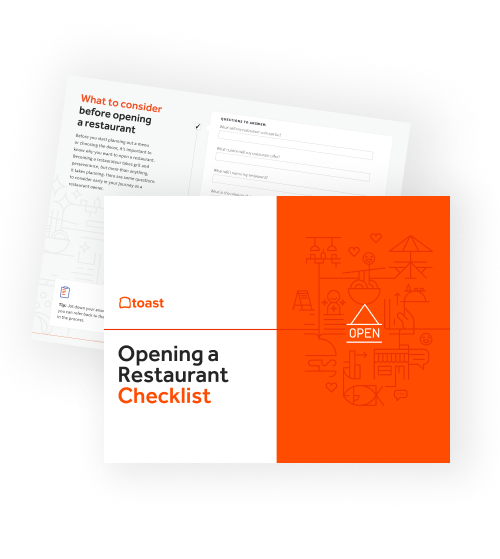
 Opening a Restaurant Checklist
So many things go into opening a restaurant. Use this free PDF checklist to set your new restaurant up for success.
Get Free Download | Built for Restaurants
Whether you’re opening a restaurant, a hair salon, a construction business, a software startup, or any other kind of business, the only way to operate legally is to register your business with the government. This is how the state tracks and collects taxes, and ensures that every business follows local regulations. One of the first things any new business needs to do in California is to register the business with the Secretary of State. Luckily, this process is relatively easy, and can usually be done online.
The California Small Business Network provides free, one-on-one consultations to help you through the process of choosing a business entity, a name, and registering your business, so take advantage of this great resource.
We’ll outline how to register a business in California to start your business off on the right foot.
Opening a Restaurant Checklist
So many things go into opening a restaurant. Use this free PDF checklist to set your new restaurant up for success.

How to register a new business in California
1. Make a Secretary of State account
The first step for registering your business is creating an online account on the Secretary of State website. Just click “Sign Up” below the form. You’ll likely be filing several forms through their online portal, so choose a username and password that you’ll have no problem remembering.
2. Choose a Business Structure
According to the Small Business Administration, there are five primary types of business entities. Most small businesses, like restaurants, choose LLCs, but there are many different cases where each of these entity types can be most appropriate. Consult with an accountant, the California Small Business Network, and your peers in your industry to learn which one makes the most sense for your goals and your financial situation.
LLC
A Limited Liability Corporation, or LLC, is the most common business structure for small businesses like restaurants. The primary benefit of an LLC is that your personal assets, from a savings account to a car to a house, won’t be at risk if you get sued or face bankruptcy. The profits you make will be able to go to your personal income without having to deal with higher corporate taxation. LLC members will be considered self-employed and will have to pay self-employed tax contributions into Medicare and Social Security. Note that LLCs in California that only have one member have specific tax requirements.
Sole Proprietorship
A sole proprietorship lets a business owner quickly and easily go into business alone. However, they do not separate your business and personal assets, so everything you own can end up involved if you get sued or go bankrupt. This structure is only good for very low-risk businesses, or as a stepping stone as you test your business out and then graduate to a different type of entity. In California, you do NOT need to do a business entity filing with the Secretary of State if you’re a sole proprietorship.
Partnership
Partnerships allow two or more people to easily go into business together, either as a limited partnership (one partner has unlimited liability and control who must pay self-employment taxes, and all others have limited liability and limited control) or a limited liability partnership, giving each partner limited liability and protection from debts against the partnership.
C Corporation (C Corp)
C Corporations are business entities completely separate from their owners, and they’re the best bet for businesses that plan to go public and sell shares. They are more expensive to form than other types but offer very strong protection for its owners from personal liability. In some cases, corporations can be taxed twice — once on the corporation’s profits, and a second time on owners’ personal tax returns once they see dividends. This type of business entity also necessitates more involved record keeping and reporting.
S Corporation (S Corp)
An S Corporation is similar to a C Corp, with similar record keeping and process requirements, but they allow profits and some losses to go to owners’ personal income without corporate taxation. Those looking to pursue an S Corp have to file through the IRS to get this status, in addition to registering their business with the state of California. Not every business is eligible, so consult the IRS S Corp eligibility requirements. State-to-state tax guidelines for S Corps vary, so check out the full guidelines at the California Franchise Tax Board website.
3. Select a location for important mail and where you’ll operate
Within the process of registering your business, selecting a location doesn’t mean renting or buying a physical space for your business just yet. It just means choosing which address you’ll use to receive important documents. When choosing where you’ll operate, consider local tax requirements, filing fees, small business resources, licensing requirements, and all specialty permits and fees.
Notoriously, Delaware has a low annual filing fee for businesses. Business-related fees vary across cities and counties across the country, and can widely range for different types of businesses — do your research before making any major location decisions, like buying or leasing space, or beginning construction.
4. Choose and register your business name
Choose a unique name to call your business. For both branding reasons and legal reasons, it’s important to ensure your name is available and not used by any other businesses of the same entity type in California. Search for business names in use with the California Business Search. Keep typing in your name ideas until you find a truly unique one. This is also a good time to start thinking broadly about your marketing strategies and how your name will fit into them.
In some counties, and with certain business types, you’ll need to file a Doing Business As (DBA), also known as a Fictitious Business Name statement or trade name, which connects you to your business name. The fees associated with filing your DBA will vary by county.
Once you select your name, you can reserve it online through the Secretary of State website. Scroll down this list of important forms and find “Entity Name Reservation”. This will grant you the right to register a new business under this name for the next 60 days, and the process costs a fee of $10.
Then, you can use that name as you register your business with the Secretary of State.
5. Fill out and submit the correct online application
The secretary of state's website has a list of the various types of business entities, and various locations or circumstances, for you to choose from. The fees associated with online filing range from $0 to $150.
Restaurant Business Plan Template
No matter where you’re at in your restaurant ownership journey, a business plan will be your north star. Organize your vision and ensure that nothing is overlooked with this free template.
Get an EIN by registering with the IRS
Once you’ve submitted your business registration, the next step is to get an Employer Identification Number (EIN) through the IRS website. This is what allows you to be compliant when hiring and paying your employees, and allows you to open a business bank account and apply for many other licenses and permits.
Get the rest of your licenses and permits
For many different types of businesses, you may need:
A public health permit from local (city or county) public health authorities. Especially important for food businesses, this permit involves having the public health department review your location and processes to ensure everything is safe for the public and employees.
A business license. This license ensures a business is registered and operating legally in its city or county.
A California seller’s permit. This State-administered permit is required for businesses that sell tangible goods to be able to charge sales tax.
To have all employees get food service licenses (or other specialized licenses) depending on your type of business.
To ensure your practices and space allow for proper waste management and abide by OSHA regulations.
Learn more details about each of these licenses and permits, and more, in our guide to Restaurant Licenses and Permits in California.
And every business should check with CalGOLD, an excellent and free permit support site, where you can plug in your county and your business type and learn exactly which permits you need to get to operate legally.
Stay on track to your grand opening
Once you’re registered with the California Secretary of State, and you’ve started the process of getting your other licenses and permits, you’ll be well on your way to opening your new California business. Open that business bank account, and find the funding you need to make your dream business a reality.
At this point, you’ll need at least a few more months to take care of all the other tasks at hand. Finding a great location will require you to balance your business goals with your budget — will you prioritize foot traffic and an easy commute for employees, or will you operate in a more remote location and put that additional budget elsewhere?
Then, you’ll need to hire a strong team and figure out an attractive pay structure, choose your decor and design, choose a technology platform to power your business, and find the vendors and partners that will help you grow your business sustainably for years to come.
Restaurant Opening Calculator
This calculator lays out some of the fundamental financial costs of opening a restaurant, so you can start planning and bring your dream restaurant to life.
Restaurant POS Comparison Tool
A free, customizable Restaurant POS Comparison Tool to research and compare point of sale systems in one Excel spreadsheet.
Is this article helpful?
DISCLAIMER: This information is provided for general informational purposes only, and publication does not constitute an endorsement. Toast does not warrant the accuracy or completeness of any information, text, graphics, links, or other items contained within this content. Toast does not guarantee you will achieve any specific results if you follow any advice herein. It may be advisable for you to consult with a professional such as a lawyer, accountant, or business advisor for advice specific to your situation.
Subscribe to On the line
Sign up to get industry intel, advice, tools, and honest takes from real people tackling their restaurants’ greatest challenges.
By submitting, you agree to receive marketing emails from Toast. We’ll handle your info according to our privacy statement. Additional information for California residents available here.