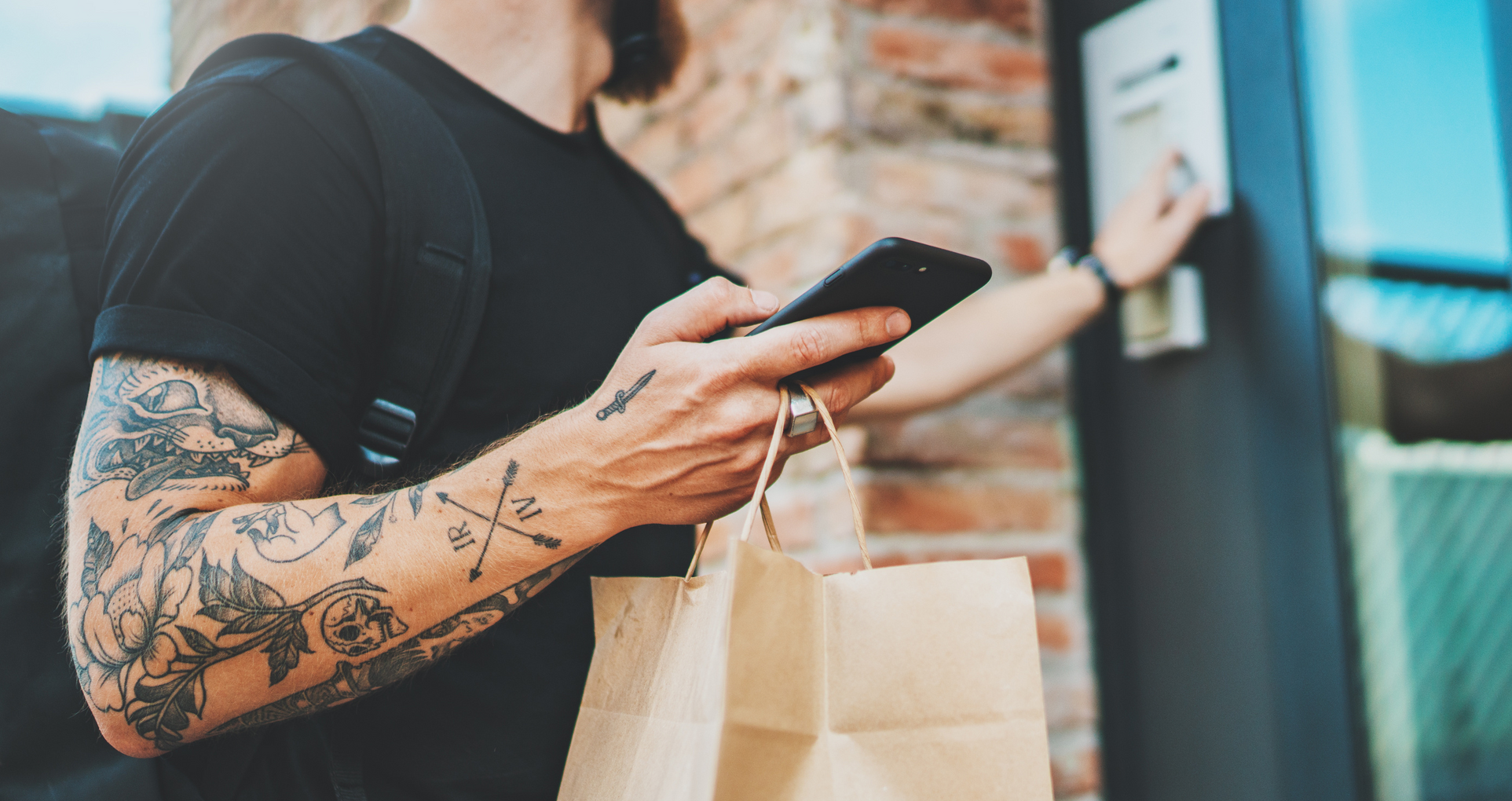
How to Increase Delivery Sales in Your Restaurant
Discover expert tips to increase delivery sales for your restaurant.

Jim McCormickAuthor
 RESOURCE
 The Guide to Restaurant Sales
In this Guide to Restaurant Sales, you’ll learn the metrics you need to measure to understand the financial health of your restaurant. Plus, you’ll get tons of great ideas that’ll help you learn how to improve sales in your restaurant.
Get Free Download | Built for Restaurants
The rise of online ordering and delivery has transformed the restaurant industry. For many operators, delivery sales represent a growing share of revenue—and in some cases, the difference between thriving and just surviving. But increasing delivery sales isn’t simply about signing up for third-party apps. It requires a thoughtful strategy that balances profitability, customer experience, and operational efficiency.
In this guide, we’ll explore proven tactics for increasing delivery sales in your restaurant—from optimizing your online presence and creating menu items designed for travel, to marketing strategies and loyalty programs that keep customers ordering again and again.
Key takeaways
Millennials and Gen Z rely heavily on off-premises dining and expect mobile-first convenience.
Direct channels reduce fees, foster customer loyalty, and deliver valuable data,setting the foundation for profitable delivery.
Prioritize dishes that travel well and boost profit margins.
Track order accuracy, delivery times, customer feedback, and profitability to identify friction points and optimize operations.
Leverage bundles, virtual brands, or late-night specials to capture niche demand and increase order frequency.
Restaurant Operations Manual Template
Use this free template to easily outline all of your operating procedures and make day-to-day operations as consistent as possible.

Why delivery sales matter so much in 2025
Consumer behavior has shifted. Convenience is king, and diners expect their favorite foods at their doorstep with just a few taps. According to industry data, more than half of consumers order delivery at least once a week, and the market for online food delivery continues to grow year after year. Olive Garden alone grew its off-premise sales by nearly 20% over last year, with gains in delivery, catering and curbside to go, according to Rick Cardenas, CEO of Olive Garden’s parent group Darden Restaurants.
For restaurants, this shift presents both an opportunity and a challenge:
Opportunity: Expanded reach, the ability to serve customers outside your immediate neighborhood, and incremental sales that don’t require extra dine-in space.
Challenge: High fees from third-party apps, maintaining food quality during transport, and managing delivery orders alongside dine-in service.
By approaching delivery strategically, restaurants can capture more of this growing demand while keeping margins sustainable.
Optimize your online ordering experience
First impressions matter, and for delivery customers, your online ordering experience is the “front door” of your restaurant. If it’s clunky, confusing, or slow, you’ll lose customers before they even place an order. Gen Z and Millennials are more likely to order online than any other demographic.
This isn’t a surprise considering this age group’s usage of mobile apps. “We all know that smartphones are as essential as food and oxygen to younger customers, and the convenience those restaurant apps provide integrate into their lifestyles. So, if operators want to tap into that market, they must be available through mobile apps,” advises Chad Moutray, Senior Vice President and Chief Economist of the National Restaurant Association.
Create a seamless ordering process
Mobile-friendly design: Most customers order from their phones. Ensure your website and ordering platform are mobile-optimized.
Simple checkout: Reduce friction by offering guest checkout, multiple payment options, and clear confirmation messages.
Direct ordering links: Add “Order Now” buttons to your website, Google Business profile, and social media accounts to drive customers directly to your ordering platform.
Invest in your own online ordering system
While third-party apps have reach, they also eat into your profits with commissions as high as 30%. Having your own branded ordering platform allows you to:
Build direct customer relationships.
Collect valuable data on ordering habits.
Save on fees and control your margins.
Restaurants that combine their own platform with third-party marketplaces often see the best results—capturing new customers through apps but encouraging loyal ones to order directly.
Make your menu delivery-friendly
Not every dish travels well, and nothing kills repeat orders faster than soggy fries or lukewarm entrees.
Streamline your delivery menu
Prioritize bestsellers: Highlight your most popular items that are both profitable and travel-friendly.
Cut what doesn’t work: Dishes that don’t hold up in transit (like delicate seafood or ice cream without proper packaging) can hurt customer satisfaction.
Bundle items: Create meal packages or family bundles that make ordering simple and increase ticket size.
Design for portability
Use sturdy, insulated packaging that maintains temperature.
Separate wet and dry ingredients when possible (e.g., sauces on the side).
Add tamper-evident seals to build trust in food safety.
A delivery-friendly menu doesn’t just improve customer experience—it also boosts efficiency for your kitchen, making it easier to handle higher order volumes.
Use strategic pricing to maximize profitability
Delivery sales can have slimmer margins due to packaging, labor, and platform fees. Smart pricing ensures you’re not losing money on every order.
Adjust menu prices: Many restaurants set slightly higher prices for delivery orders to offset costs.
Add minimum order thresholds: Require a minimum spend for delivery to ensure each order is worth the effort.
Offer delivery-exclusive combos: Bundle items together at an appealing price point to increase average ticket size while streamlining production.
Be transparent with customers.Small price differences are generally accepted if the value and convenience are clear.
Leverage marketing to drive delivery orders
Delivery customers can’t walk past your restaurant and smell what’s cooking. You have to meet them where they are: online.
Promote delivery on social media
Share eye-catching photos and videos of your top delivery items.
Highlight limited-time offers or delivery-exclusive deals.
Use Instagram Stories, TikTok videos, and Facebook posts to remind customers that delivery is available tonight.
Guide to Restaurant Social Media Marketing
Learn how to optimize your social media presence to showcase your brand, tell your story, attract new customers, and engage with your audience.
Run targeted ads
Social and search ads can target nearby customers who are likely to order delivery. Ads like “Hungry? Get [Restaurant Name] delivered in 30 minutes” work especially well during peak meal times.
Partner with delivery platforms for exposure
Third-party apps often let you pay for better placement in search results or run promotions to attract new customers. These can be worth the investment if tracked carefully.
Encourage repeat orders with loyalty programs
Winning a new delivery customer is great—but turning them into a repeat customer is even better.
Digital loyalty rewards: Offer points for every delivery order, redeemable for discounts or freebies.
Exclusive deals for direct ordering: Give customers a reason to order through your own platform instead of third-party apps. For example: “Get a free dessert when you order directly from our website.”
Email and SMS reminders: Use customer data to send personalized messages—like a pizza place sending a mid-week “Don’t feel like cooking? Order your favorite pie tonight.”
Repeat customers spend more and are less price-sensitive, making loyalty a key driver of sustainable delivery sales growth.
Expand your delivery reach
Sometimes increasing sales is as simple as making your food available to more people.
Expand delivery zones: If logistics allow, widen your delivery radius to reach new neighborhoods.
Partner with multiple platforms: Don’t rely on just one third-party app—different platforms have different user bases.
Offer scheduled delivery: Let customers order ahead for a set delivery time, appealing to planners and families.
Some restaurants also experiment with virtual brands—operating multiple online-only menus from the same kitchen to capture different customer segments. For example, a diner might launch a “Wings & Things” virtual brand to target late-night delivery customers.
Train your staff for delivery success
Delivery service impacts your reputation just as much as dine-in service. If orders go out late, wrong, or poorly packaged, customers may not give you a second chance.
Assign dedicated staff: Have a team member focused on fulfilling delivery orders during peak times.
Standardize prep procedures: Clear SOPs for packaging and labeling ensure consistency.
Work with reliable drivers: If using third-party services, monitor feedback and request experienced couriers.
Restaurants that treat delivery as a core part of operations—not just an add-on—see better results.
Monitor performance and adapt
You can’t improve what you don’t measure. Track delivery performance just as carefully as dine-in metrics.
Order accuracy rates (How often do customers complain about missing items?)
Delivery times (Are meals arriving hot and on time?)
Customer reviews (What feedback do you see on apps and social media?)
Profitability (Are margins sustainable after fees and packaging costs?)
Use these insights to adjust your menu, pricing, or staffing. Even small improvements—like cutting delivery times by five minutes—can have a big impact on repeat business.
Creative ideas to boost delivery sales
Once the basics are in place, restaurants can experiment with creative strategies to stand out in the delivery market:
Delivery-only specials: Offer a weekly or seasonal dish that’s only available for delivery.
Merch add-ons: Sell branded items (like sauces, t-shirts, or meal kits) alongside delivery orders.
Late-night delivery: Capture customers after other restaurants close.
Holiday promotions: Tailor delivery bundles for events like the Super Bowl, Valentine’s Day, or family holidays.
These ideas not only increase sales but also give customers new reasons to keep ordering from you.
Restaurant Email Marketing Templates
Download our easy-to-use Microsoft Word templates to create compelling restaurant newsletters and marketing emails.
📈Delivery sales loading
Delivery is no longer an optional side hustle for restaurants; it’s a critical revenue stream. By optimizing your online ordering system, building a delivery-friendly menu, leveraging marketing and loyalty strategies, and continuously monitoring performance, your restaurant can grow delivery sales without sacrificing quality or profitability.
The key is to treat delivery with the same care and strategy you put into your dine-in experience. After all, every order that leaves your kitchen is a reflection of your brand, and with the right approach, those takeout bags can become a powerful driver of long-term success.


Is this article helpful?
DISCLAIMER: This information is provided for general informational purposes only, and publication does not constitute an endorsement. Toast does not warrant the accuracy or completeness of any information, text, graphics, links, or other items contained within this content. Toast does not guarantee you will achieve any specific results if you follow any advice herein. It may be advisable for you to consult with a professional such as a lawyer, accountant, or business advisor for advice specific to your situation.
 Trending

Subscribe to On the line
Sign up to get industry intel, advice, tools, and honest takes from real people tackling their restaurants’ greatest challenges.
By submitting, you agree to receive marketing emails from Toast. We’ll handle your info according to our privacy statement. Additional information for California residents available here.