
Commercial Kitchen Organization: A Complete Guide to Efficiency and Success
Here are the benefits of proper restaurant kitchen organization and how to implement effective organizational systems.

Caroline PriceAuthor
 RESOURCE
 Restaurant Health Inspection Checklist
This free checklist gives you all the tips and tricks you need to ace your next inspection.
Get Free Download | Built for Restaurants
In today's fast-paced food service industry, a well-organized commercial kitchen isn't just a luxury, it's a necessity for survival.
Recent studies show that efficient kitchen organization can reduce food preparation time by 10%, keeping staff more productive. Yet many establishments struggle to implement effective organizational systems that can keep up in the fast-paced restaurant world.
Ready to transform your kitchen chaos into culinary efficiency? Let's dive in.
Understanding the impact of kitchen organization
Professional kitchen organization extends far beyond simple tidiness. It directly influences every aspect of your operation, from food safety and preparation speed to staff morale and customer satisfaction.
The benefits of proper kitchen organization
A systematic approach to kitchen organization has lots of benefits, including:
Improved food safety: Proper organization can reduce cross-contamination risks and ensure appropriate temperature control for different ingredients. This is particularly crucial given that foodborne illness outbreaks can cost restaurants an exorbitant amount of money in legal fees, settlements, and lost business.
Enhanced operational efficiency: Well-organized kitchens enable staff to locate ingredients and equipment quickly, which can reduce preparation times and improve service speed.
Cost control: Organized storage and inventory systems prevent overordering, reduce waste, and help maintain proper stock rotation.
Proper inventory control is essential for minimizing waste and maximizing cash flow.
Angelo Esposito
CEO and Co-Founder of WISK.ai
Essential components of kitchen organization
Zone-based layout
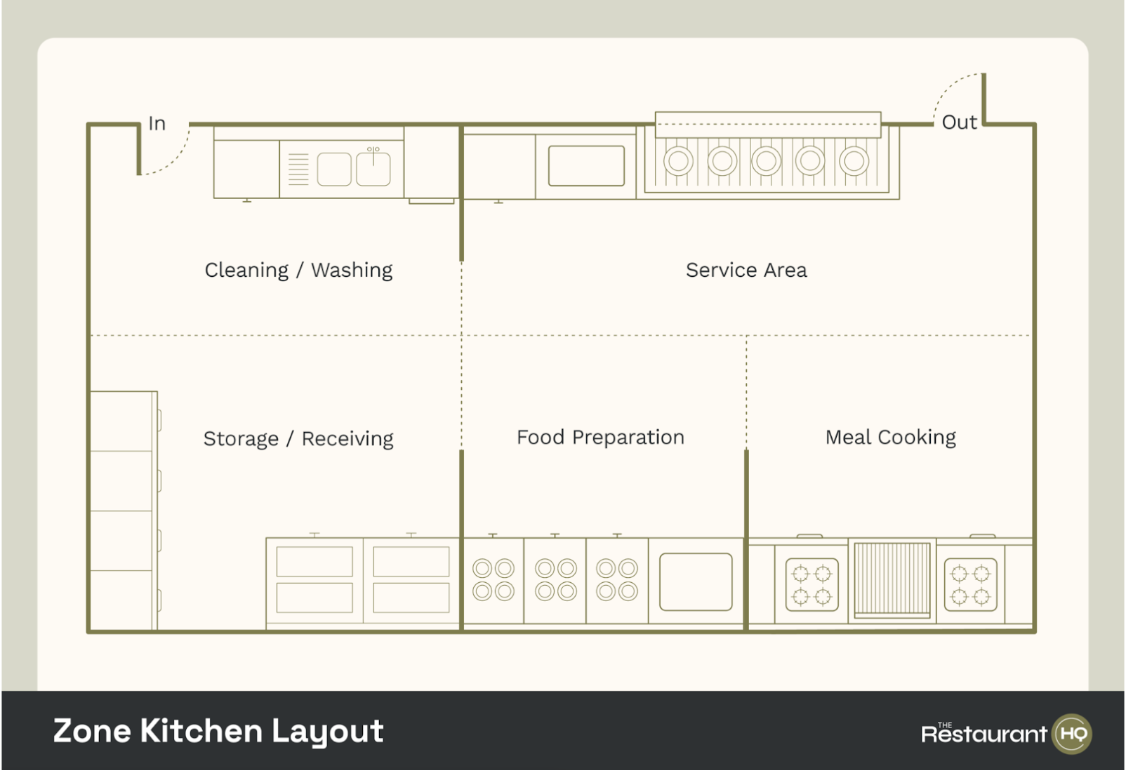
The foundation of kitchen organization lies in establishing clear, purposeful zones:
Preparation zone: Dedicate areas for specific tasks like vegetable prep, meat handling, and cold preparations. Each zone should have its own cutting boards, knives, and small equipment to prevent cross-contamination and reduce unnecessary movement.
Cooking zone: Arrange cooking equipment to minimize steps between preparation areas and cooking stations. High-volume items should be positioned for easy access during peak service times.
Cleaning zone: Set up a three-compartment sink system (wash, rinse, sanitize) alongside commercial dishwashers with a clear separation between dirty and clean items. Position trash, recycling, and compost bins nearby and ensure adequate drainage and slip-proof mats in this frequently wet area to prevent accidents.
Service zone: Create a clean, well-lit area for final assembly and garnishing, with easy access for servers to bring the finished food to the guests.
Storage zone: Implement a logical storage system with clear divisions between dry goods, refrigerated items, and non-food items. Use the FIFO (First In, First Out) method consistently.
https://www.therestauranthq.com/startups/restaurant-floor-plan/
Equipment organization
Effective equipment organization can significantly impact kitchen efficiency:
Vertical storage: Use wall-mounted racks and magnetic strips for frequently used tools. This maximizes counter space while keeping essential items within reach.
Mobile storage units: Invest in quality carts and mobile storage racks that can be positioned where needed during different service periods.
Modular shelving: Choose adjustable shelving systems that can adapt to changing needs and inventory levels.
For more equipment organization tips, check out this article.
Inventory management
Efficient kitchen organization requires robust inventory management systems:
Digital tracking: Implement inventory management software to monitor stock levels, track usage patterns, and generate automatic reorder alerts.
Clear labeling: All food containers should be labeled at all times. Make sure to use a standardized labeling system that includes:
Item name and date received
Use-by dates
Allergen information
Storage requirements
Storage categories: Organize items by category and usage, ensuring that highly sought-after items are easily accessible.
Restaurant Cleaning Checklist
Download the Restaurant Cleaning Checklist, created in partnership with RestaurantSupply.com, to keep track of the cleaning tasks that need to be completed in your restaurant.

Commercial kitchen organization implementation
Look at what's working (and what's not)
Take some time to watch your kitchen in action. Where are the bottlenecks? Which areas frustrate your staff? Notice how people move during the rush, what storage is overflowing, and where improvements could be made.
Creating your system
Now you can build organizational solutions that actually stick:
Figure out where everything belongs (and make sure it makes sense)
Set up cleaning routines that keep things tidy (without overwhelming your already busy staff)
Document your processes
Create simple guides that get new staff up to speed quickly
Implementation and Training
Roll out new organizational systems methodically:
Introduce improvements bit by bit so service doesn't suffer
Get your team comfortable with the new ways of working
Keep an eye on what's working (and fix what isn't)
Listen to your staff – they'll tell you what needs tweaking
Maintaining Organizational Systems
It can be helpful to develop a daily, weekly, and monthly routine to maintain organization. Here’s an example of one to follow:
Daily
Start fresh with a quick scan of all stations before the day begins.
Check that everything's in its place during shift changes.
End each day by resetting the space completely.
Weekly
Schedule regular maintenance.
Rotate through different areas for detailed cleaning and organization.
Conduct weekly stock counts and organization checks.
Verify that all storage equipment is functioning properly.
Monthly
Check-in on the effectiveness of current organizational systems: is it still working or does it need tweaking?
Talk to your team about what's helping and what's not, and how the process could improve.
Make necessary adjustments to systems and procedures.
Wrapping it up
Effective kitchen organization is an ongoing process that requires commitment and consistent attention. Though it takes work, the payoff is huge: your kitchen can run smoother, safer, and more profitably when everything has its place.
When your team knows the systems and sticks to them, your kitchen can handle whatever gets thrown at it – from surprise health inspections to Saturday night rushes. It's worth the effort, and it might just be what sets you apart from the place down the street.
Is this article helpful?
DISCLAIMER: This information is provided for general informational purposes only, and publication does not constitute an endorsement. Toast does not warrant the accuracy or completeness of any information, text, graphics, links, or other items contained within this content. Toast does not guarantee you will achieve any specific results if you follow any advice herein. It may be advisable for you to consult with a professional such as a lawyer, accountant, or business advisor for advice specific to your situation.
 Trending
Subscribe to On the line
Sign up to get industry intel, advice, tools, and honest takes from real people tackling their restaurants’ greatest challenges.
By submitting, you agree to receive marketing emails from Toast. We’ll handle your info according to our privacy statement. Additional information for California residents available here.