
Chargeback vs. Refund: What's the Difference & Why It Matters
Chargebacks are rising, and they're expensive. Learn the difference between chargebacks vs. refunds and how to reduce your risk of costly disputes.
Aiden ToborAuthor
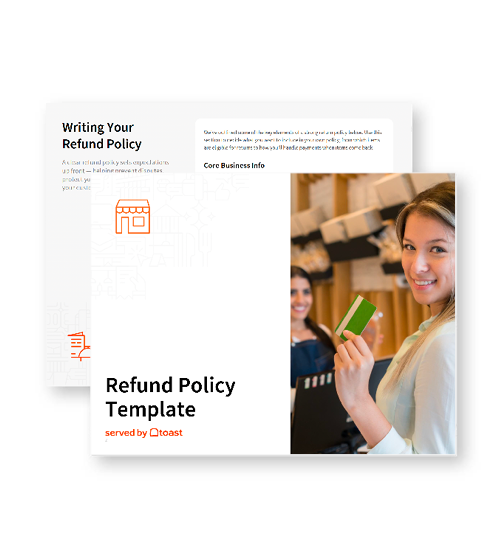
 RESOURCE
 Refund Policy Template
Use this free template to quickly outline your refund terms, reduce customer confusion, and handle returns or cancellations with confidence.
Get Free Download | Built for Restaurants
Chargebacks are often a hidden cost for new retailers—but they’re becoming harder to ignore. Global chargeback volume is projected to grow 24% by 2028, reaching 324 million transactions annually, according to Mastercard. In the U.S., the average chargeback now costs retailers $110 per transaction, making the financial impact even more severe.
While both refunds and chargebacks result in lost revenue, the way they’re handled—and the damage they cause—couldn’t be more different. In this guide, we’ll break down the key differences, explain why chargebacks hurt more, and show you how to reduce your risk.
Key takeaways
Refunds give you more control over the resolution process and help preserve customer relationships.
Chargebacks are riskier and more expensive, often resulting in lost revenue, fees, and even product loss.
Too many chargebacks can damage your reputation and lead to penalties or account termination from payment processors.
Clear refund policies and responsive customer service are essential for reducing chargebacks.
Maintaining detailed order and delivery records helps you fight back against fraudulent chargebacks.
What is a refund?
A refund is when a business voluntarily returns money to a customer—usually because something about the purchase didn’t go as planned. Maybe the item arrived damaged, the customer changed their mind, or the wrong product was sent. In any case, the refund process is initiated and handled directly by the retailer.
Unlike chargebacks, which are enforced through a customer’s bank or credit card provider, refunds give you more control. You can decide the terms, timing, and method of repayment—whether it’s through the original payment method, store credit, or an exchange.
Offering refunds may feel like a short-term loss, but they’re a valuable tool for protecting long-term customer loyalty and avoiding more costly disputes. A clear refund policy can reduce complaints, increase trust, and help you resolve problems before they escalate.
What is a chargeback?
A chargeback happens when a customer disputes a charge with their bank or credit card company—typically because they believe the transaction was unauthorized, fraudulent, or they didn’t receive what they paid for. If the bank sides with the customer, the transaction is reversed and the funds are pulled from your account.
Unlike refunds, chargebacks take the decision out of your hands. You’re notified after the fact and must go through a formal process to respond—submitting evidence like receipts, tracking numbers, or communication logs to prove the transaction was valid. As Monica Eaton, CEO of Chargebacks911, puts it:
“At best, chargebacks present an operational burden; at worst, they become an operational risk.”
Beyond the lost revenue, most payment processors charge a fee for each one—and too many disputes can lead to account freezes or higher processing rates. That’s why many businesses aim to resolve issues early with refunds before they escalate.
Refunds vs. chargebacks: What’s the difference?
While both result in the customer getting their money back, the process, control, and business impact are very different:
Initiation: Refunds are initiated by the merchant; chargebacks are initiated by the customer through their bank.
Control: Refunds are handled directly by the business; chargebacks are managed by banks or credit card companies.
Process: Refunds are internal and straightforward; chargebacks involve a formal dispute and investigation.
Fees: Refunds usually have no extra fees; chargebacks often come with costly processing fees.
Customer relationship: Refunds can help preserve trust; chargebacks may damage your reputation.
Resolution time: Refunds are typically processed quickly; chargebacks can take weeks or even months to resolve.
In short: refunds are proactive and relationship-based, while chargebacks are reactive and riskier.
Why chargebacks hurt businesses more than refunds
While both chargebacks and refunds result in a lost sale, chargebacks come with far greater consequences. From added fees to long-term reputational damage, chargebacks can seriously impact your bottom line if not kept in check.
Higher overall cost: Chargebacks cost retailers 3.75 times the original transaction value on average—once you factor in lost revenue, merchandise, processing fees, and operational overhead.
Fee-heavy process: Retailers often pay $15 to $120 or more per chargeback case, even if they win the dispute. If the case goes into arbitration and the card network gets involved, the average cost per dispute rises to $500 if the retailer loses the case.
Lost product and payment: Merchants typically lose both the physical item and the sale revenue, making chargebacks far more damaging than refunds.
Harm to business reputation: Card networks monitor chargeback ratios. Too many can lead to processing penalties or even merchant account termination.
Program-level consequences: Programs like Mastercard’s Excessive Chargeback Merchant (ECM) track merchants who exceed monthly chargeback thresholds. Falling into this category can result in additional compliance burdens and intervention by your payment processor.
How to reduce chargebacks and improve refund management
Preventing chargebacks starts with proactive customer service and transparent policies. Here are key strategies to reduce disputes and manage refunds effectively:
Set clear refund policies and display them prominently: Make it easy for customers to understand how and when they can request a refund.
Use branded billing descriptors: Ensure your business name appears clearly on customer statements to avoid “unrecognized charge” disputes.
Respond quickly to customer complaints or issues: Timely communication can stop a frustrated customer from turning to their bank.
Use tracking numbers and delivery confirmation: Providing proof of shipment and delivery helps resolve disputes and build trust.
Train customer service reps to resolve issues early: A calm, helpful response can often prevent escalation to a chargeback.
Consider offering refunds preemptively: If the issue is clear, resolving it quickly can save you from additional fees and disputes later.
Retail Store Opening Costs Calculator
This free calculator lays out some of the fundamental financial costs of opening a retail store, so you can start planning and bring your dream business to life.

How to stay prepared for fraudulent chargebacks
Even with great service, some chargebacks are unavoidable—especially those stemming from “friendly fraud,” where a customer receives the product but still disputes the charge. Here’s how to stay protected:
Understand friendly fraud: This happens when a customer knowingly requests a chargeback after receiving the item or service—essentially bypassing your refund process.
Maintain detailed records: Keep order confirmations, shipping and delivery tracking, proof of customer communication, and refund policy agreements.
Be ready to respond with evidence: If a chargeback is filed, submit documentation that shows the transaction was valid and fulfilled as promised.
Use clear communication: Emails or messages confirming delivery, service satisfaction, or refund policy acceptance can strengthen your case.
Proper documentation won’t stop every fraudulent chargeback—but it gives you the best chance to win disputes and reduce your overall risk.
Charge ahead, not back
When it comes to resolving payment disputes, timing and transparency are everything. Proactively offering refunds gives you more control, preserves customer trust, and helps you avoid the high costs and long-term damage of chargebacks.
By understanding the difference between refunds and chargebacks—and taking steps to prevent and prepare for both—you’ll be better equipped to protect your bottom line and keep your business running smoothly.


Is this article helpful?
DISCLAIMER: This information is provided for general informational purposes only, and publication does not constitute an endorsement. Toast does not warrant the accuracy or completeness of any information, text, graphics, links, or other items contained within this content. Toast does not guarantee you will achieve any specific results if you follow any advice herein. It may be advisable for you to consult with a professional such as a lawyer, accountant, or business advisor for advice specific to your situation.
 Trending

Subscribe to On the line
Sign up to get industry intel, advice, tools, and honest takes from real people tackling their restaurants’ greatest challenges.
By submitting, you agree to receive marketing emails from Toast. We’ll handle your info according to our privacy statement. Additional information for California residents available here.